Paragons of Earth #1 is now for sale!

As anyone who’s known me for more than five minutes can likely attest, I love comic books and I’ve always loved them. Comics more or less taught me how to read and my desire to become a writer first stemmed from my desire to work in comics.

But producing comics is a lot more difficult than producing novels, so I focused my efforts on my prose career and comics remained something that I’d love to do if I had the opportunity. And though I have worked on comics in a variety of capacities, these were mostly short stories or lettering jobs.

Now though, I’m happy to announce that my own full-length comic book is available!

This comic began as a simple exercise in the Public Domain Heroes group on Facebook. Someone posted the challenge of recreating Zack Snyder’s Justice League with public domain characters. I came up with a list and then thought that would be it.

But the idea stuck with me and soon I was cobbling together designs in my sketchbook and making notes about how I would reinvent these characters. Around the same time, I’d been talking with my friend Thomas Deja about working on something together. I sent him what I had and he came back with even more notes and ideas. It quickly became obvious we had the makings of something really cool on our hands.

There was one big problem, though. Although I’d come a long way as an artist, I haven’t yet developed the skill to do this concept justice. That’s when we reached out to another friend of mine, Eric Johns. Eric has done comic work in the past and has a really cool style. We sent him the script and he jumped at the chance, coming back with designs that blew mine out of the water.

We tried to crowdfund the comic through Crowdfundr and then Kickstarter. While those campaigns didn’t succeed, we did manage to complete the first issue and it’s available now in digital formats on Amazon, GlobalComix, and DriveThru Comics (print versions will shortly be available through IndyPlanet).

The Special Edition contains a lot of special features, like character bios and a behind-the-scenes look at our design process.

As of now, this comic might just be this one issue. But if we’re able to generate enough interest through sales, we might have the potential to do more with these characters in the future. Check it out and let me know your thoughts.

Daredevil on Netflix

daredevil-red-costume-lo-resOn April 10th, Daredevil premiered on Netflix. And no, I’m not talking about the 2003 film directed by Mark Steven Johnson. This is a thirteen-episode Netflix original series.

All of the live-action properties produced by Marvel Studios take place within a shared universe and Daredevil is no exception. As with all Netflix original shows, all thirteen episodes were released at once. So when I got home from work Friday afternoon, I immediately began binge-watching, and I watched the final episode on Saturday.

This show is really freaking excellent. It’s much darker than the Marvel stuff we’ve seen up to now, due to the freedom offered by Netflix. And it’s something that really suits the character of Daredevil, who came to prominence during Frank Miller’s seminal run on the title that injected a heavy dose of crime noir into the character.

Charlie Cox is wonderful as Matt Murdock and there’s really no one better to play this part. Vincent D’Onofrio’s Kingpin may not have the physical presence that Michael Clarke Duncan had in the Daredevil film, but he more than makes up for that with a spectacular performance that brings a lot of nuance to the character of Wilson Fisk. There’s great work from the cast on pretty much every front, but I have to give a special shout-out to Scott Glenn’s portrayal of Matt’s blind mentor, Stick. The episode when he appears is one of my favorites, not only because of Glenn’s excellent performance, but also because it introduces the Hand.

As I mentioned before, Daredevil is the darkest thing Marvel Studios has done so far. But Marvel is doing something smart because they aren’t taking a one-tone-fits-all approach with their properties (as opposed to the approach adopted by a certain Distinguished Competition with their films). Just like the comics, these movies and shows are adopting an appropriate tone for each character. With Captain America, they give us political intrigue. Iron Man is techno-thriller, Thor is more fantasy, Guardians of the Galaxy is fun space opera, and Daredevil is a gritty crime drama. Marvel could have easily said, “well quippy, upbeat heroes are what have worked for us, so we’re going to do the same thing to Daredevil.” But they didn’t. Instead, they said, “we’re doing Frank Miller’s Daredevil and we’re going to remain true to that.”

And it’s wonderful. It also illustrates something that my good buddy Derrick Ferguson has said many times—not every superhero needs a summer blockbuster movie. And he’s absolutely right. Characters like Daredevil work so much better in a serialized format, because it gives more time for long-running stories and plotlines to play out. That was one of the biggest problems with the Daredevil film—it basically tried to cram a television season’s worth of storytelling into two hours (or an hour and a half if you’ve only seen the vastly inferior theatrical cut). Now, if the Daredevil series does the classic Elektra/Bullseye story (which, come on, of course they’ll do it), they can have it play out over the course of an entire season and give it the room it needs to properly breathe.

I’ve been looking forward to these Marvel/Netflix shows ever since they were first announced. But now after I’ve seen Daredevil, I’m even more excited for the remaining three—AKA Jessica Jones, Luke Cage, and Iron Fist. And then they’ll all come together in The Defenders.

But even more exciting than that is another season of Daredevil. Let’s hope it comes sooner rather than later.

If you like superheroes, you might also consider giving my prose superhero serial, Vanguard, a try. Check out the first episode and see if it’s your thing.

[mybooktable book=”vanguard-1-come-the-exemplar” display=”summary” buybutton_shadowbox=”true”]

No, we don’t need #ComicsGate

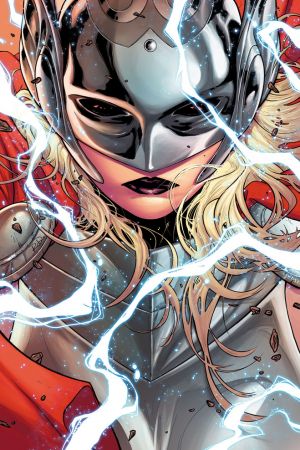
portrait_uncannyToday, I saw an interesting article over at Salon, titled “The new Gamergate: Angry white men are trying to shut down diverse comics.” In the article, Matt Binder takes down an article written on Breitbart.com by “journalist”/professional misogynist Milo Yiannopoulos. See, Milo is all pissed because Marvel has reimagined Thor as a woman.

This proves that Milo hasn’t actually read Jason Aaron’s excellent Thor comic. Because you see, there is no reimagining. Thor has not switched genders, he somehow became no longer worthy of lifting Mjolnir after something Nick Fury whispered to him during the Original Sin crossover (what Fury whispered still hasn’t been revealed).

Mjolnir was picked up by a woman, who the hammer deemed worthy and granted her the power of Thor. And then when the real Thor saw what kind of person she was and fully worthy of wielding the hammer, he gave her his blessing to use his name.

There hasn’t been any reimagining. There hasn’t been any gender-swapping. Male Thor is in fact still a major presence in the book. In fact, a recent issue featured him more than Mjolnir’s new bearer.

Milo would know this, if he had read Thor. Clearly he has not. But still, he bemoans the destruction of a cherished artform.

It should be noted that Milo was once extremely dismissive of gamers. But then once the misogynists who make up GamerGate came along, Milo saw an opportunity to spew his particular brand of vile. So all of a sudden, Milo went from mocking gamers to praising them for standing up to the dreaded feminists and “social justice warriors” who are totally ruining things for straight white men by not sitting down and taking whatever abuse the MRA crowd throws their way. Milo has also been dismissive of comic fans in the past and there is literally zero reason to believe he’s not trying to jump on this bandwagon out of shameless opportunism.

This isn’t the first time characters have swapped identities. That’s a tradition dating at least as far back as the Silver Age (since Milo has never read comics, I should inform him that the Silver Age is ostensibly believed to have begun in 1956 with the introduction of Barry Allen, taking over the mantle of the Flash from the Golden Age Flash, Jay Garrick). It’s also not the first time that minority characters have taken up the mantle of a well-established white male character. That dates back at least as far as the 70s when black men like Jim Rhodes and John Stewart took up the mantle of Iron Man and Green Lantern from their white male predecessors. It’s also not the first time that a woman has been shown to lift Thor’s hammer. Storm, Rogue, even Wonder Woman have all been shown to hold Mjolnir and gain the power of Thor.

Milo would know this, if he actually read comics. But clearly, he doesn’t.

One of the claims made in the Breitbart article (I’m not going to link to it because they don’t deserve the traffic) is that sales on Thor #4 were far lower than on Thor #1. For one thing, these are numbers of print copies ordered by the comic shops, they don’t necessarily reflect actual sales and don’t take into account digital copies. And two, it’s normal for comic shops to order far more issue #1s than issue #4s. The reason for this is simple—more people will buy the first issue of a comic because of its perceived value as a potential collector’s item.

Milo would know this, if he actually read comics. But clearly, he doesn’t.

More than that, notice how whenever a straight white guy steps into the mantle of another straight white guy, it’s never a gimmick to people like Milo? No, it’s only when a minority steps into the mantle that suddenly it becomes some evil SJW gimmick. To these people, it’s perfectly natural to imagine that someone could believe a different straight white male could fill the role as well as the first straight white male. But it is utterly inconceivable to them that anyone could believe a minority is capable of filling that role. That speaks volumes about their mindset.

Let’s also look at this whole notion of “gimmicks.” Whether or not it’s a gimmick doesn’t matter. Comics, like pretty much every form of entertainment out there, uses gimmicks.

The Avengers movie everyone loves so much? Guess what, that was a gimmick. So was rebooting the Batman films with The Dark Knight Trilogy. Hell, the entire reason Marvel Comics got started was because of a gimmick—Archie Goodwin told Stan Lee they needed a team of superheroes to compete with DC’s Justice League of America, and so Stan came up with Fantastic Four. And it was a gimmick—they were a team of superheroes who bickered with each other. Same thing with Amazing Spider-Man—not only was he a teenager headlining a solo book (teenagers were only supposed to be sidekicks back then), but he was a teenager who faced the same problems that normal teenagers faced. Nick Fury became the Director of SHIELD because Lee wanted to tap into the success of the James Bond films, so he created his own super-spy.

Speaking as a writer, there are lots of ideas I’ve gotten that were basically nothing more than “maybe this’ll be cool” or “maybe this will sell.” Whether or not something originates as a gimmick doesn’t matter. What matters is whether or not the execution is there. And Thor has been executed marvelously well.

Milo would know this, if he actually read comics. But clearly, he doesn’t. He never has and he likely never will. He is not a fan and true comic fans should rebuff his attempts to co-opt out passion for his own twisted, misogynist agenda.

Take your sexist bullshit somewhere else, Milo. We want none of it.

Marvel Unlimited

marvelunlimitedAs I’ve mentioned before, I’m a big proponent of digital media and especially of digital comics. But also as I’ve said before, the DRM restrictions that many publishers place on their comics have turned me off. I won’t be making a return to Marvel and DC until they stop treating their customers like criminals. The logic behind it is senseless, as a simple search over at the Pirate Bay would show that DRM has done absolutely nothing to curb comic book piracy, just like it hasn’t curbed piracy of movies, TV shows, books, or video games. I don’t trust ComiXology to be around ten years from now, five years from now, or even one year from now. I don’t want to end up in a situation where Marvel or DC switches digital comic providers and then I lose my collection, or in a situation where ComiXology goes out of business and I lose my collection. If you’re not going to allow me to back up my collection to my hard drive or to view it in a comic library other than ComiXology, you aren’t getting my money—it’s as simple as that.

But one thing that did intrigue me was Marvel Unlimited. For an annual fee, you get access to over 13,000 comics in Marvel’s library (or at least that’s what they advertise as). They’ve got old books as well as issues released six months ago. It’s also available for tablets and smartphones, so what this amounts to is a Netflix for Marvel Comics, and I’d be totally willing to opt into something like that. At least this way, I’m paying a rental fee for these comics, whereas with ComiXology, I’m being charged full price for a product I don’t own.

Now that I have an iPad, I thought I would check out the Marvel Unlimited app. I was really excited, downloaded it, and fired it up. And then I went to try some of their free samples.

And dear god, it is horrible.

Marvel Unlimited has three views for comics—single page, double page, and smart panel. I assumed the smart panel would be akin to ComiXology’s, but unfortunately it’s not. It basically zooms in on a portion of the page and it seems like a generic zoom, as it doesn’t have ComiXology’s smooth panel by panel reading feature.

To make things worse, on my iPad, which has retina display, I’d expect the comic pages to look pristine. Instead, they’re extremely blurry. The pages are not up to the standards of the tablet’s display.

This is a great idea, but Marvel has clearly not put a lot of thought into this. Crappy resolution and a jerky interface make for a product that is definitely not worth the price they’re charging.

Why is this so hard to get right?

WordPress Plugins and Some New WhatCulture Articles

wordpress_logoOne of the things I like a lot about WordPress are all the plugins it has. It can really help to enhance a site. Besides having my own webspace that I paid for (as opposed to using the limited free services on WordPress.com), I took it a step further and also bought the Magazine Premium theme, which has been wonderful.

One plugin I’ve been struggling to find is something that will easily display all my different books. If you use the navigation bar to find my titles, you’ll see I’ve got them split into different series. For the most part, I do this with the use of categories and make the pages as simple WordPress entries.

It’s far from being the ideal set-up. Quite far, actually. There are a few different plugins that allow me to display my books, information about them, and buy links to them, and I thought I’d talk about some of these today.

First up is Buy This Book. It provides buy links for Amazon, Kobo, Barnes & Noble, Smashwords, Lulu, iBooks, and one custom option. Books are displayed with just the cover and if you click on the cover, a slide-out menu with the buy buttons will appear. It’s got support for the major sites, plus a custom one. The downside, however, is that it’s just a widget for sidebars. Not as helpful if you want to provide more information about your books.

Next is MyBooks for Authors. This takes it a step up from Buy This Book. The sites it supports are Amazon, Barnes & Noble, iBooks, 800 CEO READ (a site for business books), IndieBound, Books-A-Million, and also iTunes and Audible if your book’s available in audio format. The buttons are displayed nicely beneath the cover and everything is aligned well. There’s also a sidebar widget that can be set up to slide through different books. Not bad so far. But there’s no support for some of the other things I’d like, such as being able to connect books in a series.

Third is Totally Booked. This one actually shows the most promise of all four (we’ll get to the fourth one in a moment). They provide links for Amazon, Barnes & Noble, Books-A-Million, IndieBound, and…ChristianBook. Support for a niche market like ChristianBook without support for iTunes and Kobo, two of the big four online booksellers, is definitely a bit strange, but whatever. There’s one buy button and when you click it, a pop-up window appears with all the various sites you can buy the book from. That definitely cuts down on clutter. And there’s support for genres and series with links at the bottom where you find links for other books in the series, other books by the same author, and other books in the same genre. The problem here is that there’s no differentiation. For example, Tales of the Rook isn’t a book I wrote by myself, I just wrote one story. So if I clicked the more by this author, which author would it list? Me? Barry Reese? Bobby Nash? Tommy Hancock? And what about multiple genres? Chasing The Dragon is partly a horror book, but it’s also a crime novel. And a thriller. If I clicked the “find more books in this genre,” which genre would it list? Also, there’s a major problem with theme integration, in that it doesn’t work with my theme. Fortunately, the developers have said they plan to address the theme support in the next release and are also going to look at the other suggestions. If those things are addressed, this may be the one to go with.

And finally is MyBookTable. This is a relatively new one and seemed to show the most promise at first. For one, their layout is the best of all of them. They’ve also got support for series, multiple authors, and multiple genres, all of which are individually-clickable links. So far, so good. But the only link you get with them is Amazon. If you want more, you have to pay for the pro version, which is $49. The pro version is also required if you want to use Amazon’s affiliate system (if you want to sell your books directly with a PayPal button, that requires a developer version ($99). So they want you to pay $49 before you get the links that are provided by other plugins, that’s a definite turn-off. But the final nail in the coffin is theme integration. They only support the free WordPress themes and select other themes (all of which are paid). Support for the plugin also requires a paid version.

At the moment, it looks like Totally Booked is going to come out as the winner. They seem the most dedicated to providing a product that can work for as many authors as possible, regardless of how much money you give them.

Anyway, on the WhatCulture front, I’ve got four new articles for you to check out, if you haven’t yet:

5 Reasons Mark Ruffalo’s Hulk Should Get His Own Movie

10 Irresistible Quentin Tarantino Spin-Offs That Definitely Deserve To Be Made

8 Changes That Would Have Completely Fixed Batman Forever

6 Worst Ever Comic Book TV Shows

UPDATE: Since I posted this piece, MyBookTable came out with an update to their app. it can now integrate with my theme without problems and they’ve also added Barnes & Noble links to the free version. For now it’s the one I’m going with, but Totally Booked could still impress me.

Lettering Portfolio Now Active And Some New Articles

Got a bit of an update for everyone today.

First off, I’ve decided to try to get back into the lettering game. I’ve spoken to some former clients and they seemed excited to hear that I’m looking for lettering work again. I’ve also updated my lettering portfolio and added it to this site, so you can check it out here. These are some sample pages I’ve worked on (obviously I can’t post up everything I’ve ever lettered). Some of these were published and some were just submissions that unfortunately didn’t get accepted. I’ve also done some logo work (which can also be seen in the logos for every single one of my books). So if you’re looking for a letterer or logo designer for your comic, please send me a line via my contact page and we can discuss page rates.

I’ve also got some new articles for your perusal on WhatCulture:

Kindle Worlds: Is Open Source Fan Fiction A Good Or Bad Thing? – I take a look at the Kindle Worlds and break it down a little, talking about the platform and what it means for new writers.

The Avengers: 4 Things The Comics Can Learn From The Movie – With the success of the Avengers, I talk about the comics and how they could benefit from some of the many, many things Joss Whedon’s Avengers film did right, which the comics are currently doing wrong.

6 WTF Comic Book Movies That Almost Got Made – There are some comic book movies that are just so terrible, even studio executives have a moment of clarity and think, “wait, what the hell are we doing?” Here are six such movies.

10 More TV Shows Marvel Must Make – After my first article spotlighting 10 shows Marvel should consider, I realized I had a whole lot more. So here’s a follow-up with 10 more comic properties I want Marvel to put on the small screen.

And here’s a new article over on GaijinPot:

4 Tips On Preparing To Move To Japan – I think back to my experience moving to Japan and give some tips for new people preparing to come over.

Want to Write Batman? Here’s Your Chance

batmanAmazon is preparing to launch Kindle Worlds. This is a new platform that will allow anyone to submit novels, novellas, and short stories inspired by the properties they’ve licensed.

If you’re thinking, “hey, that kind of sounds like fanfiction, doesn’t it?” then you’d be right. Amazon has now found a way to monetize fanfiction.

Of course, not all properties will be licensed. To date, Amazon’s Kindle Worlds page mentioned that they’ve secured the rights to Warner Bros. Television Group’s Alloy Entertainment shows Gossip Girl, Pretty Little Liars, and The Vampire Diaries. It remains to be seen whether or not you’ll actually get the chance to dust off that Batman story you have posted up at fanfiction.net and be able to publish it.

Now, some people will understandably be skeptical about this. After all, just what exactly are we looking at here? Well, according to the Kindle Worlds’ site, Amazon will set the prices of all works from $0.99-3.99. The standard royalty for these works is 35% for 10,000 words or more and 20% for works between 5,000-10,000 words. Amazon gets the global publication rights to your story, but you retain the copyright to original, copyrightable elements, such as characters and scenes, that you create (but you also grant Amazon a license to them, so other creators can build upon your work).

That’s…actually not a bad deal at all. 35% royalties sounds like a pretty decent cut. While you don’t retain the publication rights to the story, that’s also pretty much standard for work-for-hire contracts. So even if you got accepted to write something for Warner Bros., there’s no guarantee you’d get a better deal.

The platform will launch next month and Amazon is in the process of trying to secure other licenses. If this takes off, it could mean a chance for independent authors to get wider exposure by giving them a chance to work on some big-name properties.

When I started writing, it was fanfiction. I found it to be a great way to hone my skills and develop my writing style. Hopefully, Warner Bros. will allow their DC Comics’ properties to be used. Because I’ve got a Superman story I’ve had sitting around for a long time that I’d love to polish off and send their way.

Making The Punisher Work

punisher-bradstreetI want you to think for a moment about how many successful movies and TV shows have featured a veritable one-man army taking the law into his own hands and dealing out harsh justice to some well-deserving bad guys.

Can you think of one? My guess is you probably have difficulty thinking of just one. That’s because Hollywood has a very, very, very long history of telling these types of stories, and why not? They’re straightforward, they don’t have to be expensive, and people seem to really like them.

So why is it then that we’ve now had not one, not two, but three separate movies featuring Frank Castle, the Punisher, and none of them have managed to really get it right? The Punisher should be the easiest comic book character to make a successful movie out of. Yet no one seems to have really been able to do it. And more than that, what can Marvel do to make the Punisher work now that they have the rights back.

First, let’s look at the film that started it all.

punisher-lundgrenThe Punisher (1989)

This film was the first attempt to bring Frank Castle to the big screen. It featured Dolph Lundgren with his hair dyed black. In this movie, Frank Castle is a former police officer whose family is killed in a mob hit. Legally declared dead, Castle now lives in the sewers and wages a one-man war on crime. His former partner (Louis Gossett Jr.) is trying to bring him in. Meanwhile, the mafia is under threat from the Yakuza, who have kidnapped their children and the only one they can turn to is the man who has declared war on them.

In the plus column, Lundgren does a pretty good job as Castle. But the script isn’t too terribly good and there’s some cheeseball parts in here that are real cringe-worthy. Its biggest failing, though, is that if you stumbled on this movie late at night and missed the opening credits, chances are you could go a good long while before realizing it’s a Punisher movie. It’s such a generic action movie and one of the biggest mistakes is they didn’t include the Punisher’s trademark skull shirt. Just including that little detail would have gone a long way to differentiating this from all the other B-flicks flying around at the time.

Because of the studio’s financial difficulties at the time, this didn’t even get a theatrical release in the States and was instead released straight-to-video. It was so poorly received that no one would try again until fifteen years later. That’s when we got…

tomjane-punisherThe Punisher (2004)

When I first saw the movie Thursday, I came away with one thought: the actor who played Casey, a former drug dealer who has gone straight and whose life is thrown upside-down when his old partner comes calling, would make for the perfect Frank Castle. As long as he dyed his hair black.

That actor? Thomas Jane. So you can imagine my excitement when my dream pick ended up being cast in Jonathan Hensleigh’s Punisher reboot. This time around, they stuck a bit closer to the comics, including giving Frank his signature death’s head symbol.

This time around, Castle was ex-military who was working with the FBI. On his last job, the son of money launderer Howard Saint is killed. Saint (John Travolta) is not happy about this and he and his wife order a hit on Castle’s family while he’s at a reunion in Puerto Rico.

The beginning is slow and the family reunion scene is just pointless. This movie really suffers from OSS—Origin Story Syndrome. Once we get past the origin and Castle becomes the Punisher, then it picks up a notch (despite some cheesy moments from Castle’s neighbors).

Jane is absolutely perfect as Castle, but the biggest problem once more is the script. He dropped out of the sequel because he didn’t like the direction it was taking, and so that led to the sequel becoming a reboot, and that brings us to…

MP_PunisherWarZone_DVDFSWS_OCARD.inddPunisher: War Zone (2008)

This time around, Ray Stevenson plays the part of Frank Castle. And it’s also the closest we’ve gotten to a good script and the one that stays closest to the comics.

The Punisher’s origin is told very simply in a quick flashback. Castle is a military guy and he’s back in New York (the previous film being set in Tampa). They even managed to work in a little-known tidbit from the comics—before the military, Frank was studying to become a priest. We’ve also got a better supporting cast in the form of Microchip, played—surprisingly well—by Wayne Knight. And we’ve also got the Punisher’s nemesis from the comics, Billy Russo, Jigsaw (Dominic West).

Stevenson does a good job, but the costume design was really bad. I get they tried to make him look like he’s wearing body armor, but that vest makes it look like he’s wearing a neck brace. And in a lot of scenes, the skull is so faint that it can barely be seen. Costume design aside, though, he’s good. Not as good as Jane, but he gets the job done.

Dominic West, however, is just terrible. Same goes for Jigsaw’s brother, Looney Bin Jim (Doug Hutchison). Right in the middle of this serious movie, director Lexi Alexander dropped in two characters who act like they should be in an R-rated version of the old Batman TV show—yes, they really are that campy. There’s a total disconnect between Stevenson’s serious performance and West’s cartoonish over-the-top debacle.

The tragedy of the latter two Punisher films is that if you took Jane, Travolta, and Will Patton (who played Howard Saint’s right-hand man in 2004’s Punisher) and cast them as the Punisher, Jigsaw, and Looney Bin Jim, then you’d have a really awesome film that I think both the average movie-goer and Punisher fans alike would have been happy with.

So now the question…

Where Do We Go From Here?

That’s actually pretty simple. If you haven’t yet, go watch Dirty Laundry on YouTube. It’s an unauthorized short Punisher film starring Jane as well as Ron Perlman and directed by Phil Joanou. And it is incredible. This is what a Punisher movie should be like—dark, uncompromising, and violent.

But I say, forget the movie route. Three times we’ve tried, now let’s try something different. Marvel is looking to expand into live-action television, starting with ABC’s upcoming SHIELD series. And one of the easiest characters to bring to television is the Punisher…depending on how you bring it to TV. There was, briefly, a Punisher series in development recently, but it looked like bad news from the start.

Now here’s my idea. If you haven’t yet, check out Netflix’s remake of House of Cards, directed by David Fincher and starring Kevin Spacey. It’s a Netflix exclusive series and it is remarkable. Disney recently signed a licensing deal with Netflix. And while the Punisher isn’t a good fit for network TV with all its constraints, there wouldn’t be any such constraints if the show were a Netflix series.

It’s pretty simple, actually—hire Phil Joanou to develop a Punisher series for Netflix and get Tom Jane to star in the title role (I also wouldn’t mind seeing Wayne Knight back as Microchip). Everything’s already set up for it. Jane is very interested in coming back to the role and is very fond of the character, Joanou obviously has an interest as well, or else he wouldn’t have directed Dirty Laundry. Disney now owns Marvel and Marvel Studios recently got back the rights for the Punisher, and now Disney and Netflix have a licensing deal in place.

It’s a great solution all around. You’ll get a live-action Punisher that will enjoy more success and a broader reach than another movie, and it will also help both Marvel and Disney utilize new media.
How to Bring the Justice League to Life

Justice League

Ever since The Avengers proved to not only be a massive financial success, but also a textbook example of how to do a superhero film right, Warner Bros. has been extremely antsy about bringing the DC Universe to cinematic life to compete with Disney and Marvel. But it’s been met with numerous obstacles, the latest reported from Badass Digest that Will Beall’s Darkseid-centered script has been trashed.

Here are some things Warner Bros. needs to do.

1. Get your own Kevin Feige

You know how the Marvel Cinematic Universe has been so successful and integrated together very seamlessly? That’s because you had one go-to guy, and that man is Kevin Feige. If Warner Bros. wants to pull off a successful Justice League franchise, they need to have someone in charge of it who can arrange all the pieces. Christopher Nolan is already the big behind-the-scenes guy on Man of Steel, and you could do a lot worse than bringing him onboard. It’s important that the Justice League movies present a coherent vision.

2. Have a plan

Granted, there weren’t any plans for The Avengers until Iron Man proved so successful, but Marvel quickly got a plan in order once they saw it was viable. Before you could say, “Excelsior!” Marvel had an entire slate of planned films—Iron Man 2, Thor, Captain America: The First Avenger, and topping it all off with The Avengers. When Green Lantern went into production, it seemed like Warner Bros. had some semblance of a plan, but that was quickly undone once the movie flopped. So they went back to the well by allowing Nolan to close the book on his version of Batman, and now they’re trying to find some sort of middle ground with Man of Steel. Yet there’s still no real plan in place.

3. Forget your shame

Watch all the Marvel Cinematic Universe films back to back and you’ll notice something about them—not only are they great movies, but they aren’t ashamed of their roots. Between Smallville, The Dark Knight trilogy, and Arrow, it does seem like Warner Bros. is ashamed of the fact that these characters are comic book superheroes. And you can’t be, not if you want it to succeed. If Joss Whedon didn’t have a lot of affection and respect for the comics he was adapting to the big screen, The Avengers wouldn’t have worked. He didn’t try to run away from or hide the superhero aspect, he openly embraced it. And everyone loved it.

Superheroes are here to stay. Either get over yourselves and embrace it, or stay out of the way.

4. Talk to DC Comics

This is not an option. Expert consultants are nothing new. If you want to make a police procedural, you bring in a police consultant. If you want to make a medical drama, you bring in medical consultants. And if you want to make a good superhero movie, you absolutely must talk to the people who create superhero stories for a living. I know some fans may balk at this given the current state of DC Comics, but there are a number of good creators who work there (and despite my reservations about some of the writers at Marvel, when the studios consulted with those creators, the result was something incredible). And speaking of which…

5. You do still have Bruce Timm and Paul Dini’s phone number, don’t you?

Remember Batman: The Animated Series? Superman: The Animated Series? Justice League? Justice League Unlimited? What did all these shows have in common? Aside from the fact that they were awesome, the answer to that question is Bruce Timm and Paul Dini. If you want to bring the Justice League to the big screen, talk to the guys who successfully brought it to the small one.

6. Hire me

This one is self-serving, but if you want a good Justice League script, drop me a line. I’ll have it to you in a few weeks and I guarantee it will be better (and cheaper) than what you got from Beall. You’ll get a Justice League script that includes the Big Seven (Superman, Batman, Wonder Woman, Green Lantern, The Flash, Aquaman, and Martian Manhunter), it will have an intergalactic threat (either the white Martians or Starro), it’ll have explosions, characterization, superhero showdowns, and a massive climatic battle. So give me a call.

Have you heard the one about Spider-Man?

So the Internet is all a-buzz right now with the big revelation from Marvel’s Amazing Spider-Man #700, written by Dan Slott. This issue ends Amazing Spider-Man and Superior Spider-Man #1 will be released next month. It’s even earned Slott death threats. Seriously? Grow up, people. I don’t care how bad the story is (and it’s pretty bad), but at the end of the day it’s still just a fucking comic book.

First off, if you plan on buying this issue and haven’t yet, then I’d like to save you some money and time by advising you not to. Seriously, just don’t do it. Especially for the price Marvel is charging (¥700 on my Marvel Comics iPhone app).

Second, if you’re a glutton for punishment and still want to buy the issue, then you should probably stop reading right now. Because otherwise, I will spoil the ending for you.

In other words, spoilers follow, so turn away now.Continue reading→