Sentinels: A Distant Star

I absolutely loved Van Allen Plexico’s first Sentinels book, When Strikes The Warlord. So much, in fact, that once I finished, I immediately bought the second book, A Distant Star. These two books, along with Apocalypse Rising, form the first Sentinels trilogy, “The Grand Design.”

In this volume, we see the return of the Sentinels — Lyn Li/Pulsar, Ultraa, Esro Brachis and Vanadium. We also see the return of the enemy from the first book, the Warlord, albeit in a different form. There are a succession of Warlords, and every time one dies another takes his place, and it’s all part of something known as the Grand Design. Where this leads to is still something of a mystery that I assume will be the focus of the third book.

The Sentinels’ universe also expands with this book, with the introduction of the Kur-Bai, an alien race coming to Earth in order to eliminate the Xorex, a planet-destroying entity that served as the master of Kabaraak from the previous volume. Upon landing on Earth, one of the Kur-Bai, a warrior named Mondrian, and Esro get swept off on an adventure of their own in space, going up against Mondrian’s former shipmate in a Barsoomian setting.

There’s a lot of jumping around in this book as the Sentinels are seemingly pulled apart in all directions. Ultraa is injured, Pulsar has family issues, Vanadium appears to be corrupted, and the government is prepared to cut their support for the Sentinels, especially with Esro missing. All the while, the Warlord is scheming, but it’s really Esro and Mondrian’s story that serve as the most interesting set-pieces here.

Where Plexico succeeds is in his characters, once more. Mondrian is every bit as intriguing and fascinating as the characters introduced in the previous volume. Her interaction with Esro is a joy to read and Esro himself steps up to the plate, becoming a much more central character than he was in the previous book. It could be said that When Strikes The Warlord was more Pulsar’s story and in that case, A Distant Star is definitely Esro’s. There’s a grandness to this book, a sense of a larger universe outside of Earth. I know that there were aliens in the first, but this one feels more like a space opera.

That being said, one of the strengths of A Distant Star, of it feeling like a part of something greater, can also be considered a shortcoming, depending on your point of view. When Strikes The Warlord can easily be viewed as a stand-alone tale, but with A Distant Star, there’s a lot of set-up for Apocalypse Rising and you know there’s something else coming.

Apocalypse Rising is a book I will be reading in the very near future. So far, Plexico has not disappointed with his superhero epic, and I’m looking forward to an epic conclusion of this trilogy!
What’s in a name? Musings on Frankenstein’s Monster

Halloween is coming around, and as is usually the case, that means I’m watching far more horror movies than I would under normal circumstances. Among those I’ve watched lately are two recent adaptations of one of my favorite books, Frankenstein. Both shared the same title as the novel and both were made-for-TV productions, and both came out in 2004. One was a USA adaptation based on a concept from Dean Koontz (that he developed into a series of novels), which featured both the doctor and his creation alive in modern-day New Orleans. The doctor is up to his old tricks again, except this time he’s killing people and harvesting their organs. And the monster, taking on the name Deucalion (the son of Prometheus in Greek mythology, and Shelley’s novel originally carried the subtitle of The Modern Prometheus), teams up with a police detective to stop his creator. It was intended to be the pilot for a new TV series with Vincent Perez (The Crow: City of Angels) as Deucalion, but that fell through. I’ve never read the books, but it was an interesting take on the mythos.

The other was also in 2004, a mini-series that was an adaptation of the novel for the Hallmark Channel. It was a pretty faithful adaptation, albeit a bit slow in parts (the total runtime was around three hours). Luke Goss (Blade II) played the monster and William Hurt and Donald Sutherland also had supporting roles.

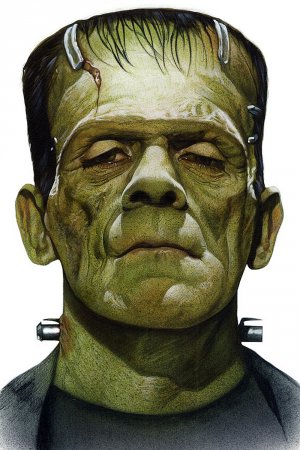
Anyway, I got to thinking about the creature’s name. Of course, anyone who has read the book and most adaptations of the novel know that Frankenstein was the doctor’s name and the monster had no name. I’ve heard that Shelley referred to the creature as Adam in some readings of the book and the creature refers to himself as the Adam of Frankenstein’s labors. But for the most part, as far as the text is concerned, the creature is nameless. Over time, the monster has come to be known as Frankenstein in the public consciousness, which has become a sticking point for some who feel the need to issue a correction.

This got me thinking…who’s to say the creature isn’t Frankenstein?

I think of this for two reasons. For one, the creature refers to Frankenstein as his father, so in that instance, Frankenstein could be considered the creature’s surname as well as Victor’s. In that case, it’s only a first name that the creature lacks (although you could make an argument for Adam to be his first name, and there have been works that use the creature and refer to him as Adam).

If you don’t want to think of the creature as Victor’s son, you could also make an alternate argument. A painting is sometimes referred to by using the creator’s name as shorthand, like a Rembrandt or a Monet. In this convention, Frankenstein’s Monster could be referred to as a Frankenstein.

I think the best argument is really that the creature is Victor’s son. He’s a very human character in the book, not at all a lumbering, monosyllabic buffoon like he’s sometimes portrayed. No, the creature is actually very intelligent and well-spoken. So personally, I don’t see anything wrong with humanizing him a bit further and referring to him as Frankenstein, since he is Frankenstein’s son.

Now if you were to refer to the monster as Victor Frankenstein, we’d have to have a talk…

The Myth Hunter Saga

Lost continents, ancient artifacts, strange creatures…for all these myths and legends, and more, there is an element of truth in them. Throughout the centuries, there have been myth hunters, people who seek out these legends. And they still exist to this day.

There are some, like Elisa Hill, who seek them out for knowledge and a better understanding of the world, as well as standing as a safeguard against those forces which would threaten humanity. But then there are mercenary myth hunters, out only for personal profit. And then there are those like the Order, which have a hidden agenda that bodes ill for all mankind.

Raised by myth hunters herself, Elisa grew up being prepared for this life, but in her early adulthood, she became a mercenary for hire. Eventually seeing the error of her ways, Elisa now works with her former mentor and family friend as well as other associates, including a Japanese changeling and a representative of a secret society.

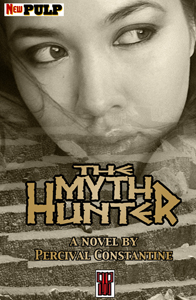
The first book in the series, The Myth Hunter, focuses on Elisa as she takes on a legend that plagued her parents for most of their careers—the lost continent of Lemuria. When new evidence hints to its location, Elisa and her allies travel from the waters of the Caribbean to the temples of India and the Ryukyu Islands of Japan in search of the lost continent. All the while, they’re in a race against time against the mysterious organization called the Order, who have hired Elisa’s former partner, mercenary Lucas Davalos. And also in the wind is another myth hunter, a vicious and cold-blooded assassin known only as Seth.

Buy in print from CreateSpace or buy a digital copy from Smashwords!

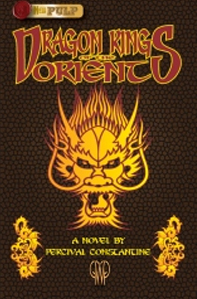
The second book, Dragon Kings of the Orient, sees Elisa accepting a job from Asami, the Japanese changeling she met in The Myth Hunter. This time around, Elisa travels to China, where Sun Wukong, the Monkey King, has been released from centuries of imprisonment, and he desires deadly retribution against the beings who trapped him—the four mythical Dragon Kings. But if the Dragon Kings die, all of Asia could be plunged into the oceans. Elisa and her allies have to face up against gods and demons in order to save the lives of billions!

Buy in print from CreateSpace or buy a digital copy from Smashwords!

Both books are also available from other online retailers, in both print and digital, such as Amazon, Barnes & Noble, and others.

Sentinels: When Strikes the Warlord

Have you ever had a book you weren’t sure you would like, but then once you started reading it, you couldn’t put it down?
That’s what happened with the first volume of Van Allen Plexico’s Sentinels series. I’ve known this author’s name for a very long time, had it come up many times in the writing circles I run in. But until now, I’d never read anything of his. And despite all the positive reviews about the Sentinels series, I was a bit gunshy.

You see, when it comes to original superheroes, it really is hit or miss with me. When superheroes first appeared. there was some hook to them. Superman was…well, Superman. He was the first, the big one. Batman was an evolution of characters like the Shadow, mixed with the burgeoning superheroes. When we came up to the Marvel heroes of the early 60s like the Fantastic Four, Spider-Man, Hulk, X-Men, etc., they all had these great hooks to set them apart.

But now, it’s 2012. If you’re a fan of superheroes, you’ve got over seventy years of stories to choose from and chances are you’ve read more than a few. So if you’re trying to get people with a new hook, you’ve got a pretty tall order. Most of the times, people think they’ve got a good hook, but it’s really not and the characters aren’t well developed.

Plexico, however, takes a different route. He knows that you know all these stories. He knows that there’s no hook you haven’t heard. And instead of trying to find the next hook, he does what writers of all other mediums do — he makes you care about the characters instead.

And really, that’s all that matters, isn’t it? How many times have you seen the basic hero legend retold over and over? How many times have you see the lone warrior story? If you show someone Yojimbo, A Fistful of Dollars, Brick, and then ask them to read Red Harvest, chances are they will get a very different experience each time, despite the fact that it’s basically the same story. And when it comes to superheroes, I doubt you could come up with a super power that hasn’t already been thought up. But does that matter? Are there many differences between the abilities of James Bond and Ethan Hunt and Jason Bourne? Not really, it’s the characters that make them different.

And it’s the same with superheroes. The Sentinels does not have a unique hook. There aren’t any reality TV shows or hidden conspiracies or trying to overthrow the existing order or anything like that.The Sentinels are superheroes who fight supervillains, pure and simple. But if you’re expecting a cheap, Avengers/Justice League knock-off. you will be pleasantly surprised. Because despite the superficial similarities with popular comic book heroes (and while they’re there, they are very much in passing — I doubt you’ll confuse Ultraa with Superman or Esra with Iron Man), what sets Plexico’s Sentinels apart from the numerous other books is that he focuses on his characters as characters, not as powersets. Even the Cavalier, who is set up from his first appearance as unlikeable, becomes someone you can relate to. And that’s a real testament to Plexico’s characterization skill. Even when Plexico hits the familiar story beats (and I won’t detail what they are because I don’t want to spoil them), there’s a sense of originality because of the great development he’s invested in these characters.

And because of these characters, I could not put this book down. When it comes to books, some take me longer to finish than others. On average, I take about a month or so to finish a book. I finished all 236 pages of this book in a week. Whenever I had some downtime, my first inclination was to read more of Sentinels, and I found myself thinking about it even when I didn’t have the time. It’s rare for a writer to inspire that kind of dedication in a first-time reader.

Needless to say, immediately after I finished this book, I bought the next in the series. And that’s a rare thing for me. Not long before this, I finished The Gunslinger, the first book in Stephen King’s Dark Tower series. But I have not yet bought the second book. Yet I already bought the next Sentinels book.

Van’s got me hooked. Fortunately, I’ve got quite a bit of material to catch up on.

Gunfighter Gothic Volume 0: Blood of the Universe

“Ignore her. She loves to throw all that time travel stuff in our ignorant nineteenth-century faces.”

That quote sums up what I love about Blood of the Universe, Volume 0 of Mark Bousquet’s Gunfighter Gothic series. It’s a snappy piece of writing and more importantly, it tells the readers that this is a world where the bizarre and unexplained is more or less an every day occurrence. Prevailing wisdom seems to be that when you enter a world like the one Bousquet’s created, you need to hold the reader’s hand, explain why all this weird stuff exists, or give you a character who’s more used to the real world.

I’m tired of that. As a reader, I have no problem being thrown into a world with vampires, zombies, werewolves, and time travel. I’ve been around the block a few times, don’t insult my intelligence by making me go through the whole “why do these pale men have such sharp teeth?” thing. 

Fortunately, Bousquet knows better. And he’s given us a tale in a genre that I absolutely love — the supernatural western. Combining these things together makes even the stale conventions of the separate western and supernatural genres feel fresh and new.

A little bit of info on the book’s story: in 1866, Jill is a well-to-do merchant’s daughter who was engaged to be married and ran off. By her side is her family’s servant and her sometime-lover, the Korean-American Hanna. Trying to start a new life, the girls get thrown right into trouble when they came across vampires, werewolves and a time traveling British spy on their train.

And then Bousquet does something really interesting. Jill, who one might assume is the central protagonist? She dies. Writing a book about a duo and killing off one of the partners in the opening pages? That takes balls. At first, I thought I must’ve read it wrong.

Jill’s death drives a large portion of the book, with Hanna now teaming up with two time travellers and an agent of President Grant. All of them are after something called the Universe Cutter, a knife with the power to resurrect the dead.

Hanna is a great character. I’m a sucker for female protagonists, especially in a traditionally male-dominated literary field like westerns and pulp. Not only is she a woman, but she’s a woman of Korean descent, which is great because minorities, particularly Asians, have gotten the real short end of the stick in pulp, dogged by extremely racist stereotypes. Bousquet seems pretty well-aware of this and he avoids any of the traditional clichés — Hanna is not a kung fu master, she’s not a dragon lady, she’s not a math whiz, and most importantly she doesn’t speak “rike dis.” She’s a very capable gunfighter, born and raised in America. Whenever someone comments on her country of origin, she always remarks that she’s American-born. Asian Americans and Asian immigrants weren’t exactly well-regarded during the late 1800s, so it’s definitely an interesting period for a character like Hanna.

Bousquet’s writing pops all throughout. The dialogue is real, even when in these unrealistic situations and the action moves at a brisk pace.

Unfortunately, for all the good in Blood of the Universe, there is a bit of bad — namely the technical aspect. In the Kindle edition, there were more than a few errors throughout, even some parts where Hanna was incorrectly named as Jill (and that was a cause for confusion more than once). These errors mostly amount to a distraction at worse, so don’t let that deter you.

Overall, we’ve got an impressive start to what I hope will be a long-running series.

Ron Fortier Reviews Dragon Kings of the Orient!

Just as he’s reviewed all my other New Pulp offerings, from Love & Bullets to Outlaw Blues, Ron Fortier has now kindly offered his thoughts on the latest installment in the fascinating and bizarre life of myth hunter Elisa Hill.

Here’s just a bit of what Ron had to say:

In this age of the popular urban fantasy genre, we seem to be inundated with more and more series featuring sparkly vampires, sexy witches and zombie private eyes.  Enough for this reader to yell, “Uncle!”  Contantine’s Dragon Kings of the Orient, packs more wall-to-wall action than any of ten of those other wimpy titles combined.  Being an American teacher in Japan, he has a unique, personal perspective on the Far East and its culture and uses it to great advantage in this rousing adventure tale. 
 
In the past, he has offered us other series but none of them can hold a candle to this one. Elisa Hill is a truly original, fun character and I hope we get to read many more of he exploits along with those of her truly remarkable supporting cast.  People, this book is a solid must read!

As always, Ron, thanks for the kind words! You can check out the rest of this review, as well as Ron’s other reviews, at Pulp Fiction Reviews. Once you’ve done that, why not swing on over to Airship 27, Ron’s own New Pulp publisher?

You can find both print and digital copies of Dragon Kings of the Orient available in any number of online booksellers. Check out the Novels link on the menu bar for more information!

Four books for the price of three!

Amazon has a new promotion going on right now, where if you purchase select items, you can get four books for the price of three. This only applies to paperback books, not Kindle versions.

Here are the details from Amazon’s site:

To take advantage of this 4-for-3 promotion, follow these steps:

  1. Add at least 4 eligible items to your Shopping Cart. Eligible items will have a message such as “This item is eligible for our 4-for-3 promotion.” on the product detail page. Eligible products include select books and Home & Garden items. You may include items from different product categories in a single order to qualify–for example, you can order an eligible book and an eligible kitchen item.
  2. Proceed to checkout. When you’re done shopping on our site, click the “Proceed to checkout” button in the Shopping Cart. Your shopping cart should include at least four qualifying items during the checkout process to qualify for this promotion. Additional conditions are listed below.
  3. On the final checkout page, we will discount the lowest-priced item. A promotion credit for the amount of the lowest-priced item will appear in the upper right corner of your Order Summary during the checkout process. If you use 1-click ordering, the promotion will be automatically applied.

I went ahead and checked, and all my books are included in this promotion! That means you can pick up both books which comprise The Myth Hunter series and both books which comprise Infernum! So if you go to Amazon right now and buy Love & Bullets, Outlaw Blues, The Myth Hunter, and Dragon Kings of the Orient, then the lowest priced book (in this case, Dragon Kings of the Orient) will be yours for free! 

So what are you waiting for? Head on over to Amazon and pick up these books!

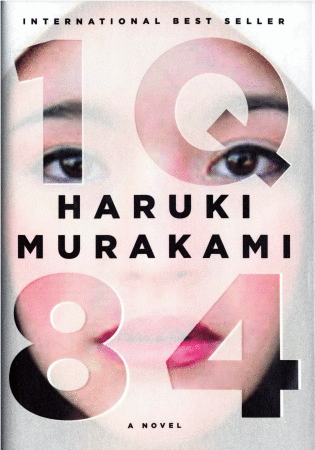
1Q84

A few years ago, I was told that I should read Haruki Murakami’s books. And I started with one that was on sale at my local shop — Kafka on the Shore. I was completely blown away by Murakami’s work. Since then, I’ve read a number of his books — Norwegian Wood, The Wind-Up Bird Chronicle, Sputnik Sweetheart, Hard Boiled Wonderland and the End of the World, and his latest work, which has been called his magnum opus, 1Q84.

The story takes place in the year 1984 and centers on two characters in their thirties. On one side, we have Aomame, a solitary woman with a lonely past who works as a fitness instructor and occasional assassin of men who abuse their wives or girlfriends. On the other, we have Tengo, a solitary man with a lonely past who teaches math three days a week at a cram school and works on his writing in his spare time. At the start of the book, Tengo is reviewing literary submissions for a new writer award and he stumbles upon a fantastic story called Air Chrysalis by a seventeen-year-old girl named Fuka-Eri. He tries to convince his editor, Komatsu, to move it to the top of the pile but while Komatsu likes the story, he doesn’t like the writing style. He comes up with a plan for Tengo to rewrite Fuka-Eri’s novel in secret and Tengo reluctantly agrees after he meets the strange young girl himself. Meanwhile, Aomame is discovering that there are strange events in the world, such as newsworthy events she has no memory of and two moons in the sky. She says she believes she’s in a new world, which she christens 1Q84, the Q standing for a question (in Japanese, this is also a play on the pronunciation, since the Japanese word for nine has the same pronunciation as the letter Q). Aomame is asked by the elderly woman she commits assassinations for to kill the leader of a religious organization called Sakigake, the same organization which the mysterious Fuka-Eri’s parents had once been affiliated with.

I’m going to stop right there with the recap. Suffice to say, the stories of Aomame and Tengo are closely connected. The book alternates chapters between the two of them, until book three when a third character, Ushikawa, is added into the mix. Although some criticized Murakami use of third-person narration (he typically uses first-person), I actually enjoyed that aspect of it. Aomame and Tengo are both two great characters and I really loved their stories.

However, by book three the story really starts to drag. Not a whole lot seems to happen in that section, and I get the feeling that Murakami was just spinning his wheels and trying to pad out the end. The prime example of this is with the character of Ushikawa. When he’s first introduced, it’s obvious he’s a creepy guy who’s not to be trusted. But when Ushikawa becomes one of the major characters in book three, this point is relentlessly hammered into our heads. Every chapter that centers on Ushikawa repeats that he’s ugly and unlikable, as if we’ve forgotten about it since the last time it was mentioned two chapters earlier. While he has some important contributions to the story, we did not need so much of a focus on this guy and Murakami could have excised a lot of useless material from these chapters.

And that’s really the major weakness of the book, what stops it from being truly great. The story just overstays its welcome in book three.

That’s not to say there’s not a lot of good. Even a not-great Murakami novel is better than the best work of lesser authors. But be prepared for some monotony towards the end.

Outlaw Blues is now on Kindle!

In addition to other digital versions distributed through Smashwords, Kindle users can now get their own copy of Outlaw Blues directly from the Amazon Kindle store! Just like with the editions found through Smashwords and their associates, Outlaw Blues is available for $0.99 on the Kindle!

Also, another reminder to pick up your free copy of Love & Bullets from Smashwords! You’ve only got until the end of January!

Outlaw Blues now available for sale!

Outlaw Blues, the second book in the Infernum series, is now available for sale!

Infernum. A shadowy, globe-spanning network of operatives run by the mysterious power broker known only as Dante. They hold allegiance to no one, existing as rogues on the fringes of society.

Carl Flint was once an assassin, until a mistake on the job led to disastrous consequences. Years later, he’s a broken man, living out his days playing music in a dive bar. He’s convinced by Dante to come out of retirement to kill one more person — Agency operative Christian Pierce.

Now on the run from Pierce’s former partner, Flint has to flee what’s left of his former life. But in his quest to find peace, he’ll have to face off with a Colombian drug cartel. Is this the redemption he’s been searching for, or the final nail in his coffin?

Outlaw Blues is available in print for $8.95 at my Amazon store or at CreateSpace. You can also buy the e-book from Smashwords for only $0.99!

Also, until the end of January, you can pick up Love & Bullets from Smashwords for free!