The POWER/RANGERS Debacle

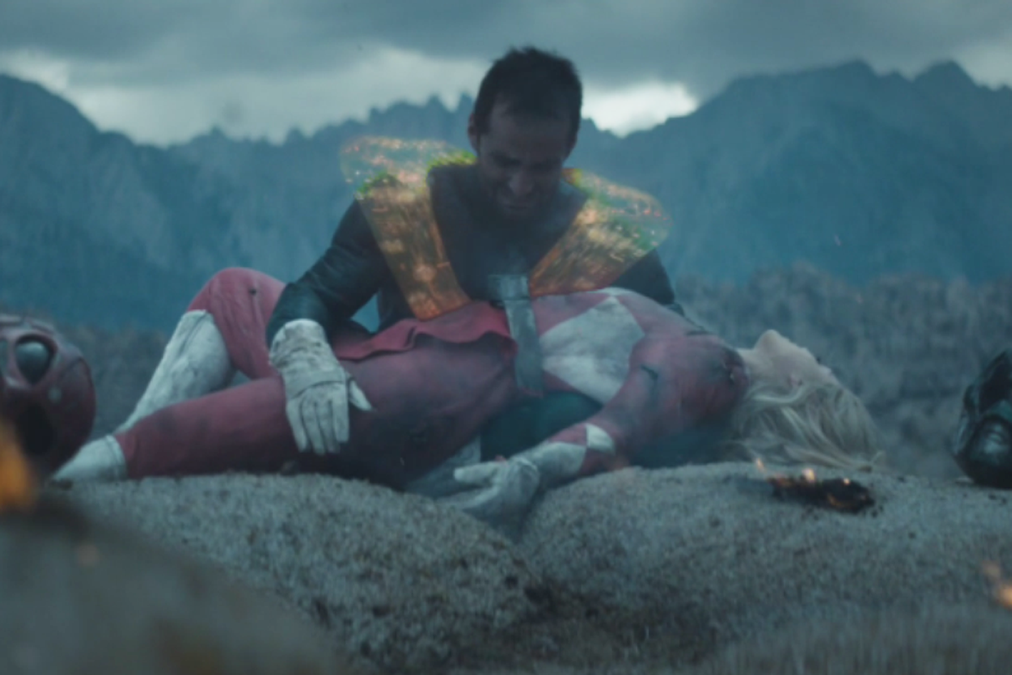
PowerRangersfanfilm_article_story_largeSo there’s this new fan film out now called Power/Rangers. It’s around fifteen minutes long and features a grim and gritty reimagining of Saban’s Mighty Morphin’ Power Rangers and stars Katee Sackhoff as Kimberly and James Van Der Beek as Rocky. SCG Power Rangers LLC, the company that owns the rights to the property, demanded it be taken down.


Adi Shankar, who created the short, isn’t backing down. In a response, he wrote: “I consider this an outright infringement on freedom of expression and individualism. … Films like my Power/Rangers ‘Bootleg’ are vital expressions of creativity in our troubled world. If we suppress this creativity and become passive participants in the consumption of the culture we live in, we implicitly allow a dangerous precedent to be set for the future of the internet.”


Some of the Internet chatter around this has thrown accusations at Haim Saban that his reaction to Power/Rangers is nothing more than jealousy that he can’t make something as good as this, or that he’s envious of all the attention it’s getting. To which I respond with three simple words: It. Doesn’t. Matter.


Saban and Power Rangers LLC own the rights to these characters. These are their toys. And if they don’t want anyone else to play with them without their express permission, then guess what? That’s their right! People have claimed that Saban is “whining” about this, but I say that Shankar is the real whiner here. He’s coming out and saying that he should have the right to use characters he doesn’t own in any way he sees fit, and if the copyright holders tell him to stop, then that’s stifling creative freedom. What about the freedom to control the properties you own? Why is that freedom not important to Shankar?


I’ve written fanfic, so I get Shankar’s desire to create something with characters he has a passion for. But every time you commission an unauthorized work featuring characters you do not own—regardless of whether or not it’s for profit—you run the risk of pissing off the people who own those properties. And if they tell you, “we don’t like what you’re doing with our characters, take it down,” then you have an obligation to respect their rights.


Growing up watching the Power Rangers doesn’t grant you ownership over them that supersedes the rights of the people who actually own the intellectual property. And no, just because you’re not making money off it doesn’t give you the right to do whatever you want.


But beyond that, there’s a larger question of appropriateness. Power Rangers is a show for children. And it’s still around today. Imagine you’re a parent and your kid is a fan of Power Rangers. He goes online and Googles Power Rangers and this video pops up. You walk in on him and see him watching a video where the Black Ranger is in bed with topless women (depending on which version you saw), where comic relief characters Bulk and Skull are portrayed as meth addicts, and where people are being murdered in bloody, gratuitous ways. How would you react? My guess is you’d be pretty pissed. I know I would be if I found out my young nephew stumbled upon this.


In the past, when kids would grow into adults, they would leave behind those books, movies, and TV shows that no longer appealed to them as adults. You don’t see anyone who grew up with Hanna-Barbara cartoons demanding that the cast of Scooby Doo be updated to portray Scooby and Shaggy as heroin addicts, Fred snapping the necks of their antagonists, or topless scenes of Velma and Daphne.


This demand a lot of modern-day fandom has for properties they enjoyed as kids to be updated as grim, gritty and violent is something I just do not understand. And hey, I love grim and gritty, I love violent movies and shows. My favorite directors include Quentin Tarantino and Takashi Miike and I think Breaking Bad is one of the greatest TV shows ever created.


But those things were created for adults and were meant to be enjoyed by adults. Power Rangers was created for kids. It’s bright, it’s colorful, it’s campy. It doesn’t need to be turned into nightmare fuel.


If Shankar wanted to create his own violent property that draws influences from Power Rangers, I’d have no problem with that. Because that’s his own original property and influences come from anywhere and everywhere. When Guillermo Del Toro wanted to do something that was inspired by Godzilla or Voltron, he didn’t just make a movie with those characters—he drew influences from those things to come up with Pacific Rim. But to just outright steal a kids’ property and twist it into something completely unrecognizable isn’t only a slap in the face to the rights of the owners of Power Rangers, it’s just flat-out crass.


If you enjoyed Power Rangers as a kid and now find it cheesy or campy or uninteresting, then guess what? That property is no longer for you. Leave Power Rangers for the next generation of kids and move on to find something that appeals to your adult sensibilities. There’s certainly plenty of adult-oriented sci-fi material out there to choose from. But don’t demand that Power Rangers grows up with you—that’s just selfish.
Iron Man 4…?

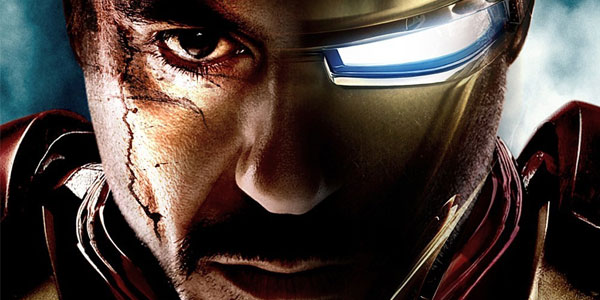
ironman4There’s a huge question mark on the future of the Iron Man franchise. Robert Downey Jr was only contracted with Marvel Studios up through Iron Man 3, and now that the film is making mountains of cash all over the world, it’s obvious that Marvel will want to keep the Armored Avenger around.

Currently, Downey and Marvel are in the midst of contract negotiations, but these negotiations only go as far as The Avengers 2. And given how one of Downey’s terms is that his co-stars in The Avengers 2 get more money, with the infamously-frugal Marvel opposed to such a move, that means there’s going to be more than a small amount of head-butting.

But absent from these discussions is Iron Man 4—it’s all about The Avengers 2. Going beyond the money issue, Downey himself has acknowledged that his age is a factor—he’s pushing fifty. And we all know he can’t play this role forever. But Marvel’s Kevin Feige has said he wants Iron Man to have as long-lived a film franchise as James Bond, which means that eventually, recasting will be necessary.

The question is where would the Iron Man films go from here? I thought on that, and came up with five storylines from the comic books that I think would make great fodder for the next phase of Iron Man movies. You can go read the full article at WhatCulture!

Lettering Portfolio Now Active And Some New Articles

Got a bit of an update for everyone today.

First off, I’ve decided to try to get back into the lettering game. I’ve spoken to some former clients and they seemed excited to hear that I’m looking for lettering work again. I’ve also updated my lettering portfolio and added it to this site, so you can check it out here. These are some sample pages I’ve worked on (obviously I can’t post up everything I’ve ever lettered). Some of these were published and some were just submissions that unfortunately didn’t get accepted. I’ve also done some logo work (which can also be seen in the logos for every single one of my books). So if you’re looking for a letterer or logo designer for your comic, please send me a line via my contact page and we can discuss page rates.

I’ve also got some new articles for your perusal on WhatCulture:

Kindle Worlds: Is Open Source Fan Fiction A Good Or Bad Thing? – I take a look at the Kindle Worlds and break it down a little, talking about the platform and what it means for new writers.

The Avengers: 4 Things The Comics Can Learn From The Movie – With the success of the Avengers, I talk about the comics and how they could benefit from some of the many, many things Joss Whedon’s Avengers film did right, which the comics are currently doing wrong.

6 WTF Comic Book Movies That Almost Got Made – There are some comic book movies that are just so terrible, even studio executives have a moment of clarity and think, “wait, what the hell are we doing?” Here are six such movies.

10 More TV Shows Marvel Must Make – After my first article spotlighting 10 shows Marvel should consider, I realized I had a whole lot more. So here’s a follow-up with 10 more comic properties I want Marvel to put on the small screen.

And here’s a new article over on GaijinPot:

4 Tips On Preparing To Move To Japan – I think back to my experience moving to Japan and give some tips for new people preparing to come over.

My Problems with UltraViolet

ultraviolet_BIGMy first introduction to UltraViolet came through Vudu. Before I picked up my Apple TV, I would often use Vudu to rent digital movies and watch them through my PS3. Once, while searching through new rentals on Vudu’s site, they advertised a program called Disc-to-Digital. I read into it out of curiosity, and here’s what has to be done.

1. Create a Vudu account. Okay, already have one. Also need an UltraViolet account and need the two linked. Umm…okay?

2. Create a movie list of DVDs and/or Blu-rays you want to convert. You can only “convert” movies that UltraViolet has the rights to stream.

3. Take your list and the DVDs you want to convert to your local Wal-Mart. They will mark the disc indicating that it’s been converted (so you can’t loan it to a buddy and have him convert it) and unlock access for the movie through Vudu/UltraViolet.

4. The service costs $2 to “convert” DVDs/Blu-rays and $5 to “upgrade” from SD to HD quality.

So this whole “conversion” thing is not actually a “conversion” at all. I understand paying to upgrade from SD to HD, but paying to get the exact same movie with the exact same quality? This, to me, seems like buying a new DVD player and then having to pay a fee in order to play your DVDs on the new player. For someone like me, who has a collection of around 800 movies, you’re looking at around $1600 in order to have access to the movies I already own.

You’ve got to hand it to the folks behind UltraViolet, Vudu, and Disc-to-Digital: they’re finding creative ways to get you to pay for something you already own with a minimum of work on their part.

Many movies these days come with digital download codes, which is very good. These codes should be included with every movie purchase. But some movies are now locking users into the UltraViolet model, which is very, very bad.

The argument I’m going to make today is similar to the argument I made about ComiXology several months back—if you make obtaining and accessing content legally more difficult than it is to obtain them illegally, people will choose the illegal route. And in this day and age when piracy, especially movie piracy, is a real problem, then the last thing you want to do is to make piracy an attractive option for people.

When I got my first iPod, I didn’t need to pay to put all the CDs I owned onto my computer. I still don’t, I can pop a CD into my optical drive and iTunes will copy it to my computer. But according to the DMCA, I can’t do this with movies. With music, it’s legal. With movies, it’s illegal. And why? Simply because the movie studios were paid up with the right politicians. That’s the only reason.

If I have to jump through hoops in order to convert my library or to get the movie I want on the platform I want, why would I waste all my time with that when I can just head on over to a torrent site and have an HD-quality movie downloaded in a fraction of the time it takes to fill out all these damn forms and registration and verifications and whatnot?

There are a few things studios need to do in order to make things easier for the consumer, and I’m positive the vast majority of consumers will happily play ball and have less reason to complain:

1. If a movie costs the same on Blu-ray as it does on iTunes or Vudu or wherever, it should be the exact same product. That means all the same extras, same quality, everything.

2. Disc releases with digital codes should be redeemable in all formats, not just UltraViolet. I should be able to access all my movies on one device with one account, I shouldn’t need to sell my Apple TV and lose the purchases made there in order to buy an UltraViolet-compatible device.

3. Enough with this DRM and copy protection crap. Backing up your movie collection either on discs or on hard drives should not be illegal. What should be illegal is distributing them. Besides, do some research. You can’t swing a dead cat on the Internet without hitting a site offering DRM circumvention software. Some of it costs money, some of it is free. And, given that movies ripped from DRM-protected DVDs and Blu-rays are still showing up on the torrent sites, it’s plainly obvious that DRM provides zero hindrance to criminals and only serves to frustrate honest customers.

Nothing is going to stop piracy for good. Movie piracy and bootlegs existed long before the Internet. You cannot stop it, you can only take steps to minimize its impact. But the more loops you make the honest customers jump through, the more attractive you make piracy look.