It’s my 10-year publishversary, and YOU get the gift

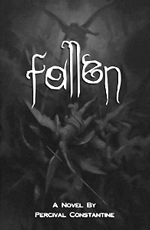
Today is March 7th, 2017. That means it is exactly ten years since I published my very first novel, Fallen.

Ten years ago, the self-publishing landscape was very different. This was in the BK days—Before Kindle. Back then, there were only three options to publish your book. One was the traditional route. Another was to pay a printer for a run of books out of pocket and pray you could sell them. The third was paying a vanity press to do the second for you.

But around this time, a fourth option became available—print-on-demand. One outfit in particular, Lulu.com, offered to do it for no upfront costs. Instead, they’d get paid whenever someone ordered a copy. If you wanted to be available for people to order through bookstores and websites, you had to pay around $30 for distribution.

I chose the latter and Fallen was born. I’ve learned a lot in that time, both as an author and a publisher, and Fallen is still a pretty imperfect book. But it was my first and it’s one I’m still proud of.

So, to celebrate ten years of publishing, I’ve decided to give all of you the gift. From today until March 11th, Fallen will be available for free on the Amazon US store. You get to read my first novel for free!

[mybooktable book=”fallen” display=”buybuttons” buybutton_shadowbox=”false”]

Here’s to another ten (hopefully more successful) years of publishing!

Goodbye 2016

2016 is finally at an end.

Man, this has been a pretty awful year, hasn’t it? From the deaths of beloved celebrities to the election of quite possibly the most unqualified, inexperienced, ill-tempered, idiotic President in American history.

And, of course, there was Batman v. Superman, which we’re better off just forgetting.

That being said, the year still had some good things for me. For starters, I got married this year. And two, this has so far been my most profitable year as an author. My sales have really gone up a lot this year. Still not enough to make a full-time living off my writing, but it’s getting to the point where the earnings are adding up.

It’s also a year of endings. I closed the book on all the series I was publishing on my own—The Myth Hunter, Infernum, and Vanguard have all seen the release of the final books in the series. Why did I choose to end all my existing series? In the case of Infernum, I’d always planned for that series to be finite.

As for The Myth Hunter and Vanguard, that’s a different story. I had hoped to continue publishing more books in both series. But unfortunately, sales and reviews just weren’t high enough to justify continuing with those series. If people who enjoyed those books didn’t review them, then that’s why there won’t be any other books. Publishing is a tough racket and I can only keep up the projects that are turning a profit.

And now I’m setting the stage for a lot of new stuff in 2017.

That kicks off in January with the launch of Fallen Idol, the first book in my new mystery series, the Nakamura Detective Agency, set in Osaka and featuring Kyoko Nakamura who first appeared in a story in The Dame Did It. I’ve seen some advance reviews for the book already and they’ve been very positive, so I’m hoping this book will prove to be my most successful launch yet.

The second book in the series, Murder Walk, is close to being finished.

I’ve also got some other stuff lined up for 2017. There will be more Luther Cross stuff, so if you’ve been waiting for that, just be patient a little bit longer. And I’m working on some more superhero stuff with some pretty impressive people. Not Vanguard, but something else. But I can’t say anything more on that yet.

Here’s hoping 2017 proves to be a better year.

How I designed new covers for my books

Vanguard-FB
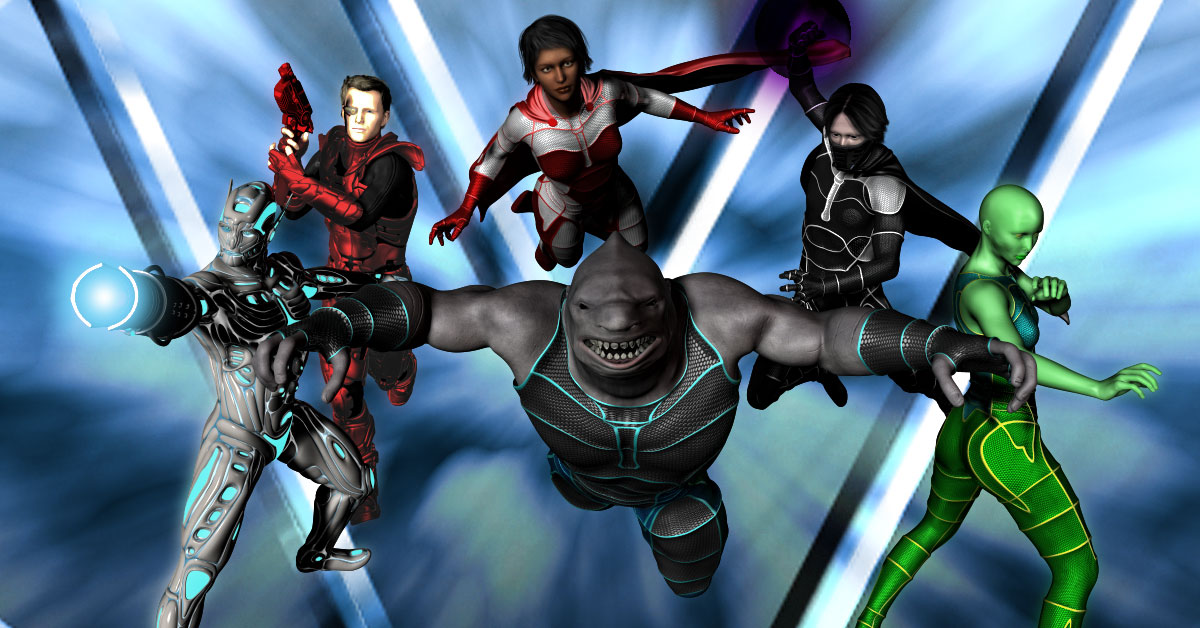
You may have noticed some new covers appearing for the Vanguard series. I recently made the decision to update the covers. I wasn’t quite sure how to do it. The first iteration of Season 1 featured comic book-style artwork by Mat Nastos and though it looked excellent, I got a number of comments from readers saying that it confused them. Some thought it was a comic book instead of prose and were thrown off. So I realized I had to do something different.

I looked at the cover art used on other best-selling superhero books and noticed that it was much more real-world. Almost none of them had the comic book-style, but instead adopted more of an urban fantasy approach. So photo manipulation or painted cover seemed the way to go. But painted covers are very expensive and I unfortunately couldn’t afford them. That left photo manipulation, which I can do pretty well.

But them the problem is how do I handle that? With most of the other superhero books, it focuses on a single character, so much easier to do. Mine is a team book, so what to do there? Do I only focus on one character at the expense of all others? And what do I do for the less-human characters like Sharkskin and Zenith? How to properly convey them on the cover?

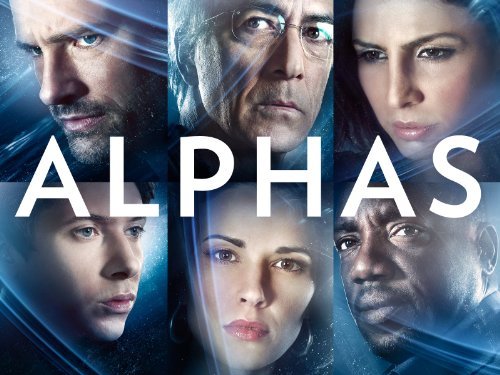
The answer came in the form of movie/TV posters. Alphas was a SyFy TV superhero series inspired by the X-Men. For their promotional posters, they chose to combine headshots of the main characters in order to make the poster. This seemed like something that was doable.alphas

Of course, I quickly realized I was at a disadvantage from Alphas. For one, I didn’t have the benefit of having the same lighting or background used for all the characters. And two, I didn’t have the benefit of being able to take multiple shots of the same models. Some models I was able to find more than one photo of, but others I couldn’t. So that meant I had to mix and match a bit, use other characters for successive covers.

That’s when I discovered DAZ Studio, a program used to create 3D artwork. The program is free to use and assets can be bought from their store. I played around with it for a while, ran through the tutorials, and then decided to buy some assets and use them in the creation of the new covers.

It took a lot of work. I was working at this almost from morning to night most days over the past two weeks. I’ll need to eventually invest in a more powerful computer to take full advantage of the program’s potential, but I’ve managed to do some impressive work so far. The background was created in Photoshop through a lot of trial and error.

Take a look and see for yourself.

[mybooktable series=”vanguard”]

Not bad, huh?

I’m really proud of these new covers and hope they lead to increased sales. I think they do a great job of conveying the tone of the books a whole lot more.

If you’re an author and you’re thinking of doing something similar, DAZ Studio can quickly get very expensive by buying assets. But I think it’s useful to learn how to do these different things, even if you’re only doing it for fun and not with the aim of creating your own covers.

How many books equals success?

7295258864_2c8530bdbb_oLast night, I was shown this blog post by Claude Forthomme. The link was shared with me by a fellow indie who was surprised by Forthomme’s headline, “Only 40 Self Published Authors are a Success, says Amazon.”

Only forty? That seems pretty low. Especially because the definition of success is extremely subjective.

One author may define success as winning awards. Another might define it by the size of their mailing list. Still another may say they aren’t successful unless they become a New York Times and/or USA Today best-selling author. For another, it might just be consistently hitting the top ten best-sellers in their genre on Amazon. Or earning a full-time income. Maybe attracting a movie deal.

Some feel successful just having published a book.

So let’s continue on with this post and look at the criteria for success:

40 self-published authors “make money”, all the others, and they number in the hundreds of thousands, don’t. This interesting statistic, recently revealed in a New York Times article, applies to the Kindle Store, but since Amazon is in fact the largest digital publishing platform in the world, it is a safe bet that self-published authors are not doing any better elsewhere.

“Making money” here means selling more than one million e-book copies in the last five years.

Okay, so “making money” is only defined as selling more than one million ebooks over the course of five years. That seemed awfully high to me, so I pulled out my calculator because I’m a writer and bad at math:

1,000,000 ÷ 5 = 200,000

So we need to sell 200,000 copies a year to be successful. Now break down the royalties for that. Every ebook retailer pays self-published authors 70% of every sale. The average price of an indie book falls between $2.99-$4.99. There are some exceptions, but that’s where you’ll find the majority. Let’s go with $2.99 for the purposes of this demonstration. For each $2.99 book sold, the author gets around $2. Fluctuates a bit when Amazon plays shenanigans with the price (sometimes it will show as being $2.90 or something), but $2 is a good number to work with.

200,000 * 2 = 400,000

Wait, so to be successful, we have to be making $400,000 a year in sales?!

Now don’t get me wrong, I would absolutely love to be making $400,000 a year. With that kind of money, I would do…well, I don’t even know what I would do, because I’ve never had that much money.

But if that’s the criteria we’re using to define success, then of course there are only a small percentage of writers who are pulling that down. Expand that beyond the writing profession—there are only a small percentage of people pulling that down!

So how do we define “making money” or “success”? For the purposes of this post, I’m going to define success as making a full-time income off book sales. The median income in the United States is around $50,000 a year. You don’t need to be making that much money in order to survive—if you’re living in Oklahoma, you can get by on a lot less per year than if you’re living in San Francisco. But $50,000 a year is a good number to use for our purposes.

50,000 (our annual income goal) ÷ 2 (royalty per book) = 25,000

We need to sell 25,000 books a year in order to make $50,000. Of course, this doesn’t take expenses into account, such as the cost of advertising and book production plus the additional expenses of maintaining a website and mailing list. But those expenses vary per author and this gives us a base idea to work with.

Selling 25,000 books a year may seem like a lot. Especially if you only publish one book a year. But most indies publish more than that. Say you publish five books every year:

25,000 (target ebook sales) ÷ 5 (number of books per year) = 5,000

Now we only need to sell 5,000 copies of each title every year to make a full-time income. If you have a series that draws your readers in, this becomes even easier. Readers who loved book 1 already know they like your writing and your characters, so it’s far more likely that they’re going to continue on to book 2.

You aren’t just going to leave your entire income dependent on those five books, though. Each year you’re publishing, you’re also building up your backlist, which gives you a way to generate even more passive income. Writing’s different from other jobs in that not only can you work without pants, but you can still make money off the work you’ve completed in years past.

In year one you’ll publish five, then in year two you’ll publish another five. So now you have ten books generating income. This lessens the amount of copies each book needs to sell in order to get us that $50,000 a year income.

25,000 (target ebook sales) ÷ 10 (books from years 1-2) = 2,500

In year two, we only have to sell 2,500 copies per title to make $50,000.

So let’s jump ahead to year five since the Forthomme used five years as the barometer. If you write five books a year, then by the fifth year you’ll have twenty-five titles generating money.

25,000 (target ebook sales) ÷ 25 (total books in your catalogue from years 1-5) = 1,000

We only have to sell a thousand copies per title per year in order to make a full-time income.

And if you’re selling at the $3.99 or $4.99 price points, you make more money per sale, so you need to sell fewer copies per title. This income also doesn’t take into account other formats, like audio or print.

Of course there’s no guarantee this is how it will work out. The first book in a series is usually the one that sells the most and there’s drop-off as the series continues. Few people will start a series with the fifth book. I don’t know any author who sells the same number of copies across all their titles.

But the point of this is that the definition of success as selling millions of books isn’t really an accurate number for indie authors. You don’t need to sell millions of books to be a success. You don’t even need to sell hundreds of thousands of books. You only need to sell tens of thousands of books in a year to be successful.

“Oh, only tens of thousands?”

Okay yeah, it’s still a lot and a difficult bar to reach for many. There’s a lot of work you have to do in order to move those tens of thousands of books per year. I know I’m definitely not there yet. I hope to be one day. But I just wanted to point out that it’s not as insurmountable a gap as it seems.

EDITED TO ADD: The New York Times article that prompted Forthomme’s comment about only forty authors being successful actually said something quite different:

Over the last five years, close to 40 independent authors have sold more than a million copies of their e-books on Amazon, the company said.

The wording is pretty different from Forthomme’s comment. Neither Amazon nor even NYT said that only forty indie authors are successful, but that forty have sold more than a million copies.
Looking Back and Forward

amazingadventures3dSo the year has come to an end. I only put out one new release in 2014, and that was the first Luther Cross story for Pro Se’s Single Shot Signatures line. But despite that, it was a pretty productive year. I completed the entire first season of Vanguard, which clocks in at just shy of 100,000 words. I also wrote the first two Luther Cross stories, so another 20,000 words there and I penned a story for one of Airship 27’s upcoming Sinbad anthologies, another 15,000 words. So in total, I wrote about 135,000 words, making it my most productive year by far in terms of writing.

I also spent a lot of time doing research. Taking a hard look at what works and what doesn’t in self-publishing and seeing how I can apply things to my own business. I branded the books in The Myth Hunter and Infernum series with logos for each series and new covers. The Myth Hunter books will also be getting another round of new covers shortly to prepare for the release of the third book in the series (more on that in the coming months). I also went back to my first book, Fallen, and finally went ahead and put together an ebook, brand-new print version, and a new cover.

All this plus I toyed with marketing attempts on different books, trying to boost some rankings and I’ve been trying to build my platform through my article writing at WhatCulture and my podcasts. I also finally created a mailing list, something I should have done long ago.

Basically, everything I’ve done in 2014 has been building to a big 2015. The reason I chose not to release any of the Vanguard episodes until 2015 is because I wanted to have them all completed in advance. And now, the first episode is available for pre-order!

[mybooktable book=”vanguard-1-come-the-exemplar” display=”default”]

The special prequel episode to the series is also available, but only to mailing list subscribers. If you’ve subscribed to my mailing list, you should have received a link to download it by now. If you’re not on the list and would like the prequel episode, then subscribe now!

I’ve also teamed up with Derrick Ferguson, Mark Bousquet and Joel Jenkins to compile Amazing Adventures: 4-Book Action-Packed Box Set. This set features Derrick’s Dillon and the Last Rail to Khusra, The Lost Continent by me, Mark’s Gunfighter Gothic: Under Zeppelin Skies, and Joel’s On Wings of Darkness. These books would normally cost $2.99 individually, but you can get all four for only 99¢. The set is now available and I’d advise you to pick it up while you can, because it won’t be on the market forever.

[mybooktable book=”amazingadventures” display=”default”]

2015 promises to be a big year. Each month will see the release of another episode of Vanguard and then I’m planning for a June release of Curse of the Necronomicon, the third book in The Myth Hunter series. Luther Cross will also see new releases quarterly and I’ve got plans for the second half of the year that I’m going to finalize once I finish Curse of the Necronomicon.

There are some other things in the works that I can’t quite talk about yet. But 2015 promises to be a very big year.

What’s wrong with New Pulp?

newpulpI’ve been thinking about this a lot lately. There’s a lot of reason to believe that pulp is alive and well in the mainstream. Seems like every new TV show has pulp elements in it. Superheroes, a total descendent of the mystery men from the pulps, absolutely dominate the box office.

Even with competition from far more visual mediums, pulp still manages to succeed in prose fiction as well. Self-published authors like Russell Blake and JF Penn do very well for themselves writing pulpy action/adventure thrillers, and Mat Nastos’ The Cestus Concern made it to the top of the Amazon charts.

But the rest of the New Pulp books? Not even close to doing that well. I don’t really know of any author who classifies themselves as a New Pulp author who is able to make a full-time living by writing fiction full-time.

I think the biggest problem is a lot of authors working in New Pulp approach it as a hobby as opposed to an occupation. And even those who do approach the physical act of writing with far more vigor than others, there are the other aspects of publishing that they take for granted.

Of course, for those who go through one of the New Pulp publishers, a lot of this is outside their control. Hard to put a link to a mailing list or to other books in the series if you aren’t the one who has final say over the ebook. But even still, one of the things that struck me about the informal New Pulp survey I conducted not too long ago was how few authors have websites they own or mailing lists and the results were shockingly low. Same goes for advertising on book lists, either free or paid. Some websites I’ve seen are a total mess without a listing of titles or buy links.

New Pulp has been kind of behind the curve and there’s no real reason for it. There are things that self-publishing and the Kindle revolution have made possible that are practically tailor-made for pulp. But New Pulp books were some of the last to make the switch over to ebooks. Even now, the majority of New Pulp books don’t include calls to action to pick up the next book in the series, leave a review, or sign up for a mailing list. There’s also the serial format, which has completely passed New Pulp by. I see an awful lot of collections of stories, so why aren’t those stories being released first individually in ebook format and then collected together in a bundle? Why isn’t anyone doing a weekly or monthly pulp serial on Kindle Unlimited?

Of course, this doesn’t apply to everyone in New Pulp. Pro Se Productions’ Single Shot Signatures line is a good example of what more people in New Pulp should be experimenting with. I’m also planning to release at least one serial in 2015, potentially two.

I think the overall thing here is I see a lot of people in New Pulp lamenting that they aren’t selling more books and aren’t getting more exposure. But then when suggestions are made, I see some of those same people then turn around and say, “well what we’re doing is just fine.” Or worse, I see some say, “yeah, we should start doing that,” and then they continue to do the same things they have been doing.

I’m certainly not a best-selling author so maybe I’m not the one to comment on this. But I am trying some new things and here are some words of advice I’d give to other New Pulp authors:

  • Try A Bundle – There are a lot of crossovers in New Pulp. Airship 27 and PulpWork Press recently released The Vril Agenda by Josh Reynolds and Derrick Ferguson. It’s a crossover novel featuring Jim Anthony, Super Detective and Dillon (and the cover should really carry both those logos, plus the subtitle on Amazon should include the characters’ names, but that’s another discussion). To try and drum up some more enthusiasm for this project, I think it would have been a great idea to sell a digital bundle featuring one or two Jim Anthony books and one or two Dillon books for 99¢, advertise the hell out of it, and include a link in the back of the book to The Vril Agenda. Or what about some multi-author bundles? A masked mystery men bundle or a horror bundle or a globe-trotting adventure bundle.
  • Update Your Back-Matter – If you have control over your books and your books are in a series, try to include links to the next book in the series, maybe even with a preview of the next book. Also include links to your website and mailing list. While we’re on that topic…
  • Get a Website and Mailing List – There’s one constant I’ve seen in all successful indie authors—they all have mailing lists. You can set up lists for free at both ReachMail or MailChimp (until you reach a certain number of subscribers), so there’s no reason not to do it. And everyone should really have a website they own. For one, it gives you a lot more control than a free site at Blogspot or WordPress. I use Bluehost with WordPress.org and I use a paid template (but you can certainly find very good free templates). I also use a plugin called MyBookTable, which offers a lot of ways to display my books with tons of buy links. And it’s even free or you can pay for an upgrade to get additional features.
  • Publish Frequently – This is tough if you’re going through one of the New Pulp publishers because you’re restricted to their release schedule. But if you’re self-published, try to plan your releases strategically. I’m doing this right now. My Vanguard serial will contain five books in the first “season” and I’m going to release it monthly. To make sure I can manage this, I’m not offering the first book for pre-order until the fifth book is finished. And yeah, this takes time, but it can be done. I’ve started setting myself a writing goal of 1K Per Day. With that, I can write a 30K novella in a month, or two 15K serials (or three 10K shorts).
  • Experiment – If something’s not working, change it. Sales on my Myth Hunter series haven’t been very good, so I’ve got plans to change things about them—new covers and I plan to finally write the third book in that series, then plan to write more. Never tried a serial? Give it a shot. Never done an ad campaign? Worth a try.

It all comes down to this one important point—no one cares about the pulp revival except pulp fans. And there are two ways to approach this. You can either shrug and say, “well then I’ll just focus on the pulp fans.” I think that’s a poor approach. For one, about half the pulp fans have already dismissed New Pulp just on the general principle that New Pulp wasn’t published during the heyday of the pulps. Two, look at how many New Pulp books are out there, and that number is growing. The existing New Pulp audience is so small that they simply can’t afford all the books that are released.

So I advocate the second way—expand the audience. To do that, you need to work harder at it, you need to invest some money into it, and you need to take it seriously. For those New Pulp writers that view this as just a hobbyist pursuit, hey good for them. This is more directed at those who seriously want to make a living at being a writer. We have to do the work or else it’s not going to happen.

And before anyone says anything, I fully acknowledge that I have not been doing this stuff myself. That’s why I’m changing things.

If you don’t want to do that, then fine, don’t do it. But then don’t go around complaining that you can’t make a living off writing and that nobody is buying or reviewing your books.

Self-Publishers: Hold Yourselves to a Higher Standard

Last month, Chuck Wendig posted an entry on his terribleminds blog, entitled Self-Publishing Is Not The Minor Leagues. Like a lot of Chuck’s posts, it’s a great read. I’m just going to quote a small portion of it, because you should read the whole thing:

The attitude that pervades self-publishing is that it’s a good place to test your craft, to hone your work. We are reminded constantly that the cream floats to the top, that all the crappy self-publishing efforts have no effect on anything or anybody ever despite evidence to the contrary. The culture forgives and sometimes congratulates even the most meager of efforts because of how courageous someone is to take the plunge to publish their own work. The culture says, “Just click publish!” The culture criticizes the faults of traditional-publishing, but excuses (or celebrates) its own. And yet, sometime in the same breath, self-publishing gets painted as a path to traditional publishing, not as a path separate and scenic all its own.

The culture is full of contradictions.

One of the things that he talks about is that self-publishers should be more critical. The basic gist of it is this: if you think your writing is good enough to complete with traditional publishing, then you should make sure that it is presented as professionally as traditionally-published books.

That means revising. That means proofreading. That means editing (and that means getting someone else to edit it as well). That means formatting it properly. That means either designing a professional cover or hiring someone to do it for you.

Now to me, that all sounds pretty non-controversial, right?

Well apparently, I was wrong. Because it has set off a firebomb in the self-publishing community. The entry generated 217 comments, and not all of them were agreeing with Chuck. Over at kboards, there was a lot of pissing and moaning about it, so much that Chuck posted a follow-up. Then there was another post. And another.

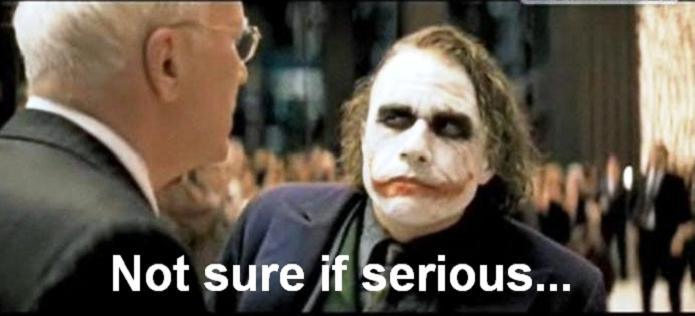
You can read some of the comments from people who vehemently disagree with Chuck. As usual when someone suggests a bit more self-criticism, there have been cries and shouts of, “YOU’RE TRAMPLING ON OUR FREEDOM!” One person said that mediocrity and half-assed books should be celebrated and then, in the same post, said that no one is suggesting that self-published books shouldn’t be the best they can be.

joker-not-sure-if-serious

Yeah, I know. I was confused, too.

Here is a fact about self-publishing: it has a terrible reputation. Fairly recently I had a conversation with someone who said that if it’s not good enough to be accepted by a publisher, it’s not good enough to be published, period. Yes, that is a very ignorant way of thinking, but it’s also, unfortunately, not uncommon.

And this race-to-the-bottom, anything goes, “it’s okay if your book looks like shit” mentality does not help. It only encourages the thinking among the general public that self-publishing is a toilet. The fact that a site like Lousy Book Covers even exists is not encouraging.

Is it true that all self-published books are crap that no self-respecting publisher would ever touch? Absolutely not. Is it true that all traditionally-published books are staggering works of brilliance? Hell no. There are both self-published books that are far superior to traditionally-published books, and there are both self-published and traditionally-published books I wouldn’t deem good enough to throw in my fireplace (if I had a fireplace).

If you want to be taken seriously as a professional writer, then you need to start approaching your work with the mindset of a professional.

I’ve seen some retorts to this. Like “well people can browse free samples on Amazon and then they’ll know if a book is worth their time.” Say you need five pages before you decide whether or not a book is worth your money. So you read five pages of one book. It’s poorly edited (if edited at all), there are grammar and spelling mistakes that would cause your high school English teacher to smash the blackboard, and the formatting is sloppy. So you then go to another book. Same problem. And another. And another. Say you go through the first five pages of ten books and they’re all terrible. That’s fifty pages you’ve just read. Would you keep going or would you stop and jump over to the best-seller lists?

This isn’t just speculation—this is stuff I’ve heard from readers. There are a great many people who have sworn off self-published books because of problems like this.

Yes, you learn things over the course of a writing career. Yes, your first book will be much different from your tenth book, because you’ve learned a lot over that time. You learn more about characterization and description. You learn more about pacing and plotting. You learn more about marketing. But one thing you should not be learning as you go is, “wow, I guess Comic Sans is not a good font choice for a cover.” One thing you should not be learning as you go is, “huh, maybe it would have been a good idea to revise this before I published it.”

Here’s a little test you can do: go to your local bookstore or library and find a traditionally-published book that you think is terrible. Look at the cover. Flip through the pages. Regardless of the quality of the story, do you know what you will not find? You will not find an abundance of grammatical and spelling errors. You will not find poor formatting. You will not find Comic Sans anywhere on the cover. Regardless of the story inside, the product has a professional standard. That’s what I’m talking about—hold your book to that same standard.

Self-publishing is easier than ever. You could drink an entire bottle of tequila, bang out a few thousand words on your computer, and then upload the file to KDP without even looking twice at it. You could also spend your entire weekend sitting in your own feces because you don’t want to get up from the couch while binge-watching Breaking Bad on Netflix.

Or in other words, just because you can do something doesn’t mean you should do it.

The point of turning off your internal editor when writing your first draft is so you can just get it out there. But once that draft is finished, you have to turn that internal editor back on and let him go ape-shit on your manuscript. Then you should revise it and hand it over to someone else. And you should format it to a professional standard, regardless of if it’s an ebook or a print book. And then you should design a professionally-looking cover.

And yes, if you cannot do this, then you may have to pay someone. Don’t give me that crap about how “it’s too hard” or “I can’t afford it”—either buckle down and do the work, or save up until you can afford it.

There is no excuse for shoddy products. Self-publishing is great, it’s opened a lot of doors for me that would have otherwise remained closed. If you want your work to be taken seriously, then you have to take it seriously yourself. If you want to be treated like a professional, then act like a professional.

If that’s too much to ask, then please go somewhere else. Because you’re only hurting the rest of us.


EDIT: This post has recently gotten some new traffic. And since I’ve already had to deal with one person who evidently thought it would be more fun to simply skim the post and then call me to task for things I never even said (all while ironically badmouthing me for making false assumptions), I’m going to lay a new ground rule: comments are moderated. I don’t put up with any bullshit here. If you’re not going to play nice, then your comments will be marked as spam. Simple as that.

Fallen

Self-Publishing: How To Do It Properly and Affordably

FallenLately, I’ve been spending a bit of time on LinkedIn, connecting with other writers. Most of these writers are self-published through services like CreateSpace, Lulu, Lightning Source, etc. A few, however, are interested in publishing and many of them have asked about some of the vanity publishers.

First off, no matter what you do, make sure you check out Preditors & Editors. The design isn’t pretty, but it’s got very useful information on scams.

Second, be realistic. Yes, there are self-publishing success stories like E.L. James and Fifty Shades of Grey, but these are more often than not the exception to the rule. It is true that authors who use a print-on-demand service like those mentioned above will get a larger share of the royalties than authors who go through traditional publishers. But your best chances of making money off your book are still through the traditional publishing market. That’s where you’ll get the most exposure, that’s where you’re likely to get more professional reviews, plus you also get an advance on it. And bookstores are far more likely to stock it than with your POD book.

Yes, it sucks. But that’s the reality. So try to find an agent and have them try to find a publisher. Maybe it’ll work, maybe it won’t. I self-publish, obviously, but if an agent called me up one day and said, “some big publisher wants to pay you a lot of money to let them publish your book,” I’d jump out of this self-publishing thing so fast, there’d be a cartoon cloud of dust where I was standing.

So don’t believe the hype. Tobias Buckell booksplained this, and it inspired a post by Chuck Wendig. Both are well worth reading and both will explain this better than I can. So I’ll just focus on what I know, which is self-publishing.

Let’s say you tried the agent route and it didn’t work. I did and it didn’t work for me, so there’s nothing wrong with that. I might try again in the future, but for now, I’m okay with where I’m at. And let’s assume you know the realities of the self-publishing market (if you don’t, read both Buckell and Wendig’s posts, then come back). With all that you know, you’ve still decided to go the self-publishing route.

Be careful.

Scammers love aspiring writers. Many of them have no clue what they’re getting into. I know I didn’t and I know I almost got sucked into scams by the likes of PublishAmerica or AuthorHouse. Fortunately, I checked up on them and tried to tell myself all the bad press wasn’t true. But I realized the truth before I went with any of those outfits.

Self-publishing can be a minefield to navigate. You’ve got tons of scams, predatory agents and editors, not to mention the process of actually creating a book. It’s unfortunately not as simple as uploading a Word document (well it is and it isn’t, but we’ll get to that in a moment).

If you go to one of the services to print your book, the technical specifications may leave you confused. Trim size? Bleed? Why is my book bleeding? What the hell is DPI? This may make you tempted to look at some of those vanity publishers that charge upfront fees of hundreds of dollars in exchange for handling that technical stuff. Don’t get sucked in there. And don’t jump onto the professional services the POD outfits offer. Not yet, at least.

My personal recommendation is CreateSpace. They’ve worked great for me, there are no upfront fees and you automatically end up in European and American Amazon stores. For expanded distribution, which puts you just about everywhere, it costs $25 per title. You also have to pay for one proof copy of your book to review, so CreateSpace will cost you under $30.

Before you even get to that point, you can download their Word template and test it out. The support forums are very helpful and you should be able to manage this without too much trouble. I personally use InDesign, and it was a very big learning curve (those first few books were a nightmare to format). But now I’ve figured it out and got it down to a science.

Cover design is trickier. If you’re not an artist, if you don’t know how to use Photoshop or Illustrator, I suggest you try CreateSpace’s free cover creator, you find someone who can design it for you, or you learn what the hell you need to do. But know your limitations—you don’t want to end up on Lousy Book Covers. If money is an issue and you don’t know what you’re doing, just use the cover creator. Discover if any of your friends are artists and if they can help you out. I’ve done this. Or hit up deviantART. Check out the artists on there, find some you like, and approach them with an offer. They may say yes, they may say no, but you won’t know until you try. “But I can’t afford it” isn’t really an option—I know your teachers told you to never judge a book by its cover, but this happens all the time and you know you’ve done it, too.

Just ask yourself: if you saw two books in the same genre, written by two authors you’ve never heard of, and one had an awful cover while the other had a great one, which book would you choose? The type of cover you put on your book matters. A cover that looks professionally designed and looks like a lot of effort was put into it shows that this is a person who cares about how they’re perceived. A cover of badly Photoshopped clipart (or worse, MS Painted, and yes, they do exist) with Comic Sans gives the impression that you’re a lazy, sloppy writer who shouldn’t be paid any attention to.

Get a good cover or hire someone who can make one for you. Don’t whine about how you can’t afford it—I was a broke college graduate working a part-time job, living with my parents and with around $150 in my checking account in a good month and I still managed to put together a cover that didn’t look like something I wiped my ass with. Necessity is the mother of invention, so you learn what you need to do to make a good cover, you save up so you can hire someone to do it for you, or you make a lot of friends with a lot of artists. Don’t let your rush to publish your book overshadow the need to do it right.

Also, find an editor. Join writing groups, pay attention to the people who know what they’re doing, and help each other out. My partners-in-crime over at PulpWork Press do this, editing each other’s books and it really helps a lot (special mention to Joel Jenkins as that man is a pro at editing).

The point here is that you should learn how much you can do on your own before you even consider opening your wallet to fork over cash to these services. One that was recently brought to my attention charged $500 for their basic publishing package—that included editing, formatting, cover design, print and distribution. Now, that’s not too bad a deal. If you used CreateSpace’s professional formatting, editing and cover design services, it would cost you a lot more than this place, called MyBookOrders.

But after the first year, they also want to charge an additional $200 per year to keep your book in print. $200! Now maybe that’s no big deal to you, but it would be for me. I crunched the numbers. Publishing through CreateSpace and selecting expanded distribution cost me under $200 for all six books. If I were to use MyBookOrders, I would have paid under $7000 to date, plus an additional $1200 each successive year from this point on. And if I wanted to publish more books, that’s another $500 + annual payments of $200.

So see what you can do on your own and save yourself hundreds or potentially thousands of dollars. Because despite what the hypesters say, the odds are you won’t make enough off your writing to support such a high overhead.