Knowing when to rewrite

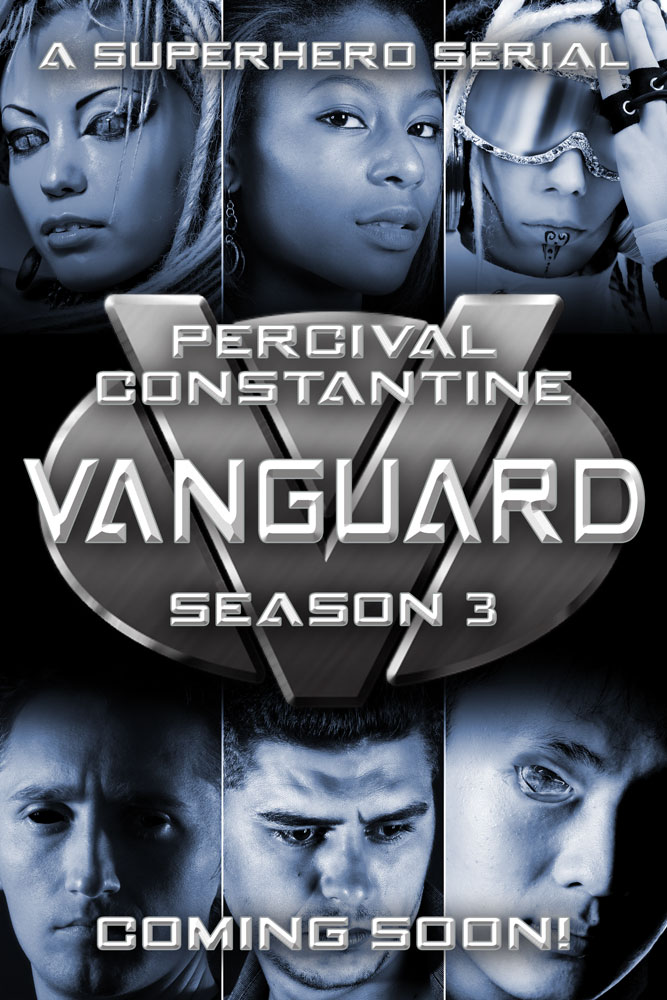
vanguard-s03-promoLast week, I came very close to finishing Vanguard #14. In fact, I was less than a thousand words from the finish line. I’m already behind schedule on completion of season three, thanks in part to some unexpected computer repairs.

But still, I realized what the problem was. It wasn’t the stress of trying to meet the deadlines that was causing me to struggle. Instead, the problem was that the story just wasn’t right. At least not in the way I was telling it.

Originally, when I was mapping out the third season, episodes #11-13 and #15 came very easily. But #14 felt like empty space. I needed another episode to get to the usual standard of five episodes per season, I just couldn’t find out what the problem was.

And then I realized—the problem was I kept thinking that the finale would be a typical finale, so it would be able to fit into a single episode.

Now I know how wrong I was. The season three finale will be a massive turning point for the series. And once I saw that, I realized that it’s actually supposed to be a two-part episode.

So over the weekend, I went over what I had already written. I found out that about a quarter of what I’d written could be salvaged and used in the new episode. And then I remapped the episode and started writing it all over today.

And to my surprise, it works so much better. The previous draft felt more like filler than an actual episode. This now feels like it fits in so much better. Sometimes you have to take stock of what you’re doing and even if it means more work or missing deadlines, do what’s best for the story.

I have a lot more time on my hands this month, so the hope is I can double my daily word count goals. If all goes well, I’ll still be able to get Vanguard Season Three on schedule for release beginning in the middle of March.

And in case you’re wondering about The Complete Second Season? Check back next week.

Make a writing schedule

schedule_clipartAnswer the following questions:

  1. When is the deadline for your current writing project?
  2. What is your next project going to be and when will it be due?
  3. When will your next book be published?

If you can’t rattle off the answers to these questions right away or if you don’t have the answers written down somewhere easily accessible, then we’ve got a problem.

As much as you might hate them, the truth is that we need deadlines. Humans love to procrastinate. If we don’t have regular deadlines, then we think of projects as being something for Future You to worry about.

Think back to when you were in school. Could be college, could be high school, whatever. Ever have a homework assignment given to you before a long weekend? When did you finish it? When you first got home? Or the night before school started up after the break?

If you’re like I was, you probably waited until the night before.

Now think back to school again. Did you ever have a big project that had frequent checkpoints that had to be met? What I mean is that the whole project was due at the end of the semester. But there were other aspects your teacher wanted you to turn in earlier. So maybe a few weeks into the semester, you had to have a thesis in mind for your teacher to approve. Then a few weeks after that, you had to have a list of sources to use. A few weeks after that, you needed an outline. A few weeks after that you had to show a rough draft. And so on.

Even though those multiple deadlines may have been annoying, I bet they made that project a lot easier than doing everything in the last week of the semester, didn’t they?

Writing isn’t any different. If you say, “I’ll write this book in three months,” then that sounds great. But three months is a long time. Very easy to procrastinate. It’s a lot harder to procrastinate when you say, “I have to write 2000 words every day.” Now that deadline is a lot closer.

And if you don’t have a release schedule for your books, then you need to sit down and make one up right now. If you say, “I’ll just wait to see what I feel like writing when the time comes,” then that makes it a lot easier to get distracted by other projects. Or to just decide you aren’t going to write at all.

I’ve got my schedule mapped out pretty solidly for the next year or more. I just finished Spear of Destiny, the fourth Myth Hunter novella. Now I’m working on the fourth Luther Cross story, which shouldn’t take me more than a week or so. Then the fourth Infernum novella. Then the third season of Vanguard.

And so on. I’ve got this routine mapped out until I complete the fifth and final Infernum novella, at which point I’ll decide on which of my series ideas I want to tackle next.

The point here is that the schedule helps me keep things in perspective. I’ve found that as I started writing more, I get an influx of ideas. In the year since I started writing daily, I haven’t had writer’s block. And that’s because when you’ve got deadlines, you don’t have the benefit of writer’s block.

So try this. Make a schedule. Take out a piece of paper right this instant (or open up your word processor of choice) and make a list of each project you want to work on. Don’t stop until you run out of projects. Write down every project. If you don’t have a title for the book, then just write a brief descriptor or a series title.

For example, on my list, I have one project just titled “giant robot squad.” That’s not a title, but it’s a quick descriptor of something I had an idea for that I want to do in the future.

Got your list finished? Good, now prioritize. Look at the ones that either have to be completed first or that you’re really passionate about at the moment. Don’t worry, this isn’t set in stone. No one’s going to make sure you adhere to this, it’s just a starting point.

If you have a series in progress (or multiple series), that should be the priority. By that I don’t mean it needs to be the only thing you work on, but you should figure out a way to make it consistent. When I made my list, I had four series in progress: The Myth Hunter, Infernum, Vanguard, and Luther Cross. Now as Luther Cross is through a publisher and has a quarterly release schedule, I don’t have to worry about that so much. Each installment is only 10,000 words and I can knock that out in a week, easy. So that goes further down the list of priorities.

The others, though, were a different story. I had The Myth Hunter and Infernum, both novella series. And I had Vanguard, a serial. So I decided the best thing to do was alternate between them.That way, I’m keeping them consistent for the readers, and also consistent in my mind.

When I made up this schedule, I was only writing 1,000 words per day. I’ve since doubled that. So in theory, I can probably add in some more projects. For example, Spear of Destiny is due to be completed this week, but the release date isn’t until mid-late December. I’ll have the book ready to go long before that date. Still, best to get comfortable in a routine before changing it up.

What does that mean for those other projects? There’s about seven of them in total. Well, for now, I just make a note of them and move on. I know, for example, that Dante, the planned fifth Infernum book, will be the final one in that series. So once that’s done, I’ll look at the other ideas I have and see which one I’m most passionate about (at the moment I believe I have it narrowed down to two, but that could change).

This kind of schedule, as I said, isn’t set in stone. But it acts like a kind of roadmap and helps me keep my priorities straight. If you haven’t done it, it’s worth trying.
Writing Fast

images_increasing-productivityStephen King recently wrote an opinion piece for The New York Times entitled “Can A Novelist Be Too Productive?” In it, he addresses the myth by many in the literary community that being a prolific writer equals being a bad writer.

This is one of those myths that just won’t die and I have no idea why it continues to be perpetuated. Think for a minute about the other arts. A person who wants to be a painter is encouraged to paint a lot. A person who wants to be a musician is encouraged to practice every day. But a person who wants to be a writer is told by the literary world that, “it’s quality, not quantity.”

Which is true in a way. Quality is more important than quantity, but like King says in his article, “No one in his or her right mind would argue that quantity guarantees quality, but to suggest that quantity never produces quality strikes me as snobbish, inane and demonstrably untrue.”

When I say it takes me less than a month to write a novella, some people will look at me in horror. Okay, but think about what that entails. Let’s just break down the numbers here. My novellas are 30,000 words and I write 2,000 words a day. 30000 ÷ 2000 = 15. That means if I write 2,000 words a day (and some days it’s usually around 2,500 or more) and if I write five days a week (sometimes six), I can have a novella finished in less than a month.

I think part of the problem is that some like to look at writing as this mystical, esoteric activity where you summon in the muse to work through you or some such bullshit. And it’s nonsense. Writing is just like any other activity—the more you do it, the better and faster you’ll get.

I think there are two things that inspire the mentality that prolific writing is bad. The first is the realities of the traditional publishing industry. It can take a year or more before a novel goes from the author to the bookshelf. But of course this is now being challenged by indie publishing where authors are showing they can put out several well-written, high-quality books within a single year.

The second is just pure, old fashioned snobbery tinged with jealousy. “Look at those prolific writers over there. Clearly they’re only able to write so many words because they don’t care about the quality of those words. I’m a real author, I think carefully and craft my sentences with the utmost care.” Bullshit. I’ve known many “writers” of this kind and I use the scare-quotes because they’re usually the kind of people who spend more time talking about writing than actually writing.

Writing is the only artform there this myth that practice is bad is shoved down the throats of newcomers. It’s why you have creative writing students who spend years tinkering with one novel that will never be finished. I’m a firm believer that you’ll learn a whole lot more about writing if you finish that first book, put it in a drawer for a few months, and then start working on the next.

Writing productivity

images_increasing-productivityProductivity is something I struggle with. Pretty much all my life, I’ve been a procrastinator. In high school, I did a lot of my homework assignments in homeroom the period before I had to turn them in. In college, I would get a month to read a book and put it off until the week before it had to be finished. I would write all my papers the night before they were due. When I was single, I wouldn’t do the dishes or the wash until I ran out of clean plates and clothes.

And unfortunately, that’s also true with writing fiction. Even when I had a deadline to finish a book or a story, I would put it off. It’s why for the first seven years of my publishing career, I would only put out one book a year. I’m trying to change that and so far, I’ve managed to put out monthly releases, and I have monthly releases scheduled for the rest of the year. At the time I’m writing this, I’ve already got content ready to go up to November.

So I’ve found little ways to increase my productivity. Before I would write whenever I felt like it. Now, I make time for writing and I try to do at least an hour of work Monday through Friday. Weekends can sometimes be really difficult because my day job schedule on weekends is all over the place (although if I do have time on the weekends, I will write).

Something else I’ve done is changed the time of day I write. I used to write at night before bed. But when I examined this, it proved problematic. When putting off writing until the night, I would often get too tired and not want to do anything other than watch Netflix and sip some scotch. So now I make sure to do it as close to the morning as possible. As long as I write before 5 in the afternoon, I’m good. If that clock hits 5, though, it’s a lot harder for me to get started.

Another thing is outlining. I could talk about this more at another point though, so I won’t go into any detail here. Suffice to say, outlining has greatly helped me boost my writing output.

I also lowered my word count target. Before my target was 2000 words but there were a lot of times when I would fall short of that. And when I failed to hit that goal, I was down on myself and it would make it harder to write the next day. And then that would make me feel bad for the next day it came to write and the effect just kept compounding. So I said, “screw it, I’m shooting for 1000 words.” And it worked. 1K Per Day was my motto and I managed to hit it almost every time. Setting a deadline also makes it harder to skip days. I give myself a bit of a buffer here because shit happens—if I think it will take me two weeks to finish a project, I’ll set a deadline for two and a half weeks or so.

I block out an hour for my writing time and I use the Pomodoro Method. How the Pomodoro Method works is you set a timer for twenty-five minutes. Once that time is up, you take a five-minute break. At the end of the fourth twenty-five minute work session, you take a thirty-minute break. But like I said, I only do it for an hour and I found it helps. During that twenty-five minutes, I also use a program called Anti-Social to block social media for that time. 1000-1500 words is usually what I average in this hour.

But the other day I decided something different. I write in Scrivener and there’s a Project Targets window that you can bring up with a hotkey. Every time I would write, I would keep that Project Targets window open. But the other day, I decided to close it. By the end of that first twenty-five minute session, I had written over 900 words. I kept the window opened in the second session and only managed about 500 words. Today I closed the Project Targets window and kept it closed for the entire hour. I hit the 1000-word mark in the first session and by the end of the second session, I had passed 2000 words.

Having that Project Targets window open kept tripping me up. I’d see my progress bar fill up and subconsciously go slower or faster depending on how close I was to the goal. But turning it off and writing invisibly I didn’t even realize how little time it took to break 1000 words.

The take-away from this post is keep examining your writing processes. What works now may not work later. And what you think is working might be able to work better if you tweak it a little.

Does writing speed affect the quality of your work?

writers-blockI’ve seen a few people lately push the idea that the quality of writing is all based on the speed at which you write. Specifically that the longer it takes you to finish a book, the higher quality it is.

This is a silly bit of nonsense that I think came about through the traditional publishing schedule, where it would take a long time for a book to go from the writer’s hands to the bookstore. And it’s a myth that’s spread all throughout literary circles, that if you write fast, then somehow you’re only writing trash.

Of course it’s pretty ridiculous because there are so many variables that go into how long it takes to complete a novel. If someone writes a novel a year and another person writes a novel a month, there are a lot of things to look at. How many days a week are they writing? How many hours per day? How many words per hour? Do they have a schedule or do they just write whenever they feel like it? Are they working from an outline or not?

Use some simple math to break it down. Let’s say you can average about 1,000 words an hour, which isn’t that uncommon. That means if you’re writing a 90,000-word novel, it will take you ninety hours to produce a first draft. If you write to my schedule, which is an hour a day, five days a week, that means it will take you around four or five months to finish a novel.

It’s not Dean Wesley Smith’s pulp-speed fast, but it’s also less than half the time that the myth says it should take to write a novel. And what if I wrote for two hours a day and I wrote seven days a week? Now we’re down to around six weeks.

In fact, if you’re to break down the numbers, to spend a year writing a book means writing less than 250 words a day, seven days a week. To give you an idea of how long it takes to write 250 words, at this point this blog entry is at around 350 words and it took me about ten minutes to write this much.

Writing may be the only profession where being less productive is considered to be a mark of higher quality. Sure, there are times when you can struggle to produce 250 words a day. But if the whole novel is a struggle like that, then maybe you just don’t want to write it.

Now yes, some people may write slower than others. And some people may only be able to write in fifteen-minute increments each day. And that’s fine. But don’t ever disparage people who write fast simply because they write fast.

If it takes you a year to finish a novel, great. If it takes you a month to finish one, that’s great, too. The amount of time it took you to finish that book shouldn’t even be factored into whether or not it’s a quality book.

And it should also be noted that there are quality works of literature that were written in a short amount of time. William Faulkner’s As I Lay Dying? Written in six weeks. Anthony Burgess’ A Clockwork Orange Written in three weeks. Robert Louis Stevenson’s The Strange Case of Dr. Jekyll and Mr. Hyde? Written in six days.

Be comfortable with your writing speed and never ever judge another writer based on theirs.