Goodbye 2016

2016 is finally at an end.

Man, this has been a pretty awful year, hasn’t it? From the deaths of beloved celebrities to the election of quite possibly the most unqualified, inexperienced, ill-tempered, idiotic President in American history.

And, of course, there was Batman v. Superman, which we’re better off just forgetting.

That being said, the year still had some good things for me. For starters, I got married this year. And two, this has so far been my most profitable year as an author. My sales have really gone up a lot this year. Still not enough to make a full-time living off my writing, but it’s getting to the point where the earnings are adding up.

It’s also a year of endings. I closed the book on all the series I was publishing on my own—The Myth Hunter, Infernum, and Vanguard have all seen the release of the final books in the series. Why did I choose to end all my existing series? In the case of Infernum, I’d always planned for that series to be finite.

As for The Myth Hunter and Vanguard, that’s a different story. I had hoped to continue publishing more books in both series. But unfortunately, sales and reviews just weren’t high enough to justify continuing with those series. If people who enjoyed those books didn’t review them, then that’s why there won’t be any other books. Publishing is a tough racket and I can only keep up the projects that are turning a profit.

And now I’m setting the stage for a lot of new stuff in 2017.

That kicks off in January with the launch of Fallen Idol, the first book in my new mystery series, the Nakamura Detective Agency, set in Osaka and featuring Kyoko Nakamura who first appeared in a story in The Dame Did It. I’ve seen some advance reviews for the book already and they’ve been very positive, so I’m hoping this book will prove to be my most successful launch yet.

The second book in the series, Murder Walk, is close to being finished.

I’ve also got some other stuff lined up for 2017. There will be more Luther Cross stuff, so if you’ve been waiting for that, just be patient a little bit longer. And I’m working on some more superhero stuff with some pretty impressive people. Not Vanguard, but something else. But I can’t say anything more on that yet.

Here’s hoping 2017 proves to be a better year.

How I designed new covers for my books

Vanguard-FB
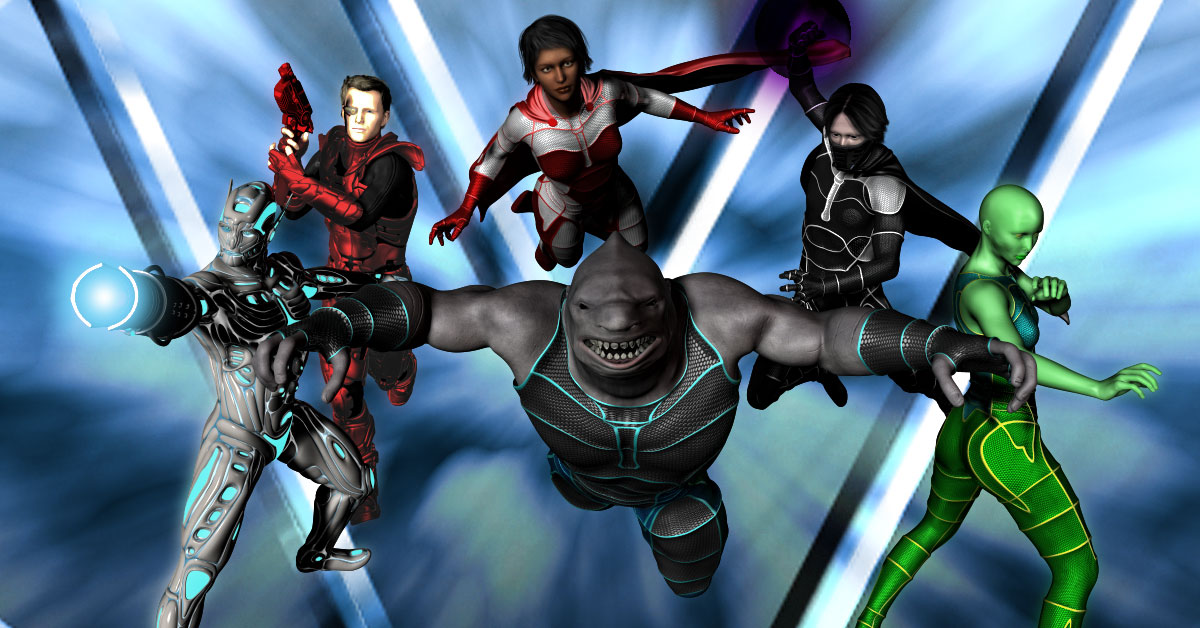
You may have noticed some new covers appearing for the Vanguard series. I recently made the decision to update the covers. I wasn’t quite sure how to do it. The first iteration of Season 1 featured comic book-style artwork by Mat Nastos and though it looked excellent, I got a number of comments from readers saying that it confused them. Some thought it was a comic book instead of prose and were thrown off. So I realized I had to do something different.

I looked at the cover art used on other best-selling superhero books and noticed that it was much more real-world. Almost none of them had the comic book-style, but instead adopted more of an urban fantasy approach. So photo manipulation or painted cover seemed the way to go. But painted covers are very expensive and I unfortunately couldn’t afford them. That left photo manipulation, which I can do pretty well.

But them the problem is how do I handle that? With most of the other superhero books, it focuses on a single character, so much easier to do. Mine is a team book, so what to do there? Do I only focus on one character at the expense of all others? And what do I do for the less-human characters like Sharkskin and Zenith? How to properly convey them on the cover?

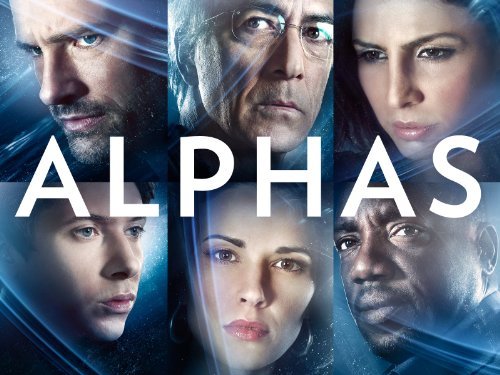
The answer came in the form of movie/TV posters. Alphas was a SyFy TV superhero series inspired by the X-Men. For their promotional posters, they chose to combine headshots of the main characters in order to make the poster. This seemed like something that was doable.alphas

Of course, I quickly realized I was at a disadvantage from Alphas. For one, I didn’t have the benefit of having the same lighting or background used for all the characters. And two, I didn’t have the benefit of being able to take multiple shots of the same models. Some models I was able to find more than one photo of, but others I couldn’t. So that meant I had to mix and match a bit, use other characters for successive covers.

That’s when I discovered DAZ Studio, a program used to create 3D artwork. The program is free to use and assets can be bought from their store. I played around with it for a while, ran through the tutorials, and then decided to buy some assets and use them in the creation of the new covers.

It took a lot of work. I was working at this almost from morning to night most days over the past two weeks. I’ll need to eventually invest in a more powerful computer to take full advantage of the program’s potential, but I’ve managed to do some impressive work so far. The background was created in Photoshop through a lot of trial and error.

Take a look and see for yourself.

[mybooktable series=”vanguard”]

Not bad, huh?

I’m really proud of these new covers and hope they lead to increased sales. I think they do a great job of conveying the tone of the books a whole lot more.

If you’re an author and you’re thinking of doing something similar, DAZ Studio can quickly get very expensive by buying assets. But I think it’s useful to learn how to do these different things, even if you’re only doing it for fun and not with the aim of creating your own covers.

Pay the Writer

shakespeare-got-to-get-paidRecently, a fellow New Pulp author posted on Facebook saying that he was asked by someone if he could make a living off his writing and he tried not to laugh. Another New Pulp author said that he has family members who are convinced he’s sitting on mountains of cash from his writing career and is lying when he says otherwise.

It’s an unfortunate truth that the vast majority of us writing in New Pulp still have to have day jobs, because we do not make enough off of our writing to live off of. Even if I were making enough money from my writing to live off of, I’d still need a day job for visa purposes (the joys of dealing with the Japanese immigration system).

So when my fellow writers tell me they aren’t making enough to live off of, I nod my head in sad agreement. But what gets me is that invariably there’s someone who will come along with the “true writers write for the joy of writing, not for the money.”

That kind of mentality drives me nuts.

I’m going to post this quote from an interview with Harlan Ellison:

They always want the writer to work for nothing. And the problem is there’s so goddamn many writers who have no idea that they’re supposed to be paid every time they do something. They do it for nothing!

I love writing. Novels, novellas, short stories, comics, film and TV scripts—I love it. If I made enough money off writing to live comfortably, then I’d quit my day job so fast, it’d make your head spin. But the notion that artists don’t or shouldn’t care about money, that they’re “sell-outs” if they use their art to earn a paycheck, is just flat-out nonsense and it’s something I’m sick and tired of hearing.

If a carpenter loves his job, would you expect him to build you a table for free? If a mechanic loves his job, would you expect him to fix your car for free? If a chef loves his job, would you expect him to cook your food for free?

Absolutely not. So why is it with the arts there’s always this idea of “well if you’re a true artist, you’ll do it because you love it, not because you want to get paid.”

Fuck. That.

If you think I’m not trying to build a career out of my writing, a career that pays the bills and provides for my family, then you are out of your freaking mind. If I didn’t want money for my writing, I would only write fanfiction. If I didn’t want money for my writing, I would post up all my stuff on Wattpad and not even bother with publication. If I didn’t want money for my writing, I wouldn’t pay for cover design.

Money isn’t the only reason why I write, but it absolutely is a factor. Anyone who sells their writing and says otherwise is flat-out lying. And it’s because we’ve built up this image in our culture of the noble starving artist, slaving away at his craft not because he’s trying to enrich his soul instead of his bankbook.

Kill the starving artist. Stop perpetuating that stereotype. Because it’s that stereotype that leads to people thinking they can exploit writers and artists by getting them to do work for free.

Writers may not be laying brick or performing life-saving operations or stopping violent crimes or anything like that. But it’s still work. It’s a valuable service that people need. Writers who make a living off their art aren’t whores or sell-outs—they’re smart.

Self-Publishers: Hold Yourselves to a Higher Standard

Last month, Chuck Wendig posted an entry on his terribleminds blog, entitled Self-Publishing Is Not The Minor Leagues. Like a lot of Chuck’s posts, it’s a great read. I’m just going to quote a small portion of it, because you should read the whole thing:

The attitude that pervades self-publishing is that it’s a good place to test your craft, to hone your work. We are reminded constantly that the cream floats to the top, that all the crappy self-publishing efforts have no effect on anything or anybody ever despite evidence to the contrary. The culture forgives and sometimes congratulates even the most meager of efforts because of how courageous someone is to take the plunge to publish their own work. The culture says, “Just click publish!” The culture criticizes the faults of traditional-publishing, but excuses (or celebrates) its own. And yet, sometime in the same breath, self-publishing gets painted as a path to traditional publishing, not as a path separate and scenic all its own.

The culture is full of contradictions.

One of the things that he talks about is that self-publishers should be more critical. The basic gist of it is this: if you think your writing is good enough to complete with traditional publishing, then you should make sure that it is presented as professionally as traditionally-published books.

That means revising. That means proofreading. That means editing (and that means getting someone else to edit it as well). That means formatting it properly. That means either designing a professional cover or hiring someone to do it for you.

Now to me, that all sounds pretty non-controversial, right?

Well apparently, I was wrong. Because it has set off a firebomb in the self-publishing community. The entry generated 217 comments, and not all of them were agreeing with Chuck. Over at kboards, there was a lot of pissing and moaning about it, so much that Chuck posted a follow-up. Then there was another post. And another.

You can read some of the comments from people who vehemently disagree with Chuck. As usual when someone suggests a bit more self-criticism, there have been cries and shouts of, “YOU’RE TRAMPLING ON OUR FREEDOM!” One person said that mediocrity and half-assed books should be celebrated and then, in the same post, said that no one is suggesting that self-published books shouldn’t be the best they can be.
joker-not-sure-if-serious

Yeah, I know. I was confused, too.

Here is a fact about self-publishing: it has a terrible reputation. Fairly recently I had a conversation with someone who said that if it’s not good enough to be accepted by a publisher, it’s not good enough to be published, period. Yes, that is a very ignorant way of thinking, but it’s also, unfortunately, not uncommon.

And this race-to-the-bottom, anything goes, “it’s okay if your book looks like shit” mentality does not help. It only encourages the thinking among the general public that self-publishing is a toilet. The fact that a site like Lousy Book Covers even exists is not encouraging.

Is it true that all self-published books are crap that no self-respecting publisher would ever touch? Absolutely not. Is it true that all traditionally-published books are staggering works of brilliance? Hell no. There are both self-published books that are far superior to traditionally-published books, and there are both self-published and traditionally-published books I wouldn’t deem good enough to throw in my fireplace (if I had a fireplace).

If you want to be taken seriously as a professional writer, then you need to start approaching your work with the mindset of a professional.

I’ve seen some retorts to this. Like “well people can browse free samples on Amazon and then they’ll know if a book is worth their time.” Say you need five pages before you decide whether or not a book is worth your money. So you read five pages of one book. It’s poorly edited (if edited at all), there are grammar and spelling mistakes that would cause your high school English teacher to smash the blackboard, and the formatting is sloppy. So you then go to another book. Same problem. And another. And another. Say you go through the first five pages of ten books and they’re all terrible. That’s fifty pages you’ve just read. Would you keep going or would you stop and jump over to the best-seller lists?

This isn’t just speculation—this is stuff I’ve heard from readers. There are a great many people who have sworn off self-published books because of problems like this.

Yes, you learn things over the course of a writing career. Yes, your first book will be much different from your tenth book, because you’ve learned a lot over that time. You learn more about characterization and description. You learn more about pacing and plotting. You learn more about marketing. But one thing you should not be learning as you go is, “wow, I guess Comic Sans is not a good font choice for a cover.” One thing you should not be learning as you go is, “huh, maybe it would have been a good idea to revise this before I published it.”

Here’s a little test you can do: go to your local bookstore or library and find a traditionally-published book that you think is terrible. Look at the cover. Flip through the pages. Regardless of the quality of the story, do you know what you will not find? You will not find an abundance of grammatical and spelling errors. You will not find poor formatting. You will not find Comic Sans anywhere on the cover. Regardless of the story inside, the product has a professional standard. That’s what I’m talking about—hold your book to that same standard.

Self-publishing is easier than ever. You could drink an entire bottle of tequila, bang out a few thousand words on your computer, and then upload the file to KDP without even looking twice at it. You could also spend your entire weekend sitting in your own feces because you don’t want to get up from the couch while binge-watching Breaking Bad on Netflix.

Or in other words, just because you can do something doesn’t mean you should do it.

The point of turning off your internal editor when writing your first draft is so you can just get it out there. But once that draft is finished, you have to turn that internal editor back on and let him go ape-shit on your manuscript. Then you should revise it and hand it over to someone else. And you should format it to a professional standard, regardless of if it’s an ebook or a print book. And then you should design a professionally-looking cover.

And yes, if you cannot do this, then you may have to pay someone. Don’t give me that crap about how “it’s too hard” or “I can’t afford it”—either buckle down and do the work, or save up until you can afford it.

There is no excuse for shoddy products. Self-publishing is great, it’s opened a lot of doors for me that would have otherwise remained closed. If you want your work to be taken seriously, then you have to take it seriously yourself. If you want to be treated like a professional, then act like a professional.

If that’s too much to ask, then please go somewhere else. Because you’re only hurting the rest of us.


EDIT: This post has recently gotten some new traffic. And since I’ve already had to deal with one person who evidently thought it would be more fun to simply skim the post and then call me to task for things I never even said (all while ironically badmouthing me for making false assumptions), I’m going to lay a new ground rule: comments are moderated. I don’t put up with any bullshit here. If you’re not going to play nice, then your comments will be marked as spam. Simple as that.

Japan Writers Conference

jwcNow that I’ve had some time, I wanted to talk a bit more about the Japan Writers Conference. I’m not sure how I stumbled upon their website back in the spring, but I was extremely excited once I did. Even more excited when I saw they were accepting proposals for presentations.

Immediately, I put together two presentations I had ideas for. One was on self-publishing and the other was on New Pulp, two subjects that I have a lot to talk about. I sent both proposals in and finally heard back from the organizers, John Gribble and Bern Mulvey, that my presentation on self-publishing was accepted. Then later, a few months before the conference, I received another email asking them if I could also prepare my New Pulp presentation, as they had an additional open slot.

I wasn’t sure what to expect from the conference, but as the date grew closer, I started to receive a lot more retweets from the JWC and also from JETWit. Already I was seeing some positive response to my participation in this conference.

When the actual weekend came, I hopped a flight from Kagoshima down to Okinawa, and man was that a whirlwind of a morning. My flight landed just before noon, my first presentation was scheduled for 2 pm, and I had to get from the airport in Naha to the Okinawa Christian University, roughly half an hour by car. I wasn’t sure what the buses were like that afternoon, so I decided to bite the bullet and rent a car. Traffic on the streets of Naha is pretty intense, but fortunately I managed to make it to the conference about twenty minutes before my presentation.

My first presentation was the one on New Pulp, and I was extremely nervous. You’d think after teaching classes of screaming kids for over five years that a roomful of calm adults who understood my native language would be no challenge. Sure enough, that’s what I thought, but damn was I ever nervous. I felt like a total amateur in that moment, and I was so convinced that everyone in the audience thought I was wasting their time. I was almost afraid to ask if there were any questions at the end of my presentation. I was worried the questions would be in the vein of, “this was completely pointless, can I get my thirty minutes back?” But quite the opposite, there were a number of questions, and they were all great. After the presentation was over, a number of people came up to me and there was much handing off of business cards and discussions to be had about writing.

The convention was only two days and this was the first time I’d met any of these people. Normally, when I’m thrust into a strange environment with people I don’t know, I’m really nervous and find it difficult to interact with other people. But there’s something about being around other writers, people who think like you, that helps alleviate that. I ended up making a number of great contacts while I was there, and having a lot of fun interactions with everyone.

The Japan Writers Conference is a great place for English writers in Japan, both established and aspiring, to find a place to network and communicate, and learn about ways to expand your influence and learn a lot about writing, making connections, and marketing.

If you’re a writer in Japan, there really isn’t a reason why you shouldn’t try to attend if you have the time. It’s well worth the trip. Visit the JWC website and Twitter feed to stay up to date on the announcement. Also check out Tokyo Tom Baker’s site for a video featuring various people (including me) who attended the JWC and what they had to say about it.

The Magic Spreadsheet

tumblr_lua11wav5b1qa3gglo1_500As I mentioned recently, my new job has a much longer commute, which gives me more time in the car and more time to listen to podcasts. Mostly I focus on comic book and film podcasts (special mention goes to my buddy Derrick Ferguson, co-host of Better in the Dark and of course, Tommy Hancock and his podcasts, Pro Se Presents: The Podcast and Pulped!), with a few political stuff thrown in for good measure (especially The Bugle).

I also listen to a few writing ones, and one of them I found that I like is Mur Lafferty’s show, I Should Be Writing. On it, she talked about the Magic Spreadsheet, created by Tony Pisculli. Here’s a link to the podcast she did with Tony about the Magic Spreadsheet and here you can find the Google+ community for the Magic Spreadsheet (as well as information on accessing it on Google Drive).

The Magic Spreadsheet works by encouraging you to keep a daily habit. Unlike most other writing outlets, the Magic Spreadsheet sets the bar pretty low to start off—250 words a day. Some may look at that and scoff. “250 words? That’s like a workout which consists of stretching!”

And it’s a good argument. Most people shoot for around 1000-2000 words a day, which is a good goal. When you’re working on a book that has to be tens of thousands of words long (or sometimes hundreds of thousands), 250 words a day doesn’t seem like it’ll get you any where.

But the goal isn’t necessarily quantity, it’s consistency. Yes, 250 words is easy to do, which is why this is an easy habit to get into. You can go over if you want (I frequently do), but what’s important is if you don’t write, you break the chain you’ve built up and you start off back at the beginning. Which may not matter to most people, but it gives you a sense of accomplishment and it’s something to keep you motivated.

Plus, let’s face it—we all have off days when we don’t feel like writing. But if all you have to do is put out 250 words, that’s not as daunting as 2000. Even if you’re not in the mood, it becomes something that you just have to get done. Like doing the dishes.  “Okay, I’m not in the mood, but this will only take about fifteen minutes and then I can get back to GTA5.”

And you might surprise yourself. Lately, I’ve had to work on Saturday mornings, but I had this past weekend off. Friday night, I was enjoying that I didn’t have to be anywhere the next day. I made a pizza, drank some beer, caught up on TV and read some comics. And then I looked at the clock and realized it was already getting close to 11 and I hadn’t written anything all day. I wasn’t feeling like it, but I told myself, “hey, 250 words and then I’m done.” So I sat at my computer and by the time I was done, I’d written about 1200 words.

That’s why something like this is good. Even if you feel like you’re not in the mood to write, that “it’s just 250 words” kick might be just what you need to get some momentum going.

So give it a try, you might find it to be very effective.

SoulQuest Cover Coming Along!

imageToday I’ve got something special for you. Brad Horton is hard at work on the cover. If you follow me on Twitter, you probably saw I posted a small headshot from Brad recently. Well, I woke up this morning to find the image you see to your left waiting for me in my inbox!

The hooded guy in the cape and wielding a sword is Zarim, the hero of SoulQuest and captain of the pirate airship, the Excalibur. By his side, as always, is Ekala, his first mate, a rough-and-tumble thief who doesn’t take crap off anyone.

These designs were originally created by artist Frank Jensen when he was working on SoulQuest as a comic book. I gave those designs to Brad as a reference to work from and told him to feel free to make any changes he felt were necessary. For the most part, he left the designs intact, but he made some subtle tweaks which I feel have really tightened up the look of the characters.

And this is just the preliminary stuff, people! Brad’s showed me the concept he has in mind for the cover, and it will take these awesome designs and make them extremely dynamic!

Once again, if you haven’t, run on over to Brad’s website and check out his amazing work. He’s also got some art for sale (my personal favorite is his Teenage Mutant Ninja Turtles piece)! We still don’t have an official launch date for SoulQuest just yet, because I want to give Brad all the time he needs to work his magic, but once we do, readers of this blog will be the first to know!
On other fronts, my latest story for Pro Se is inching closer and closer to completion. I’m at 5,239 words and the story has a rough goal of 8-10,000 words, so a little more than halfway done.

I announced this on Facebook and Twitter yesterday, but I wanted to mention it here as well: I’m looking into starting up a podcast specifically about pulp writers on writing pulp. I’ve gotten some interest so far, but if any pulp writers are reading this and would like to be a guest on the show, please drop me a line either through Facebook, Twitter, or this site’s contact page. In your message, let me know what aspect of writing pulp you’d be interested in discussing on the show (feel free to come up with a list of things, as I’d like to have recurring guests).

The Muddling Middle

Yesterday, I passed the 25K mark on SoulQuest, so I’ve hit the middle of my 50K goal. Crossing the 50% mark on a project is both exciting and scary and it’s when I enter what I like to call the Muddling Middle.

On every project, when I hit the 50% mark, there are two thoughts that occur to me. The first is, “wow, I’ve made it to the halfway point! This is great, I’m going to finish this thing!” And then the second thought is one of panic: “Wait…I’m only halfway through? All the work I’ve done so far and I basically have to do it all again?”

It’s more of a state of mind than anything else. The majority of my books are novellas of only around 30K, so I’d be close to the end if I were writing those. I entered the Muddling Middle on every one of those books when I reached 15K. When that didn’t happen with SoulQuest, I thought I was in the clear and on a great track…until I hit the Muddling Middle at 25K.

So like I said, it’s a state of mind. It’s even happened on short stories of only a few thousand words. It’s this whole idea of being so close to the finish, yet so far at the same time and also a sense of, “you’ve invested this much into it now, so there’s no turning back.”

And the Muddling Middle can really be the point where a project will either see fruition…or stop dead in its tracks. There have been a number of projects of mine that just stopped dead at the Muddling Middle because I didn’t know where to go. A big part of this had to do with the fact that in the past, I didn’t plan out as much. These days, I do much more planning and I’ve got everything mapped out with SoulQuest—I know where I want to go and what I want to do. I know one theory could be, “well obviously, it’s time to change the plan if you don’t like it,” except I do like the plan and I think it makes for a great story the way everything is connecting together.

So it’s more of a state of mind than anything else. Given how long I’ve lived with SoulQuest and how much effort I’ve put into it this far, I don’t think the Muddling Middle will be strong enough to cause me to drop it. Nonetheless, it’s a difficult stage to hit, and something I’m sure many writers struggle with.