Digital movies

Occasionally, I’ll check out the movies section on iTunes. Sometimes, they’ll have older movies discounted (they had a “Back to School” sale recently, which enabled me to pick up Easy A, Superbad, and The Substitute all pretty cheap — yes, I like The Substitute, shut up). Another reason I’ve been checking it lately, is that I’m hoping I was wrong about the September 25th release date for The Avengers and that I’ll go onto iTunes and find it waiting to be downloaded.

Anyway, I saw something interesting there when I went on today — Prometheus is now available in HD for $14.99. But for standard definition, it’s only available for pre-order. I was curious if this may have been a mistake, so I did a quick Google search and came up with this article from the Huffington Post – ‘Prometheus’ Digital Edition Available 3 Weeks Before DVD. Apparently, 20th Century Fox is releasing the HD version through digital channels almost a month early to boost digital sales. According to the article, even though digital sales are growing, they still only represent 4% of home video sales.

Offering movies through digital channels earlier than the stores is certainly a good way to try and boost sales. Just like how rental versions used to be (and in some cases still are) available before you could buy movies, probably so people who couldn’t wait to buy, say, The Avengers, would rent it first and then buy it when it comes out two weeks later (okay, I admit, I’d be one of those people and speaking of which, why is The Avengers not available to rent yet?).

But here’s something even more interesting, and, in my opinion at least, sheds some light on why digital sales aren’t as high:

The digital versions of Fox titles don’t come with all the extras included with Blu-ray copies, such as deleted scenes, and they are not as high-quality.

Wait…what? They don’t see the disconnect here?

Look, movie studios, here’s something you should know: there is a certain group of people that cares about having the best quality movies and having all the extras. There is also a group of people that would have more of a tendency to buy these movies digitally. I’ll bet that these two groups are actually one and the same.

And yet, the studios are confused as to why digital sales are so low.

It’s really not that hard to figure out. Basically, if you’re going to offer digital versions that lack the extras and are of a lower quality, the people you’re trying to get to buy digitally are more likely to wait for the full versions. This isn’t hard to figure out. If you offer the same HD quality as Blu-rays with all the features, I guarantee you’ll see an increase in digital sales.

Scrivener

Ahh, writing software. Now, I know what some of you are thinking. “Why waste money on something that promises to help you be a writer when all you need is something to write with and something to write about?”

It is true that when it comes to writing software, there is no program that will do your work for you. But there are programs out there that can be very helpful with formatting and organization. And they really vary in terms of quality, features, and price (ohh especially in price). I think most writers I know tend to use the basic writing program, like Microsoft Word or its open-source cousin, OpenOffice Writer. Both of these are good and I’ve used them myself.

If you’re a scriptwriter, be it comics, film, TV, plays, or radio, then there’s a program like Final Draft, which makes the formatting stuff a breeze. And just like Word has OpenOffice, Final Draft also has a free competitor, Celtx (although Celtx has limitations, like only being able to export into other files when connected to the Internet and I’ve had problems with it frequently crashing on my MacBook).

When it comes to structuring and outlining your story, you could use something like Word or OpenOffice (and both Celtx and I believe Final Draft also have some sort of options for this). There are also programs specifically for structuring stories, like Dramatica Pro. There’s also another program, which is free, called Xmind, a program that’s great for creating mind maps and layout charts. You could also use Excel or another spreadsheet program. There are tons of different ways to structure your story, Chuck Wendig lists twenty-five of them in this blog post (and if you haven’t yet, look around Wendig’s site or buy some of his books on writing — that’s a guy who knows how to give damn-good advice in an entertaining fashion).

A few months ago, I came across a program called Scrivener, made by Literature and Latte. It’s basically an all-purpose writing program that gives you tons of different options for organizing your writing projects. You can break your story into several different documents, each one a different chapter or section, you can have separate folders and files for different books, you can import images or other data from your research, and it’s all kept in one place. There are a bunch of basic templates Scrivener provides, but you can also create your own or download some (S.M. Worth has some great ones at his site).

I’ll give you an example as a pulp writer. For my series of books focusing on Elisa Hill, I have one project file. Under a section called Novels, I have a folder for The Myth Hunter and another for Dragon Kings of the Orient. Under the Research section, I have images of the weapons Elisa uses, notes on myths I’ve looked into that I have or might use in the future, and images of places that her adventures might lead her to. I’ve also got sections for characters and settings, where I can import some of those images as well as make notes on these places. So everything is organized here in one place, which makes it a lot easier.

I could also set up a template that follows different methods of story structure, if I so choose (the previously-mentioned Worth site has some templates that do this). Here’s another example, using Randy Ingermanson’s Snowflake Method. Or pulp writers could set up a template based on Lester Dent’s Pulp Paper Fiction Master Plot.

One thing that’s helpful for me is having the option to switch between different kinds of writing templates. For the most part, I learned how to write by first writing scripts and my writing is very dialogue-heavy. So sometimes, it might be easier for me to switch to dialogue-only and I could do this by switching easily over to a screenplay or comic mode and then later converting this into prose (without having to switch between Word and Final Draft, as I did in the past). Scrivener also autosaves constantly.

Although there is a free trial, Scrivener is not a free program. It costs $45 USD, so it’s obviously not as cheap as OpenOffice or Celtx or other free writing programs. But it’s also a lot cheaper than Microsoft Word, Final Draft or Dramatica Pro (which cost $100 on the cheap end). And personally, it seems to be able to do everything those programs can do, and then some. So $45, for me anyway, is a great deal. I like being able to have all the elements of my stories in one place as opposed to hunting around my apartment for loose notes or digging through my hard drive or various external drives, trying to remember where I saved some files that now I need.

As a guy who has a tendency to be horrible with organizing my stuff, it’s been very helpful for me. If you have the same problems as I do, you might want to check out the trial version. It’s a thirty-day trial, but I paid for a license after the first day.

The Myth Hunter Saga

Lost continents, ancient artifacts, strange creatures…for all these myths and legends, and more, there is an element of truth in them. Throughout the centuries, there have been myth hunters, people who seek out these legends. And they still exist to this day.

There are some, like Elisa Hill, who seek them out for knowledge and a better understanding of the world, as well as standing as a safeguard against those forces which would threaten humanity. But then there are mercenary myth hunters, out only for personal profit. And then there are those like the Order, which have a hidden agenda that bodes ill for all mankind.

Raised by myth hunters herself, Elisa grew up being prepared for this life, but in her early adulthood, she became a mercenary for hire. Eventually seeing the error of her ways, Elisa now works with her former mentor and family friend as well as other associates, including a Japanese changeling and a representative of a secret society.

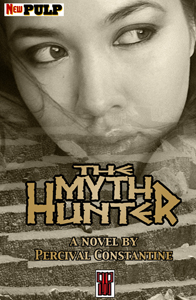
The first book in the series, The Myth Hunter, focuses on Elisa as she takes on a legend that plagued her parents for most of their careers—the lost continent of Lemuria. When new evidence hints to its location, Elisa and her allies travel from the waters of the Caribbean to the temples of India and the Ryukyu Islands of Japan in search of the lost continent. All the while, they’re in a race against time against the mysterious organization called the Order, who have hired Elisa’s former partner, mercenary Lucas Davalos. And also in the wind is another myth hunter, a vicious and cold-blooded assassin known only as Seth.

Buy in print from CreateSpace or buy a digital copy from Smashwords!

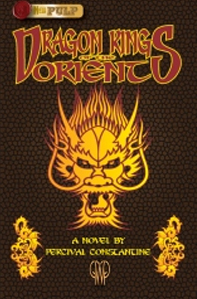
The second book, Dragon Kings of the Orient, sees Elisa accepting a job from Asami, the Japanese changeling she met in The Myth Hunter. This time around, Elisa travels to China, where Sun Wukong, the Monkey King, has been released from centuries of imprisonment, and he desires deadly retribution against the beings who trapped him—the four mythical Dragon Kings. But if the Dragon Kings die, all of Asia could be plunged into the oceans. Elisa and her allies have to face up against gods and demons in order to save the lives of billions!

Buy in print from CreateSpace or buy a digital copy from Smashwords!

Both books are also available from other online retailers, in both print and digital, such as Amazon, Barnes & Noble, and others.

Sentinels: When Strikes the Warlord

Have you ever had a book you weren’t sure you would like, but then once you started reading it, you couldn’t put it down?

That’s what happened with the first volume of Van Allen Plexico’s Sentinels series. I’ve known this author’s name for a very long time, had it come up many times in the writing circles I run in. But until now, I’d never read anything of his. And despite all the positive reviews about the Sentinels series, I was a bit gunshy.

You see, when it comes to original superheroes, it really is hit or miss with me. When superheroes first appeared. there was some hook to them. Superman was…well, Superman. He was the first, the big one. Batman was an evolution of characters like the Shadow, mixed with the burgeoning superheroes. When we came up to the Marvel heroes of the early 60s like the Fantastic Four, Spider-Man, Hulk, X-Men, etc., they all had these great hooks to set them apart.

But now, it’s 2012. If you’re a fan of superheroes, you’ve got over seventy years of stories to choose from and chances are you’ve read more than a few. So if you’re trying to get people with a new hook, you’ve got a pretty tall order. Most of the times, people think they’ve got a good hook, but it’s really not and the characters aren’t well developed.

Plexico, however, takes a different route. He knows that you know all these stories. He knows that there’s no hook you haven’t heard. And instead of trying to find the next hook, he does what writers of all other mediums do — he makes you care about the characters instead.

And really, that’s all that matters, isn’t it? How many times have you seen the basic hero legend retold over and over? How many times have you see the lone warrior story? If you show someone Yojimbo, A Fistful of Dollars, Brick, and then ask them to read Red Harvest, chances are they will get a very different experience each time, despite the fact that it’s basically the same story. And when it comes to superheroes, I doubt you could come up with a super power that hasn’t already been thought up. But does that matter? Are there many differences between the abilities of James Bond and Ethan Hunt and Jason Bourne? Not really, it’s the characters that make them different.

And it’s the same with superheroes. The Sentinels does not have a unique hook. There aren’t any reality TV shows or hidden conspiracies or trying to overthrow the existing order or anything like that.The Sentinels are superheroes who fight supervillains, pure and simple. But if you’re expecting a cheap, Avengers/Justice League knock-off. you will be pleasantly surprised. Because despite the superficial similarities with popular comic book heroes (and while they’re there, they are very much in passing — I doubt you’ll confuse Ultraa with Superman or Esra with Iron Man), what sets Plexico’s Sentinels apart from the numerous other books is that he focuses on his characters as characters, not as powersets. Even the Cavalier, who is set up from his first appearance as unlikeable, becomes someone you can relate to. And that’s a real testament to Plexico’s characterization skill. Even when Plexico hits the familiar story beats (and I won’t detail what they are because I don’t want to spoil them), there’s a sense of originality because of the great development he’s invested in these characters.

And because of these characters, I could not put this book down. When it comes to books, some take me longer to finish than others. On average, I take about a month or so to finish a book. I finished all 236 pages of this book in a week. Whenever I had some downtime, my first inclination was to read more of Sentinels, and I found myself thinking about it even when I didn’t have the time. It’s rare for a writer to inspire that kind of dedication in a first-time reader.

Needless to say, immediately after I finished this book, I bought the next in the series. And that’s a rare thing for me. Not long before this, I finished The Gunslinger, the first book in Stephen King’s Dark Tower series. But I have not yet bought the second book. Yet I already bought the next Sentinels book.

Van’s got me hooked. Fortunately, I’ve got quite a bit of material to catch up on.

Gunfighter Gothic Volume 0: Blood of the Universe

“Ignore her. She loves to throw all that time travel stuff in our ignorant nineteenth-century faces.”

That quote sums up what I love about Blood of the Universe, Volume 0 of Mark Bousquet’s Gunfighter Gothic series. It’s a snappy piece of writing and more importantly, it tells the readers that this is a world where the bizarre and unexplained is more or less an every day occurrence. Prevailing wisdom seems to be that when you enter a world like the one Bousquet’s created, you need to hold the reader’s hand, explain why all this weird stuff exists, or give you a character who’s more used to the real world.

I’m tired of that. As a reader, I have no problem being thrown into a world with vampires, zombies, werewolves, and time travel. I’ve been around the block a few times, don’t insult my intelligence by making me go through the whole “why do these pale men have such sharp teeth?” thing. 

Fortunately, Bousquet knows better. And he’s given us a tale in a genre that I absolutely love — the supernatural western. Combining these things together makes even the stale conventions of the separate western and supernatural genres feel fresh and new.

A little bit of info on the book’s story: in 1866, Jill is a well-to-do merchant’s daughter who was engaged to be married and ran off. By her side is her family’s servant and her sometime-lover, the Korean-American Hanna. Trying to start a new life, the girls get thrown right into trouble when they came across vampires, werewolves and a time traveling British spy on their train.

And then Bousquet does something really interesting. Jill, who one might assume is the central protagonist? She dies. Writing a book about a duo and killing off one of the partners in the opening pages? That takes balls. At first, I thought I must’ve read it wrong.

Jill’s death drives a large portion of the book, with Hanna now teaming up with two time travellers and an agent of President Grant. All of them are after something called the Universe Cutter, a knife with the power to resurrect the dead.

Hanna is a great character. I’m a sucker for female protagonists, especially in a traditionally male-dominated literary field like westerns and pulp. Not only is she a woman, but she’s a woman of Korean descent, which is great because minorities, particularly Asians, have gotten the real short end of the stick in pulp, dogged by extremely racist stereotypes. Bousquet seems pretty well-aware of this and he avoids any of the traditional clichés — Hanna is not a kung fu master, she’s not a dragon lady, she’s not a math whiz, and most importantly she doesn’t speak “rike dis.” She’s a very capable gunfighter, born and raised in America. Whenever someone comments on her country of origin, she always remarks that she’s American-born. Asian Americans and Asian immigrants weren’t exactly well-regarded during the late 1800s, so it’s definitely an interesting period for a character like Hanna.

Bousquet’s writing pops all throughout. The dialogue is real, even when in these unrealistic situations and the action moves at a brisk pace.

Unfortunately, for all the good in Blood of the Universe, there is a bit of bad — namely the technical aspect. In the Kindle edition, there were more than a few errors throughout, even some parts where Hanna was incorrectly named as Jill (and that was a cause for confusion more than once). These errors mostly amount to a distraction at worse, so don’t let that deter you.

Overall, we’ve got an impressive start to what I hope will be a long-running series.

Ron Fortier Reviews Dragon Kings of the Orient!

Just as he’s reviewed all my other New Pulp offerings, from Love & Bullets to Outlaw Blues, Ron Fortier has now kindly offered his thoughts on the latest installment in the fascinating and bizarre life of myth hunter Elisa Hill.

Here’s just a bit of what Ron had to say:

In this age of the popular urban fantasy genre, we seem to be inundated with more and more series featuring sparkly vampires, sexy witches and zombie private eyes.  Enough for this reader to yell, “Uncle!”  Contantine’s Dragon Kings of the Orient, packs more wall-to-wall action than any of ten of those other wimpy titles combined.  Being an American teacher in Japan, he has a unique, personal perspective on the Far East and its culture and uses it to great advantage in this rousing adventure tale. 
 
In the past, he has offered us other series but none of them can hold a candle to this one. Elisa Hill is a truly original, fun character and I hope we get to read many more of he exploits along with those of her truly remarkable supporting cast.  People, this book is a solid must read!

As always, Ron, thanks for the kind words! You can check out the rest of this review, as well as Ron’s other reviews, at Pulp Fiction Reviews. Once you’ve done that, why not swing on over to Airship 27, Ron’s own New Pulp publisher?

You can find both print and digital copies of Dragon Kings of the Orient available in any number of online booksellers. Check out the Novels link on the menu bar for more information!

The Dark Knight Rises

So here we are, the final big superhero movie of the summer (at least if you live outside Japan, but I’ve bitched enough about the four month wait for The Avengers). Not only does The Dark Knight Rises round out the summer trilogy of big superhero movies, but it also rounds out Nolan’s Batman trilogy that began with Batman Begins. When Batman next appears on the big screen, it will be a different actor under the cowl with a different director at the helm, and in a different universe (Warner Bros. has already confirmed they will reboot Batman following The Dark Knight Rises, and I’ll get to that later).

I am a bit sad to see this series end, especially Christian Bale’s role as Bruce Wayne/Batman. Ever since I saw American Psycho, I was telling anyone who’d listen that Bale is the perfect actor to play the Caped Crusader. So when he was actually cast, you can imagine how quickly I flipped. Three movies later, I’m still happy about this choice. There are certain actors who were just born to play certain characters — Christopher Reeve/Superman, Robert Downey Jr./Iron Man, Patrick Stewart/Professor X, and I added Christian Bale/Batman to that list seconds after Batman Begins.

Nolan and Bale brought Batman into the modern superhero cinematic family with Batman Begins and proved that even after the disastrous Batman & Robin, the Caped Crusader can still be a contender. And then Nolan raised the bar for superhero movies everywhere with The Dark Knight. Not only was it a good superhero movie, but The Dark Knight was a game-changer. Now, even the snootiest of film snobs was taking another look at superheroes. And The Dark Knight, in my opinion, didn’t really do anything that hadn’t been done in superhero films before — I think Hulk, X-Men, X2, Iron Man, and Batman Begins all did similar things as well — but the execution of it in The Dark Knight was just better (helped in no small part by Heath Ledger’s stunning performance as the Joker).

But enough on all that. This is supposed to be a review of The Dark Knight Rises so let’s get on that. Spoilers are after the jump.

Continue reading→

Don’t Blame Batman

During a midnight premiere of The Dark Knight Rises at a theater in Aurora, Colorado, twenty-four year-old James Holmes, dressed in tactical gear (including a bulletproof vest and a gas mask), entered a theater through an emergency exit, set off gas canisters, and opened fire on the crowd. He was armed with, among other weapons, an AR-15 assault rifle.

Since then, I’ve seen a number of comments. I’ve seen a reporter on ABC claim that Holmes may have been affiliated with the Tea Party and I’ve seen Breitbart.com claim Holmes is a registered Democrat. I’ve seen other people saying that if people had been armed in the theater, this wouldn’t have happened and more than a few have sworn that if they were in the theater with their gun, they would have stopped it.

These kinds of statements are nonsensical and serve no purpose. As of now, there is no evidence whatsoever that this was politically motivated, so let’s drop the politics. And the idea that a guy with a concealed handgun would stand up to someone in tactical gear and armed with assault weapons, in the middle of a crowded and dark movie theater with gas all over the place, and not only be successful but also manage to avoid hitting any innocent bystanders, is just beyond the pale. So spare us your Clint Eastwood hero fantasies, because they aren’t helping.

And, just like in the wakes of the Columbine and Virginia Tech tragedies, there’s another debate starting to bubble to the surface — is the media responsible? Specifically, is Batman responsible? Sean Higgins at The Washington Examiner cited the 1986 masterpiece The Dark Knight Returns as possible motivation. And then Ty Burr at The Boston Globe suggested it’s the “violent power fantasy” sold by Batman.

Higgins obviously didn’t pay too much attention to The Dark Knight Returns, specifically this part:

Despite using a gun in his early appearances, Batman has eschewed the use of firearms for decades. Of all the characters in fiction, I’m hard-pressed to think of one who is more anti-gun than Batman.

And Burr obviously didn’t pay much attention to this scene from Batman Begins:

Batman’s compassion

In Christopher Nolan’s series of films, Batman relies on non-lethal methods. He says he won’t be an executioner. So the idea that Batman influenced Holmes to commit this senseless act of terrorism is absolutely ridiculous.

And why would it be Batman? If this theory of causation is to be believed, wouldn’t the Rambo movies (especially following First Blood) have caused shootings? What about James Bond, who isn’t shy about using guns? What about Die Hard? Or The Punisher? If Holmes dressed up in a cape and swung from the ceiling, then we could make an argument about how he was influenced by Batman.

So either a psychopath modeled his terrorist behavior after a masked vigilante who despises guns and refuses to use lethal methods, or he chose to use the premiere of one of the most highly anticipated movies of the year for his violent debut because the crowds and the attention would be much larger. Which one seems more likely?

Higgins, Burr, and others like them are nothing more than opportunistic vultures. They should not be listened to.

My new theory on The Dark Knight Rises

There’s been a lot of speculation on The Dark Knight Rises. While it comes out this weekend in the States, here in Japan we’ll have to wait until next week to see it. I’m not too disappointed about that, because generally Japan tends to get movies a lot later than the rest of the world (we’ve still got another month before The Avengers comes out in theaters here, and yes, I’m still pissed about that). Ever since we started hearing about this movie, rumors were flying about what “The Legend Ends” tagline really means. The commonly-accepted theory (I’m not sure who first came up with it, but I first read about it on Cracked) is that Bruce Wayne will die but Batman will live on, potentially in the form of Joseph Gordon-Levitt’s character, John Blake, taking up the mantle.

One of the major hints to this is in Batman Begins when both Ducard/Ra’s al Ghul and Bruce talk about how a man can be destroyed, but a symbol — a legend — can live on. And in the trailers, Selina Kyle (Anne Hathaway) tells Batman (Christian Bale) that he’s given them everything. Batman responds with, “not everything, not yet.” That certainly lends credence to the theory.

But the more I think about it, the more I’m suspicious about this theory. It makes a whole lot of sense. In fact, it makes too much sense. It makes so much sense that it’s almost obvious. And Christopher Nolan is a crafty bastard.

What if, instead of dying, Batman rises with some help? As in, the form of a partner? Now here’s where people will chime in and say that Nolan specifically said Robin won’t appear because he doesn’t feel Robin is compatible with the world he’s created. And Bale has said if Robin appears, then Bale won’t be in that film.

Notice some clever wordplay here, though. Bale and Nolan have said that Robin won’t appear. Robin is just an identity, and one that’s been adopted by numerous characters in the history of DC Comics. Dick Grayson was the first and most-famous. Jason Todd was his successor, who was killed by the Joker. Then came Tim Drake, who was later succeeded by his girlfriend, Stephanie Brown. And Batman’s son, Damian Wayne, is the current Robin. In Frank Miller’s acclaimed graphic novel, The Dark Knight Returns, a girl named Carrie Kelly became Robin in a future where Batman comes out of retirement.

So Robin won’t appear, and here’s what leads me to my current theory. While Dick is famously known as Robin, that was only his first costumed identity. He’s also taken up the Batman mantle a few times (both in continuity stories and in alternate universe tales). But Dick has another identity — those who are familiar either with the Batman comics or The New Batman Adventures or the current Young Justice cartoons know that Dick Grayson eventually adopts the costumed identity of Nightwing.

Check out this image from The Dark Knight Rises trailer, when Blake draws a symbol in chalk:

In the trailer, this shot is accompanied by a clip where a kid asks Blake if Batman will come back and Blake says, “I don’t know.” Now, it seems at first glance that this is nothing more than a simplified version of Batman’s famous insignia.

But then I recently noticed this:


That’s Dick in his Nightwing identity. Pay close attention to the symbol on his chest. Now compare it to the above symbol from The Dark Knight Rises. The two seem pretty similar, don’t they?

The Dark Knight Rises takes place eight years after the events of The Dark Knight and Bruce has stopped being Batman. Maybe when Bane first appears, there is no Batman — and that leads Blake to adopting a costumed identity of his own, inspired by Batman. Perhaps “John Blake” is just a false identity Dick has assumed for reasons as-yet unknown. Maybe Dick is initially a plant by the League of Shadows (we know there will be connections to Batman Begins in this film) and that’s where the John Blake identity comes in. Maybe he sets the stage for Bane’s initial strike and, horrified at how he’s been misled, turns on Bane and the League and becomes Nightwing. He takes on Bane, gets defeated, and his defeat leads Bruce to picking up the Batman mantle again — the Dark Knight Rises once more. And this time around, he’s got back-up.

That’s just one theory. I could be way off-base, though.

NOTE: If you have seen the movie, please do me a favor and do not confirm nor deny any of this post! I want to find out for myself whether or not my theory proves accurate and as I said, I won’t get a chance to watch the movie until at least next weekend. As I mentioned in my review of The Avengers, I already had the mid-credits reveal spoiled by some asshole and I don’t want that to happen again. Once I’ve seen the movie, I will post my own review, which will discuss my theory once again.

Bane vs. Bain

Normally, I don’t talk politics on this blog. I do my best to keep my political views separate from my professional writing because I’m just a pulp fiction writer. I’m not trying to push my political views through my writing or to make any statements in my work about politics (if any such statements are made, it’s 100% unintentional). I just write action stories, period. And I avoid political statements because they really don’t need to be made, and I have no interest in alienating potential readers who might be interested in my stories but are turned off by my personal politics.

But sometimes, something comes along in the world of politics that’s just so ridiculous, it deserves to be commented on. So first, full disclosure: I’m Perry, I’m a liberal. And now, I’ll ask you a simple question:

What do these men have in common?

In case you’ve been living under a rock lately, the guy on the left is Bane, the villain from The Dark Knight Rises (played by actor Tom Hardy). The guy on the right is Mitt Romney, the presumptive Republican nominee for President. And the question, as you can see in the caption, is a simple one: what do these two men have in common?

If your answer was “absolutely nothing,” then you’d be correct. Congratulations on being a sane individual. But if you’re professional blowhard and successful human/swine hybrid Rush Limbaugh, you believe that The Dark Knight Rises is propaganda against Romney:

Do you know the name of the villain in this movie? Bane. The villain in the Dark Knight Rises is named Bane. B-A-N-E. What is the name of the venture capital firm that Romney ran, and around which there’s now this make-believe controversy? Bain…The movie has been in the works for a a long time, the release date’s been known, summer 2012 for a long time. Do you think that it is accidental, that the name of the really vicious, fire-breathing, four-eyed whatever-it-is villain in this movie is named Bain…This evil villain in the new Batman movie is named Bane. And there’s now discussion out there as to whether or not this was purposeful, and whether or not it will influence voters…It’s going to have a lot of people. This movie, the audience is going to be huge, lot of people are going to see the movie. And it’s a lot of brain-dead people, entertainment, the pop-culture crowd. And they’re going to hear Bane in the movie, and they are going to associate Bain, and the thought is that when they start paying attention to the campaign later in the year, and Obama, the Democrats keep talking about Bain, not Bain Capital, but Bain, Romney and Bain, that these people will think back to the Batman movie — “Oh yeah, I know who that is” That’s — there are some people who think it will work.

Source

So, to be clear, Limbaugh’s thesis is that The Dark Knight Rises uses a villain called Bane in order to create propaganda against Romney because of the ongoing story regarding his ties to his former company, Bain Capital (if you don’t know what the situation is with Bain Capital, feel free to research it yourself, I really have no desire to comment on it). This movie has, as Limbaugh himself admits, been in the works for a while. And it overlooks a number of crucial facts:

  • The term “bane” is defined as “a cause of great stress or annoyance” and an archaic meaning is “a thing that causes death.” That’s what the character was named after.
  • Bane was created by Chuck Dixon, Graham Nolan, and Dough Moench in 1993 for DC Comics’ “Knightfall” story running through the Batman books. Since then, he’s appeared in other media as well, including Batman: The Animated Series, Batman: Arkham Asylum and Batman: Arkham City video games, and, I’m sorry to remind you all, Batman & Robin, the film which almost killed the Batman franchise.
  • I can only theorize, but there seems to be a lot of social unrest and upheaval caused by Bane in Gotham, with his partner(?) Selina Kyle (Catwoman) telling Bruce Wayne that he and his kind have been lording over the masses for far too long. If you want to draw a political message, it seems more like Bruce/Batman represents the 1% and Bane represents the 99%. You’d think that’d be reason for conservatives to start claiming The Dark Knight Rises as a pro-conservative movie. After all…
  • In 2008, conservative commentators were hailing the previous film in this series, The Dark Knight, as justification of George W. Bush’s policies and tactics during the War on Terror. Both The Dark Knight and The Dark Knight Rises were directed by Christopher Nolan.
  • Both Chuck Dixon and Graham Nolan are lifelong conservatives. As Dixon said, “[Bane]’s far more akin to an Occupy Wall Street type if you’re looking to cast him politically. And if there ever was a Bruce Wayne running for the White House it would have to be Romney.”

In order for Limbaugh’s theory to make any sense, we have to assume that Barack Obama, Christopher Nolan, Chuck Dixon, Graham Nolan (zoinks, same last name, must be a connection!), and Doug Moench all conspired in 1993 to create a Batman villain named after Romney’s company in preparation to eventually make a movie that would smear Romney and prevent him from defeating Barack Obama in a second-term election (and both Dixon and G. Nolan would had to have betrayed their own political beliefs).

Or what’s more likely is that it’s simply coincidental and people should stop looking for political statements in a freaking Batman movie and just sit back and enjoy it.

These are the kinds of conspiracy theories that make other conspiracy theorists shake their head in embarrassment.