Writing Frustrations

I’m about halfway into the last of the short stories I’m presently committed to write for Pro Se. It’s coming along a bit slowly as I reach into the middle. But it got off to a rocky start. When it comes to these assignments I do for other people, and especially in a genre I’m not really familiar with, I go through a few different stages of progress.

First off, there’s the planning stage. At this point, I’m really excited about the project, and my hand can’t stop scribbling notes in my trusty writing notebook. I plot out a loose structure from the story—or at least loose in the sense that even if it is detailed, I don’t force myself to adhere to it. I treat it like Google Maps—they give me a route to take, but as I’m driving along, I may recognize another road that cuts down on the commute or I’ll take a detour in case I want to stop off at a store or something.

Next, comes the writing stage. At the beginning, this is the first part of the frustration. I just sit there staring at the blank screen, not sure what to write. I read through my notes over and over and over again, and I can’t get anything done. With this story, I actually wrote two separate introductory scenes that I quickly scrapped.

Then I start getting into the groove, the characters start speaking to me, and we’re off and running. But around the midpoint of the story, I start to slow down and I go back to reading my notes, thinking, “well what do I put in here?” This is another period of frustration.

But if I keep to the grindstone (and when you’re writing a story as an assignment for someone, you’ve got a deadline to meet, and that definitely helps), I push past this part.

Then by the time I hit the word count limit, I’m not quite finished with the story.

At this point, I’m at the middle stage. I haven’t done any writing for today just yet, and I’m typing up this blog entry as something of a warm-up. Lately I’ve been cranking out about a 1000 words a day on this tale, which is good, but today may be a bit rougher. For the Magic Spreadsheet, to keep the writing chain going, you only need to crank out 250 words a day, every day. Obviously I’m shooting for more than that, but it’s good to know that even if I’m having an off-day, all I have to do is throw out a few hundred words to keep pushing on.

As I mentioned in another post, as a consequence of my much longer commute, I’ve been catching up on a lot of podcasts. It’s made me want to get back into podcasting myself. I had a short-lived program about two years ago, but my co-host and I disagreed on the show’s format and we decided to stop doing it. I’ve also appeared on several other podcasts, including Pulped and The Book Cave and really enjoyed those experiences, so I’d like to podcast a bit more regularly. In particular, I’d be interested in doing one about writing, but don’t have a regular co-host (finding one is difficult when you live on the other side of the world) and I’m not so sure people would like to hear me ramble on solo for 30-60 minutes every week.

Buy in print, get a free digital copy!

Amazon has just unveiled Kindle MatchBook. With this program, if you buy a print book from Amazon and a digital version is also available, you get the digital version at a discounted price!

I’ve gone ahead and enrolled all my ebooks into this program. That means Chasing the Dragon, Love & Bullets, Outlaw Blues, The Myth Hunter and Dragon Kings of the Orient are all now part of Kindle Matchbook. The normal price for these ebooks is $2.99.

But, if you’ve bought any of these books in print form from Amazon, then you get the digital versions for the low, low price of free! I don’t believe in charging people twice for the same item just in a different format with no additional content, so if you already own these books in print format, there’s no reason why you shouldn’t also be able to own the digital versions!

And if you haven’t bought these books in either print or digital, then run on over to Amazon and pick them up today!

REMEMBER: This is only for books I wrote on my own which are also available in digital format. So Tales of the Rook isn’t eligible because that’s under the control of Pro Se Press and Fallen isn’t eligible because it’s not available in digital format.

Back to School

backtoschoolSeptember has brought about a return to school on two fronts for me. At the beginning of this month, I began my new day job. I’m still teaching English in public schools here in southern Kyushu, but now I’m working for a private company instead of the JET Program (which imposes a limit of five years). The other major difference is that before, I taught at elementary and junior high schools, whereas now I’m teaching at only elementary schools. I’ve also got a much longer commute, around forty minutes to an hour and a half depending on the school (I have a lot of schools to visit). The good thing with that is I’ve gotten a chance to catch up on a lot of podcasts, as well as discovered some others.

On that note, if you aren’t listening to Tommy Hancock’s excellent PULPED! and Pro Se Presents: The Podcast shows, then you need to jump over to iTunes right now and search for those. Every week, both are updated with Tommy speaking to a different New Pulp writer and they’re well worth a listen.

The other “back to school” front is I’ve begun the second semester of my online masters course at Southern New Hampshire University. The first semester was a difficult one. I took two classes with the assumption that I’d have plenty of time—after all, I was taking five classes a semester during my undergrad years, why couldn’t I be able to handle two? Famous last words, as those two classes took up a lot of my time and I was burning the candle at both ends. This semester I’ve only decided to take one class. Initially, I was enrolled in a Masters in English, but when registration time came around and I looked over the required classes, I realized they were pretty much identical to classes I took in my undergraduate years. Not wanting to just repeat myself, I changed my major slightly—I’m still going for a Masters in English, but now it’s more specific: a Masters in English and Creative Writing with a Screenwriting Concentration (man that’s a mouthful). Poetry doesn’t pose much of an interest to me (and I’m not very good at it) and while there’s no harm in improving my prose skills, screenwriting and film has always been one of my first loves, so I wanted to focus on that. This semester, I’m taking a class called Fiction Fundamentals and today’s the first day. I popped in on the message boards and introduced myself (as is customary at the beginning of these online classes), talked a little bit about myself, and was surprised to find someone who recognized me from my work with PulpWork Press! Always a nice feeling.

On the education front, last semester both of my final papers focused on pulp work. One of them was a linguistic analysis the language of Fleming’s Bond novels and how Fleming used that language to promote notions of British superiority. After a semester full of struggle and my professor getting really frustrated with me just not getting ig (although still disguising it with nearly endless patience), imagine my surprise when she sent me an email in response to my first draft and asked me to post it up on the class message board to serve as an example!

My other paper was comparing Edgar Rice Burroughs’ Tarzan to another jungle hero, Charles Saunders’ Mtimu, who made his debut in Black Pulp. As an editor for Pro Se, I’m entitled to digital comp copies of their entire library, so I emailed Tommy and asked him if I could get one of Black Pulp and explained why. Tommy was more than happy to provide me with a copy (and go pick up yours, it’s an excellent book). Once I finished the essay, I sent it to him and Tommy loved it to the point that he asked me if he could post it up on the Pro Se website as one of Pro Se’s Free Extras and I said sure, albeit with some trepidation. I hadn’t yet received a grade on it, nor feedback from my classmates, so the self-conscious part of me who has been out of college for about seven years kept telling me “this is crap, you don’t know what you’re doing.” But Tommy liked it and so I allowed him to post it up.

Nothing could prepare me for what would happen next. A few weeks ago, I received an email from Ron Fortier, who really needs no introduction (but go on over to Airship 27 if for some reason you do need one). Ron’s always an interesting guy with a story to tell (if you’ve ever heard him on any of the podcasts he’s appeared on, you know this, and he just did one for The Nocturne Travel Agency that you should listen to), and this was no exception. This time around, Ron told me about how he’d been trying to convince Charles Saunders for some time to write a jungle queen novel focused on the character of Lulama, who was at first an antagonist of sorts in the Mtimu story. Saunders gave it some thought, but once my essay was posted on Pro Se’s website, Ron took advantage of it and sent it to Charles. The essay apparently delighted Charles to the point that he decided to move ahead with the Lulama novel! You can read the full account on Airship 27’s press release. Needless to say, I was floored by this news. What turned out to be a simple essay (and writing about pulp in a positive light in an academic setting is a steep hill to climb) turned into something that served as inspiration for a great writer!

And yes, I got an A on the paper.

Things have now calmed down after I’ve moved into my new house and settled into my new job. I’ve managed to jump back on the writing horse. SoulQuest, my next novel, is close to print. My old friend and wonderful artist Brad Horton is handling the cover art this time, and from the concepts he’s shown me, this will probably be the best-looking book I’ve published to date.

After living with SoulQuest for far too long, I decided to recharge by doing some short story work. I’ve also finished two short stories for Pro Se, and I’m in the process of working on a third. I’m not sure if Tommy would like me to go into more specifics than that, so I’ll keep quiet about what those projects are until there’s a press release. I’ve also got another short story to work on for the 2013 PulpWork Christmas Special. This will be the first time I’ve participated in that anthology. I had to decline in the past because I was in the midst of other things and couldn’t get it ready in time. But this time, I had an idea for a great Christmas story. So rejoice, Myth Hunter fans, because this story will focus on Asami, Elisa Hill’s changeling partner!

Once I’m done with those stories, I can get back to my next novel project. I put it to the side for a while so I could recharge myself with these shorter projects. But now I’m chomping at the bit to get back to work on it. I won’t say much more about it than that. I’ve started using the Magic Spreadsheet to chart my progress, and you can find out more about that here.

That’s all for now. Hopefully with some more time, I’ll be able to post on here more frequently.

Japan Writers Conference 2013

As some of you know, I submitted a proposal to the Japan Writers Conference for their upcoming event this November in Okinawa. About a month ago, I was contacted by them and told that my presentation was accepted! For those of you in Japan, try to come on out to the Okinawa Christian University on November 2nd from 10 am until 5 pm and then again on November 3rd from 10 am until 3 pm. My presentation on self-publishing will be on November 3rd from 2-2:50 in Room #3! I’m really looking forward to this opportunity to meet and connect with other writers in Japan!

In addition to that, apologies for my lack of activity lately. I wish I could tell everyone it’s because I’ve been lying on the beach all summer, but the truth is I’ve been really busy. My previous day-job ended at the end of July, and so all summer (and for several months before), I’ve been looking for a new one. Luckily I found one, and am still able to stay in Kagoshima. I also had to find a new home, which required a lot of house-hunting, but that too has been settled and now I’ve moved into the new place and have everything unpacked and ready to go. I’ve also been really busy with these graduate-level courses I’ve started taking for my masters degree: the first two are winding down and this upcoming fall semester, I’ll only take one class.

On the writing front, some exciting things in the pipeline. I’ve just completed a short story for one of Pro Se Press’ anthologies, and I have two more in the works. One of those stories is at the halfway mark and the other I’ll jump right into as well. I’m not sure if Tommy Hancock will like me announcing which anthologies these three stories will appear in, so for now I’ll just have to keep quiet on that front. I’ve also got another short story, which if I can finish in time will turn up in the next PulpWork Christmas Special.

My seventh novel, SoulQuest, is done. The PDF for the book’s interior is laid out, and I’m just waiting on the cover art from the artist, which should be finished in September. If all goes well, the book will be ready to drop by October or November, with the ebook coming shortly after.

I’ve got a pretty good idea of what my next novel will be. For those waiting on another Infernum or Myth Hunter book, sorry to say but it won’t be one of those. Although I have not abandoned them. I’ve got rough outlines and working titles for the third books in both those series. This next book I’m working on, though, is something I’ve thought about for a while and I’m looking forward to finally having the chance to work on it.

More information as it becomes available.

Fallen

Self-Publishing: How To Do It Properly and Affordably

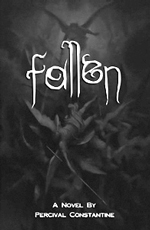
FallenLately, I’ve been spending a bit of time on LinkedIn, connecting with other writers. Most of these writers are self-published through services like CreateSpace, Lulu, Lightning Source, etc. A few, however, are interested in publishing and many of them have asked about some of the vanity publishers.

First off, no matter what you do, make sure you check out Preditors & Editors. The design isn’t pretty, but it’s got very useful information on scams.

Second, be realistic. Yes, there are self-publishing success stories like E.L. James and Fifty Shades of Grey, but these are more often than not the exception to the rule. It is true that authors who use a print-on-demand service like those mentioned above will get a larger share of the royalties than authors who go through traditional publishers. But your best chances of making money off your book are still through the traditional publishing market. That’s where you’ll get the most exposure, that’s where you’re likely to get more professional reviews, plus you also get an advance on it. And bookstores are far more likely to stock it than with your POD book.

Yes, it sucks. But that’s the reality. So try to find an agent and have them try to find a publisher. Maybe it’ll work, maybe it won’t. I self-publish, obviously, but if an agent called me up one day and said, “some big publisher wants to pay you a lot of money to let them publish your book,” I’d jump out of this self-publishing thing so fast, there’d be a cartoon cloud of dust where I was standing.

So don’t believe the hype. Tobias Buckell booksplained this, and it inspired a post by Chuck Wendig. Both are well worth reading and both will explain this better than I can. So I’ll just focus on what I know, which is self-publishing.

Let’s say you tried the agent route and it didn’t work. I did and it didn’t work for me, so there’s nothing wrong with that. I might try again in the future, but for now, I’m okay with where I’m at. And let’s assume you know the realities of the self-publishing market (if you don’t, read both Buckell and Wendig’s posts, then come back). With all that you know, you’ve still decided to go the self-publishing route.

Be careful.

Scammers love aspiring writers. Many of them have no clue what they’re getting into. I know I didn’t and I know I almost got sucked into scams by the likes of PublishAmerica or AuthorHouse. Fortunately, I checked up on them and tried to tell myself all the bad press wasn’t true. But I realized the truth before I went with any of those outfits.

Self-publishing can be a minefield to navigate. You’ve got tons of scams, predatory agents and editors, not to mention the process of actually creating a book. It’s unfortunately not as simple as uploading a Word document (well it is and it isn’t, but we’ll get to that in a moment).

If you go to one of the services to print your book, the technical specifications may leave you confused. Trim size? Bleed? Why is my book bleeding? What the hell is DPI? This may make you tempted to look at some of those vanity publishers that charge upfront fees of hundreds of dollars in exchange for handling that technical stuff. Don’t get sucked in there. And don’t jump onto the professional services the POD outfits offer. Not yet, at least.

My personal recommendation is CreateSpace. They’ve worked great for me, there are no upfront fees and you automatically end up in European and American Amazon stores. For expanded distribution, which puts you just about everywhere, it costs $25 per title. You also have to pay for one proof copy of your book to review, so CreateSpace will cost you under $30.

Before you even get to that point, you can download their Word template and test it out. The support forums are very helpful and you should be able to manage this without too much trouble. I personally use InDesign, and it was a very big learning curve (those first few books were a nightmare to format). But now I’ve figured it out and got it down to a science.

Cover design is trickier. If you’re not an artist, if you don’t know how to use Photoshop or Illustrator, I suggest you try CreateSpace’s free cover creator, you find someone who can design it for you, or you learn what the hell you need to do. But know your limitations—you don’t want to end up on Lousy Book Covers. If money is an issue and you don’t know what you’re doing, just use the cover creator. Discover if any of your friends are artists and if they can help you out. I’ve done this. Or hit up deviantART. Check out the artists on there, find some you like, and approach them with an offer. They may say yes, they may say no, but you won’t know until you try. “But I can’t afford it” isn’t really an option—I know your teachers told you to never judge a book by its cover, but this happens all the time and you know you’ve done it, too.

Just ask yourself: if you saw two books in the same genre, written by two authors you’ve never heard of, and one had an awful cover while the other had a great one, which book would you choose? The type of cover you put on your book matters. A cover that looks professionally designed and looks like a lot of effort was put into it shows that this is a person who cares about how they’re perceived. A cover of badly Photoshopped clipart (or worse, MS Painted, and yes, they do exist) with Comic Sans gives the impression that you’re a lazy, sloppy writer who shouldn’t be paid any attention to.

Get a good cover or hire someone who can make one for you. Don’t whine about how you can’t afford it—I was a broke college graduate working a part-time job, living with my parents and with around $150 in my checking account in a good month and I still managed to put together a cover that didn’t look like something I wiped my ass with. Necessity is the mother of invention, so you learn what you need to do to make a good cover, you save up so you can hire someone to do it for you, or you make a lot of friends with a lot of artists. Don’t let your rush to publish your book overshadow the need to do it right.

Also, find an editor. Join writing groups, pay attention to the people who know what they’re doing, and help each other out. My partners-in-crime over at PulpWork Press do this, editing each other’s books and it really helps a lot (special mention to Joel Jenkins as that man is a pro at editing).

The point here is that you should learn how much you can do on your own before you even consider opening your wallet to fork over cash to these services. One that was recently brought to my attention charged $500 for their basic publishing package—that included editing, formatting, cover design, print and distribution. Now, that’s not too bad a deal. If you used CreateSpace’s professional formatting, editing and cover design services, it would cost you a lot more than this place, called MyBookOrders.

But after the first year, they also want to charge an additional $200 per year to keep your book in print. $200! Now maybe that’s no big deal to you, but it would be for me. I crunched the numbers. Publishing through CreateSpace and selecting expanded distribution cost me under $200 for all six books. If I were to use MyBookOrders, I would have paid under $7000 to date, plus an additional $1200 each successive year from this point on. And if I wanted to publish more books, that’s another $500 + annual payments of $200.

So see what you can do on your own and save yourself hundreds or potentially thousands of dollars. Because despite what the hypesters say, the odds are you won’t make enough off your writing to support such a high overhead.

WordPress Plugins and Some New WhatCulture Articles

wordpress_logoOne of the things I like a lot about WordPress are all the plugins it has. It can really help to enhance a site. Besides having my own webspace that I paid for (as opposed to using the limited free services on WordPress.com), I took it a step further and also bought the Magazine Premium theme, which has been wonderful.

One plugin I’ve been struggling to find is something that will easily display all my different books. If you use the navigation bar to find my titles, you’ll see I’ve got them split into different series. For the most part, I do this with the use of categories and make the pages as simple WordPress entries.

It’s far from being the ideal set-up. Quite far, actually. There are a few different plugins that allow me to display my books, information about them, and buy links to them, and I thought I’d talk about some of these today.

First up is Buy This Book. It provides buy links for Amazon, Kobo, Barnes & Noble, Smashwords, Lulu, iBooks, and one custom option. Books are displayed with just the cover and if you click on the cover, a slide-out menu with the buy buttons will appear. It’s got support for the major sites, plus a custom one. The downside, however, is that it’s just a widget for sidebars. Not as helpful if you want to provide more information about your books.

Next is MyBooks for Authors. This takes it a step up from Buy This Book. The sites it supports are Amazon, Barnes & Noble, iBooks, 800 CEO READ (a site for business books), IndieBound, Books-A-Million, and also iTunes and Audible if your book’s available in audio format. The buttons are displayed nicely beneath the cover and everything is aligned well. There’s also a sidebar widget that can be set up to slide through different books. Not bad so far. But there’s no support for some of the other things I’d like, such as being able to connect books in a series.

Third is Totally Booked. This one actually shows the most promise of all four (we’ll get to the fourth one in a moment). They provide links for Amazon, Barnes & Noble, Books-A-Million, IndieBound, and…ChristianBook. Support for a niche market like ChristianBook without support for iTunes and Kobo, two of the big four online booksellers, is definitely a bit strange, but whatever. There’s one buy button and when you click it, a pop-up window appears with all the various sites you can buy the book from. That definitely cuts down on clutter. And there’s support for genres and series with links at the bottom where you find links for other books in the series, other books by the same author, and other books in the same genre. The problem here is that there’s no differentiation. For example, Tales of the Rook isn’t a book I wrote by myself, I just wrote one story. So if I clicked the more by this author, which author would it list? Me? Barry Reese? Bobby Nash? Tommy Hancock? And what about multiple genres? Chasing The Dragon is partly a horror book, but it’s also a crime novel. And a thriller. If I clicked the “find more books in this genre,” which genre would it list? Also, there’s a major problem with theme integration, in that it doesn’t work with my theme. Fortunately, the developers have said they plan to address the theme support in the next release and are also going to look at the other suggestions. If those things are addressed, this may be the one to go with.

And finally is MyBookTable. This is a relatively new one and seemed to show the most promise at first. For one, their layout is the best of all of them. They’ve also got support for series, multiple authors, and multiple genres, all of which are individually-clickable links. So far, so good. But the only link you get with them is Amazon. If you want more, you have to pay for the pro version, which is $49. The pro version is also required if you want to use Amazon’s affiliate system (if you want to sell your books directly with a PayPal button, that requires a developer version ($99). So they want you to pay $49 before you get the links that are provided by other plugins, that’s a definite turn-off. But the final nail in the coffin is theme integration. They only support the free WordPress themes and select other themes (all of which are paid). Support for the plugin also requires a paid version.

At the moment, it looks like Totally Booked is going to come out as the winner. They seem the most dedicated to providing a product that can work for as many authors as possible, regardless of how much money you give them.

Anyway, on the WhatCulture front, I’ve got four new articles for you to check out, if you haven’t yet:

5 Reasons Mark Ruffalo’s Hulk Should Get His Own Movie

10 Irresistible Quentin Tarantino Spin-Offs That Definitely Deserve To Be Made

8 Changes That Would Have Completely Fixed Batman Forever

6 Worst Ever Comic Book TV Shows

UPDATE: Since I posted this piece, MyBookTable came out with an update to their app. it can now integrate with my theme without problems and they’ve also added Barnes & Noble links to the free version. For now it’s the one I’m going with, but Totally Booked could still impress me.

Iron Man 4…?

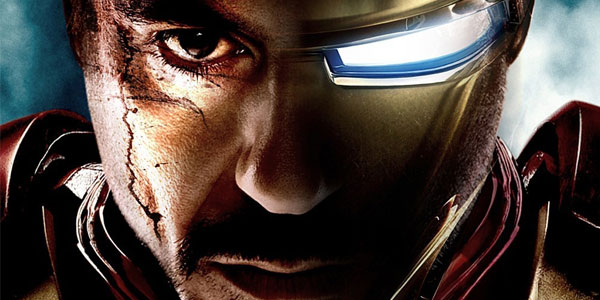
ironman4There’s a huge question mark on the future of the Iron Man franchise. Robert Downey Jr was only contracted with Marvel Studios up through Iron Man 3, and now that the film is making mountains of cash all over the world, it’s obvious that Marvel will want to keep the Armored Avenger around.

Currently, Downey and Marvel are in the midst of contract negotiations, but these negotiations only go as far as The Avengers 2. And given how one of Downey’s terms is that his co-stars in The Avengers 2 get more money, with the infamously-frugal Marvel opposed to such a move, that means there’s going to be more than a small amount of head-butting.

But absent from these discussions is Iron Man 4—it’s all about The Avengers 2. Going beyond the money issue, Downey himself has acknowledged that his age is a factor—he’s pushing fifty. And we all know he can’t play this role forever. But Marvel’s Kevin Feige has said he wants Iron Man to have as long-lived a film franchise as James Bond, which means that eventually, recasting will be necessary.

The question is where would the Iron Man films go from here? I thought on that, and came up with five storylines from the comic books that I think would make great fodder for the next phase of Iron Man movies. You can go read the full article at WhatCulture!

The Cestus Concern (Weir Codex Book 1)

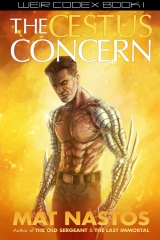
cestusconcernLooking at Mat Nastos’ biography is enough to give you feelings of inadequacy. If you want to talk about making the most of your creative career, he’s definitely one guy who has done that, as an artist for comics/film/TV, director, writer, and now, he can add novelist to that long list of accomplishments. He’s a self-proclaimed Super Genius, and after reading some of his excellent articles on marketing over at his website, I can say that’s a title he’s definitely earned.

The Cestus Concern is Nastos’ first novel, as well as the first book in the Weir Codex series (Book 2 is due out this year). The story centers on Malcolm Weir, a soldier who awakens in an operating room to find cybernetic arms have been grafted to his body and a computer installed in his mind. Fighting his way out, Weir discovers that he has no memory of the past eleven months and seeks to discover what what done to him. With the help of his old college buddy (and conspiracy theorist) David “Zuz” Zuzelo, Weir tries to discover what transpired in the lost year of his life, all while fighting off super-powered mercenaries and assassins dispatched by the government’s mysterious Project: Hardwired, which is also responsible for Weir’s present condition.

The Cestus Concern is some of the best New Pulp out there. Like any good action movie, it’s a roller-coaster ride that grabs hold of you from the first page and doesn’t let go until the last.

I know from my own personal experience that one of the most difficult things to write in a novel is an action scene, because the reader has only your words to visualize it, and sometimes what you see in your head can be difficult to put into words. Nastos has experience with crafting scenes through his work as an artist and director, but being able to translate that into prose is very different. Fortunately, Nastos is able to transition seamlessly into this new medium he finds himself working in, and his action scenes are so vibrant and perfectly and succinctly described that he gives you just enough to let you know what’s happening, but avoids dragging down the narrative with too much description. These scenes move with such speed, that you feel as if you are watching an action movie play out in your head.

Of course, action can only get you so far. You can craft the best action scenes in human history, but it won’t mean a thing unless you’ve got characters for the reader to care about. Fortunately, we’ve got that. Malcolm Weir is a battle-hardened soldier, but when the bullets aren’t flying, he’s a relatable, down-to-earth and funny guy, the kind of guy you could see yourself tossing back a few beers with as you watch a movie or play a video game. We care about Mal as he goes through his predicament, and we feel for him as things go from bad to worse. Also added into the mix is Zuz, who serves a role both as light-hearted comedy relief, but also provides some much-needed narrative explanation. Although there are times when his conspiracy theorist lifestyle borders on providing a bit too much convenience for the story, for the most part he’s an entertaining supporting character that gives our hero someone to play off, rather than being an irritating nuisance like his type of character usually becomes in some of the poorer action fare out there.

Nastos makes no secret of his influences on this book—in fact, he states them in the book’s description: “Fans of films like Bourne Identity or Smoking Aces, or the comics of Deadpool and Wolverine, will love the over-the-top science fiction action of The Cestus Concern.” There are elements of all those in here, and more—it’s an unapologetic hodgepodge of everything you love about over-the-top action movies and comics, and it’s a whole lot of fun to get lost in.

You can pick up The Cestus Concern from Amazon in either print or digital formats. Check out Mat Nastos’ website for more information on not only this book, but his other work.

Lettering Portfolio Now Active And Some New Articles

Got a bit of an update for everyone today.

First off, I’ve decided to try to get back into the lettering game. I’ve spoken to some former clients and they seemed excited to hear that I’m looking for lettering work again. I’ve also updated my lettering portfolio and added it to this site, so you can check it out here. These are some sample pages I’ve worked on (obviously I can’t post up everything I’ve ever lettered). Some of these were published and some were just submissions that unfortunately didn’t get accepted. I’ve also done some logo work (which can also be seen in the logos for every single one of my books). So if you’re looking for a letterer or logo designer for your comic, please send me a line via my contact page and we can discuss page rates.

I’ve also got some new articles for your perusal on WhatCulture:

Kindle Worlds: Is Open Source Fan Fiction A Good Or Bad Thing? – I take a look at the Kindle Worlds and break it down a little, talking about the platform and what it means for new writers.

The Avengers: 4 Things The Comics Can Learn From The Movie – With the success of the Avengers, I talk about the comics and how they could benefit from some of the many, many things Joss Whedon’s Avengers film did right, which the comics are currently doing wrong.

6 WTF Comic Book Movies That Almost Got Made – There are some comic book movies that are just so terrible, even studio executives have a moment of clarity and think, “wait, what the hell are we doing?” Here are six such movies.

10 More TV Shows Marvel Must Make – After my first article spotlighting 10 shows Marvel should consider, I realized I had a whole lot more. So here’s a follow-up with 10 more comic properties I want Marvel to put on the small screen.

And here’s a new article over on GaijinPot:

4 Tips On Preparing To Move To Japan – I think back to my experience moving to Japan and give some tips for new people preparing to come over.

Want to Write Batman? Here’s Your Chance

batmanAmazon is preparing to launch Kindle Worlds. This is a new platform that will allow anyone to submit novels, novellas, and short stories inspired by the properties they’ve licensed.

If you’re thinking, “hey, that kind of sounds like fanfiction, doesn’t it?” then you’d be right. Amazon has now found a way to monetize fanfiction.

Of course, not all properties will be licensed. To date, Amazon’s Kindle Worlds page mentioned that they’ve secured the rights to Warner Bros. Television Group’s Alloy Entertainment shows Gossip Girl, Pretty Little Liars, and The Vampire Diaries. It remains to be seen whether or not you’ll actually get the chance to dust off that Batman story you have posted up at fanfiction.net and be able to publish it.

Now, some people will understandably be skeptical about this. After all, just what exactly are we looking at here? Well, according to the Kindle Worlds’ site, Amazon will set the prices of all works from $0.99-3.99. The standard royalty for these works is 35% for 10,000 words or more and 20% for works between 5,000-10,000 words. Amazon gets the global publication rights to your story, but you retain the copyright to original, copyrightable elements, such as characters and scenes, that you create (but you also grant Amazon a license to them, so other creators can build upon your work).

That’s…actually not a bad deal at all. 35% royalties sounds like a pretty decent cut. While you don’t retain the publication rights to the story, that’s also pretty much standard for work-for-hire contracts. So even if you got accepted to write something for Warner Bros., there’s no guarantee you’d get a better deal.

The platform will launch next month and Amazon is in the process of trying to secure other licenses. If this takes off, it could mean a chance for independent authors to get wider exposure by giving them a chance to work on some big-name properties.

When I started writing, it was fanfiction. I found it to be a great way to hone my skills and develop my writing style. Hopefully, Warner Bros. will allow their DC Comics’ properties to be used. Because I’ve got a Superman story I’ve had sitting around for a long time that I’d love to polish off and send their way.