2016 Reader Survey

6306132745_347e21a6e8_oSome of you may recall a while back, when I asked for your feedback in a reader survey. Well now, I’m asking again. Reader input is very valuable to me. It helps me know what I’m doing right, what I need to change, and where I should concentrate my efforts next.

One of the big things for me in 2016 is that Infernum will be ending with the fifth and final book. So I’m starting to think about what to work on after it’s completed. I’ve got a lot of ideas and I’d like some input from the rest of you.

Take a few minutes and fill out the survey. And thanks for all your support!

[wwm_survey id=”2382″]

A New Year

latest-happy-new-year-2016-photosAn update from me is a bit overdue and what better time to get it out there than in the form of a New Year’s message?

2015 was a pretty big year for me as an author. Although I’ve been doing this since 2007, 2015 was really when I started taking it seriously. I went into 2015 with the goal of having a release every month and I did manage to accomplish that goal. And it was my most successful year yet as an author.

So what about 2016?

I’m not one for New Year’s Resolutions, but I am in favor of New Year’s Plans. First off, a bit of an announcement—recently, I made the decision to make all my titles Amazon exclusive. The reason for this is that the other platforms have really been a black hole. I’ve spent money on advertising, I’ve been patient, I’ve emailed their author support, and it’s led to a steady graph of zero sales (and even zero downloads of my free titles).

The consequence is that by not being exclusive to Amazon, I don’t make any money from Kindle Unlimited borrows. And since Amazon is the only platform I make any money on to begin with, then I’m losing money by being on all the platforms.

I don’t like the idea of exclusivity, but when building a business, tough choices have to be made. And ultimately, I have to go with the approach that will help me build my business. When the other platforms are ready to incorporate a better search engine, more support for indies who aren’t already best-sellers, and stop with this curation nonsense, then I might experiment with going wide again. Until then, my books are only available on Amazon in digital formats, or you can buy them in paperback.

With that out of the way, here’s what my schedule looks like for this year:

  • January will see the release of The Fixers, book four in the Infernum series. This will see the return of a lot of characters. The book centers on Angela Lockhart, the protagonist of Love & Bullets, and will also see other returning characters: Julie Kim, Tauna, Vincente, Baxter Sutton, William Quartermain, and of course, Dante.
  • In February, I’ll be releasing Vanguard: The Complete Second Season in both print and digital formats. I initially hoped to have this out earlier but I had some computer issues in December that made it impossible. So I had to shuffle some things around.
  • Vanguard Season Three begins in March with Vanguard #11: Vengeance. In this episode, the Exemplar is back and out to get back at Cerberus for their part in the destruction of Arcadia.
  • Vanguard #12: Fight Night comes out in the first half of April. Gunsmith accepts a mission from Cerberus to investigate underground fight clubs that are using a drug to temporarily grant special abilities to fighters.
  • Vanguard #13: The Tomorrow Man will be released in the second half of April. After being built-up over the course of the first two seasons, Chronos will arrive in the present and encounter Vanguard in an attempt to stop his future from coming to pass.
  • Vanguard #14: The Trial of the Exemplar comes out in the first half of May. The Exemplar will finally be put on trial for his crimes.
  • Vanguard #15: The Invasion closes out May. Title is pretty self-explanatory.
  • The fifth Myth Hunter book, tentatively titled Hammer of the Gods, will come out in June.
  • The fifth and final Infernum book, Dante, comes out in July.
  • August will see the release of Vanguard: The Complete Third Season.
  • September begins Vanguard Season Four with Vanguard #16.
  • Vanguard #17 and Vanguard #18 in October.
  • Vanguard #19 and Vanguard #20 in November.
  • Vanguard: The Complete Fourth Season in December.

This is just a tentative schedule at the moment and things are subject to change. The summer will see a big change in my life and that could very well affect this schedule. The Luther Cross series through Pro Se will also continue this year and I’ll have a story in an Airship 27 title sometime next year. But other than that, I don’t plan to do any work for any other publishers.

You may notice that Dante is the final Infernum book. I’ll be closing out that series but in 2017, I’ll have another series out. Interested in having a say? Check out my reader survey.

Thanks for your support in 2015. I hope I can count on your continued support in 2016 and beyond!

Should you do NaNoWriMo?

NaNo-2015-Participant-Badge-Large-SquareAh, November. The month when writers all over the world will fire up their computers and prepare to begin the arduous task of completing a 50,000 word manuscript in one month.

National Novel Writing Month has become a global phenomenon. I know a lot of writers who are doing it this month, but I won’t be among them.

And it’s not because I don’t believe it’s possible to write 50,000 words in a month, or that I’m against writing fast (just a quick look at my output over the past year will prove differently). It’s that for me, every month is now NaNoWriMo.

I don’t always write 50,000 words a month, but I write 2,000 words a day, five days a week. In a way, NaNoWriMo helped me with that. I wrote my first novel, Fallen, as part of NaNoWriMo. And it was tough. But it also helped me realize that a book didn’t have to be the year(s)-long project I always thought it had to be in the past. And it’s important to understand that.

I think NaNoWriMo is great for people who are trying to get into a writing habit. I think it’s good to see what it’s like to write at that kind of a breakneck speed and to try and build up a daily writing routine. I think it’s especially great for those people who write as a hobby.

But if you’re trying to build up a body of work, I don’t think you should stop on midnight of December 1st. Instead, I think you should keep going. Is your book completed by the end of November? Great! Then in December, begin work on the next book. Go at a slower pace if you have to. Just don’t wait until November 2016 to begin that next title.

So should you do NaNoWriMo? Why not? It’s a great way to write in a community and it’s easy to get caught up in the enthusiasm. But don’t let that community and that enthusiasm detract you from what’s most important—getting those words in. Join NaNoWriMo, have fun on the forums, and then when December comes, keep writing every day.

Vanguard #8 available now!

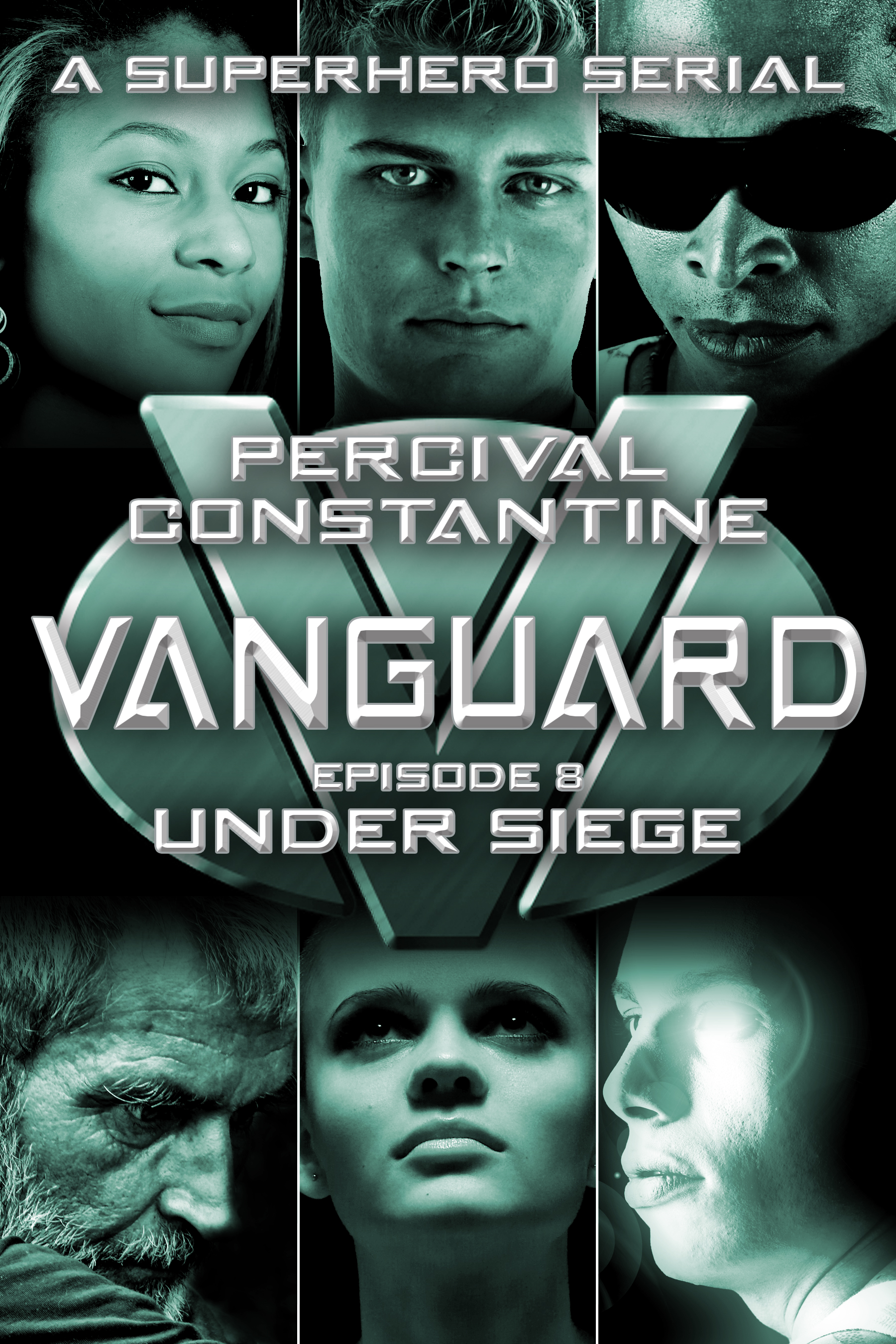
Vanguard 008We’re now at the halfway point of season two, and everything begins to change here! Various pieces are falling into place that will set up not only the season finale, but also answer questions and prepare for what promises to be an explosive third season!

In the latest episode, Zenith and Lee Parker have remained at Vanguard’s former base, the Atlas, ever since the team was disbanded. And they’re not alone! If you’ve read the previous episode, then you already know the other surprising inhabitant! How did they get here? The answer is in the latest episode!

Lee has been working to repair Zenith’s body and together they’ve been investigating Cerberus and Director Callus. But now, things take a turn for the worse as a new enemy called Omega appears!

If you’ve pre-ordered Vanguard #8, it should now be available to download. If you haven’t, then you can go over to Amazon and get it now. And if you’re a Kindle Unlimited subscriber, read it for free!

Nothing Found

Want Free Books?

freebooksWho doesn’t love free books?

Well, I’m giving you a chance to get all the free books you can handle. I’m starting up an Advance Review Team. What this means is that you’ll receive free copies of my books before they’re released so you can have a chance to read them and post a review once they go live on Amazon.

Reviews are one of the most important things for indie authors. A book with a review count in the single (or low double) digits will have a very difficult time gaining any sort of traction in the marketplace. And books that have less than a hundred reviews are far more likely to be ignored by the most powerful book marketing services, like Bookbub. But unfortunately, only a small number of readers post reviews.

That’s why I’m starting up this Advance Review Team. I’ve got about twenty spots on the team to fill and if this is something you’re interested in, then please read on!

What I’m looking for are people I can count on. I understand that not everyone will have the time to read and review every single book I publish as soon as the book goes live. But I am looking for people who I can rely on to review these books. To that end, I ask that you send me a link to a review you’ve written for one of my titles. If you haven’t written any reviews yet, then you can do so right now (and don’t forget, if you haven’t read any of my books, both Love & Bullets and The Lost Continent are available for free).

I ask that reviews at the very least be posted on Amazon. If you’d also like to post the reviews on other sites, that’s fine. But Amazon is the only place I require for the team members. Reviews don’t have to be long and they don’t even have to be positive—they just need to be honest.

Just fill out this form and I’ll get back to you:

← Back

Thank you for your response. ✨

Preferred ebook format(required)

Make a writing schedule

schedule_clipartAnswer the following questions:

  1. When is the deadline for your current writing project?
  2. What is your next project going to be and when will it be due?
  3. When will your next book be published?

If you can’t rattle off the answers to these questions right away or if you don’t have the answers written down somewhere easily accessible, then we’ve got a problem.

As much as you might hate them, the truth is that we need deadlines. Humans love to procrastinate. If we don’t have regular deadlines, then we think of projects as being something for Future You to worry about.

Think back to when you were in school. Could be college, could be high school, whatever. Ever have a homework assignment given to you before a long weekend? When did you finish it? When you first got home? Or the night before school started up after the break?

If you’re like I was, you probably waited until the night before.

Now think back to school again. Did you ever have a big project that had frequent checkpoints that had to be met? What I mean is that the whole project was due at the end of the semester. But there were other aspects your teacher wanted you to turn in earlier. So maybe a few weeks into the semester, you had to have a thesis in mind for your teacher to approve. Then a few weeks after that, you had to have a list of sources to use. A few weeks after that, you needed an outline. A few weeks after that you had to show a rough draft. And so on.

Even though those multiple deadlines may have been annoying, I bet they made that project a lot easier than doing everything in the last week of the semester, didn’t they?

Writing isn’t any different. If you say, “I’ll write this book in three months,” then that sounds great. But three months is a long time. Very easy to procrastinate. It’s a lot harder to procrastinate when you say, “I have to write 2000 words every day.” Now that deadline is a lot closer.

And if you don’t have a release schedule for your books, then you need to sit down and make one up right now. If you say, “I’ll just wait to see what I feel like writing when the time comes,” then that makes it a lot easier to get distracted by other projects. Or to just decide you aren’t going to write at all.

I’ve got my schedule mapped out pretty solidly for the next year or more. I just finished Spear of Destiny, the fourth Myth Hunter novella. Now I’m working on the fourth Luther Cross story, which shouldn’t take me more than a week or so. Then the fourth Infernum novella. Then the third season of Vanguard.

And so on. I’ve got this routine mapped out until I complete the fifth and final Infernum novella, at which point I’ll decide on which of my series ideas I want to tackle next.

The point here is that the schedule helps me keep things in perspective. I’ve found that as I started writing more, I get an influx of ideas. In the year since I started writing daily, I haven’t had writer’s block. And that’s because when you’ve got deadlines, you don’t have the benefit of writer’s block.

So try this. Make a schedule. Take out a piece of paper right this instant (or open up your word processor of choice) and make a list of each project you want to work on. Don’t stop until you run out of projects. Write down every project. If you don’t have a title for the book, then just write a brief descriptor or a series title.

For example, on my list, I have one project just titled “giant robot squad.” That’s not a title, but it’s a quick descriptor of something I had an idea for that I want to do in the future.

Got your list finished? Good, now prioritize. Look at the ones that either have to be completed first or that you’re really passionate about at the moment. Don’t worry, this isn’t set in stone. No one’s going to make sure you adhere to this, it’s just a starting point.

If you have a series in progress (or multiple series), that should be the priority. By that I don’t mean it needs to be the only thing you work on, but you should figure out a way to make it consistent. When I made my list, I had four series in progress: The Myth Hunter, Infernum, Vanguard, and Luther Cross. Now as Luther Cross is through a publisher and has a quarterly release schedule, I don’t have to worry about that so much. Each installment is only 10,000 words and I can knock that out in a week, easy. So that goes further down the list of priorities.

The others, though, were a different story. I had The Myth Hunter and Infernum, both novella series. And I had Vanguard, a serial. So I decided the best thing to do was alternate between them.That way, I’m keeping them consistent for the readers, and also consistent in my mind.

When I made up this schedule, I was only writing 1,000 words per day. I’ve since doubled that. So in theory, I can probably add in some more projects. For example, Spear of Destiny is due to be completed this week, but the release date isn’t until mid-late December. I’ll have the book ready to go long before that date. Still, best to get comfortable in a routine before changing it up.

What does that mean for those other projects? There’s about seven of them in total. Well, for now, I just make a note of them and move on. I know, for example, that Dante, the planned fifth Infernum book, will be the final one in that series. So once that’s done, I’ll look at the other ideas I have and see which one I’m most passionate about (at the moment I believe I have it narrowed down to two, but that could change).

This kind of schedule, as I said, isn’t set in stone. But it acts like a kind of roadmap and helps me keep my priorities straight. If you haven’t done it, it’s worth trying.

Writing Fast

images_increasing-productivityStephen King recently wrote an opinion piece for The New York Times entitled “Can A Novelist Be Too Productive?” In it, he addresses the myth by many in the literary community that being a prolific writer equals being a bad writer.

This is one of those myths that just won’t die and I have no idea why it continues to be perpetuated. Think for a minute about the other arts. A person who wants to be a painter is encouraged to paint a lot. A person who wants to be a musician is encouraged to practice every day. But a person who wants to be a writer is told by the literary world that, “it’s quality, not quantity.”

Which is true in a way. Quality is more important than quantity, but like King says in his article, “No one in his or her right mind would argue that quantity guarantees quality, but to suggest that quantity never produces quality strikes me as snobbish, inane and demonstrably untrue.”

When I say it takes me less than a month to write a novella, some people will look at me in horror. Okay, but think about what that entails. Let’s just break down the numbers here. My novellas are 30,000 words and I write 2,000 words a day. 30000 ÷ 2000 = 15. That means if I write 2,000 words a day (and some days it’s usually around 2,500 or more) and if I write five days a week (sometimes six), I can have a novella finished in less than a month.

I think part of the problem is that some like to look at writing as this mystical, esoteric activity where you summon in the muse to work through you or some such bullshit. And it’s nonsense. Writing is just like any other activity—the more you do it, the better and faster you’ll get.

I think there are two things that inspire the mentality that prolific writing is bad. The first is the realities of the traditional publishing industry. It can take a year or more before a novel goes from the author to the bookshelf. But of course this is now being challenged by indie publishing where authors are showing they can put out several well-written, high-quality books within a single year.

The second is just pure, old fashioned snobbery tinged with jealousy. “Look at those prolific writers over there. Clearly they’re only able to write so many words because they don’t care about the quality of those words. I’m a real author, I think carefully and craft my sentences with the utmost care.” Bullshit. I’ve known many “writers” of this kind and I use the scare-quotes because they’re usually the kind of people who spend more time talking about writing than actually writing.

Writing is the only artform there this myth that practice is bad is shoved down the throats of newcomers. It’s why you have creative writing students who spend years tinkering with one novel that will never be finished. I’m a firm believer that you’ll learn a whole lot more about writing if you finish that first book, put it in a drawer for a few months, and then start working on the next.

Take the reader survey!

Survey. 3D little human character X2 during Survey. Green.

I’ve got a few questions for readers of my fiction and I would really like to know your opinions on some things.

If you don’t mind, I’d really appreciate taking a few minutes to answer these questions. There’s not a lot of them and you don’t have to attach your name or your email address.

Click here to take the survey.

The purpose of this survey is to get some insight into what you like of my work, what you don’t like, what you’d like to see more of, and to learn more about the demographics of my readership.

I’ve gotten a few responses so far and it’s given me some interesting insights. The survey will only be live for ten days, so make sure you take it before it ends. This will help me understand more about what sort of things I should be doing to improve your reading experience.

5000 Words Per Hour

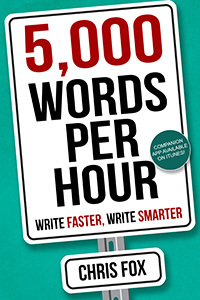
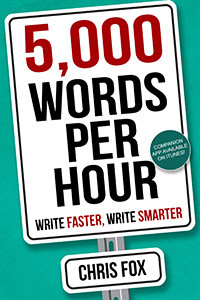
5000-words-per-hour-300x200If you’re serious about improving your productivity as a writer, then you should definitely read this book.

Writers are constantly being told that they should increase their word count, but making that jump from a few hundred to a few thousand words an hour can seem very daunting. Fox lays out a system that should work for anyone by laying out incremental steps to improve your productivity. Although some of this may seem obvious if you’ve read other books on writing productivity, it’s still helpful to read this.

One of the things I was told was to use the Pomodoro method when writing, which sets 25-minute timed sessions with 5-minute breaks. This is a good system, but Fox begins with 5-minute sprints and then builds from there. That’s wonderful for writers who might be coming to timed writing sessions for the first time.

The book flows extremely well. Fox writes in a very casual style that makes it feel like you’re having a conversation with him. I blew through the entire book in one sitting. One of the helpful aspects is that if you just want to read the book straight-through before doing any exercises (something I often do), Fox includes all the exercises in an appendix at the end to remind you that you should do them (and it also makes them easily accessible so you can go back to them later or quickly jump to them for reference purposes).

Also, if you have an iOS device, be sure to get the companion app to the book. Up until I downloaded the app, I was using a combination of timers and then had to leave a post-it on my wall to remind myself to enter my word count into a spreadsheet. The app does all that together and it makes tracking incredibly easy.

This is a book I will be recommending to every writer I know.

Pick it up on Amazon and get the app on iOS.