Last month, Chuck Wendig posted an entry on his terribleminds blog, entitled Self-Publishing Is Not The Minor Leagues. Like a lot of Chuck’s posts, it’s a great read. I’m just going to quote a small portion of it, because you should read the whole thing:
The attitude that pervades self-publishing is that it’s a good place to test your craft, to hone your work. We are reminded constantly that the cream floats to the top, that all the crappy self-publishing efforts have no effect on anything or anybody ever despite evidence to the contrary. The culture forgives and sometimes congratulates even the most meager of efforts because of how courageous someone is to take the plunge to publish their own work. The culture says, “Just click publish!” The culture criticizes the faults of traditional-publishing, but excuses (or celebrates) its own. And yet, sometime in the same breath, self-publishing gets painted as a path to traditional publishing, not as a path separate and scenic all its own.
The culture is full of contradictions.
One of the things that he talks about is that self-publishers should be more critical. The basic gist of it is this: if you think your writing is good enough to complete with traditional publishing, then you should make sure that it is presented as professionally as traditionally-published books.
That means revising. That means proofreading. That means editing (and that means getting someone else to edit it as well). That means formatting it properly. That means either designing a professional cover or hiring someone to do it for you.
Now to me, that all sounds pretty non-controversial, right?
Well apparently, I was wrong. Because it has set off a firebomb in the self-publishing community. The entry generated 217 comments, and not all of them were agreeing with Chuck. Over at kboards, there was a lot of pissing and moaning about it, so much that Chuck posted a follow-up. Then there was another post. And another.
You can read some of the comments from people who vehemently disagree with Chuck. As usual when someone suggests a bit more self-criticism, there have been cries and shouts of, “YOU’RE TRAMPLING ON OUR FREEDOM!” One person said that mediocrity and half-assed books should be celebrated and then, in the same post, said that no one is suggesting that self-published books shouldn’t be the best they can be.
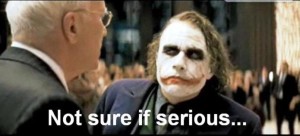
Yeah, I know. I was confused, too.
Here is a fact about self-publishing: it has a terrible reputation. Fairly recently I had a conversation with someone who said that if it’s not good enough to be accepted by a publisher, it’s not good enough to be published, period. Yes, that is a very ignorant way of thinking, but it’s also, unfortunately, not uncommon.
And this race-to-the-bottom, anything goes, “it’s okay if your book looks like shit” mentality does not help. It only encourages the thinking among the general public that self-publishing is a toilet. The fact that a site like Lousy Book Covers even exists is not encouraging.
Is it true that all self-published books are crap that no self-respecting publisher would ever touch? Absolutely not. Is it true that all traditionally-published books are staggering works of brilliance? Hell no. There are both self-published books that are far superior to traditionally-published books, and there are both self-published and traditionally-published books I wouldn’t deem good enough to throw in my fireplace (if I had a fireplace).
If you want to be taken seriously as a professional writer, then you need to start approaching your work with the mindset of a professional.
I’ve seen some retorts to this. Like “well people can browse free samples on Amazon and then they’ll know if a book is worth their time.” Say you need five pages before you decide whether or not a book is worth your money. So you read five pages of one book. It’s poorly edited (if edited at all), there are grammar and spelling mistakes that would cause your high school English teacher to smash the blackboard, and the formatting is sloppy. So you then go to another book. Same problem. And another. And another. Say you go through the first five pages of ten books and they’re all terrible. That’s fifty pages you’ve just read. Would you keep going or would you stop and jump over to the best-seller lists?
This isn’t just speculation—this is stuff I’ve heard from readers. There are a great many people who have sworn off self-published books because of problems like this.
Yes, you learn things over the course of a writing career. Yes, your first book will be much different from your tenth book, because you’ve learned a lot over that time. You learn more about characterization and description. You learn more about pacing and plotting. You learn more about marketing. But one thing you should not be learning as you go is, “wow, I guess Comic Sans is not a good font choice for a cover.” One thing you should not be learning as you go is, “huh, maybe it would have been a good idea to revise this before I published it.”
Here’s a little test you can do: go to your local bookstore or library and find a traditionally-published book that you think is terrible. Look at the cover. Flip through the pages. Regardless of the quality of the story, do you know what you will not find? You will not find an abundance of grammatical and spelling errors. You will not find poor formatting. You will not find Comic Sans anywhere on the cover. Regardless of the story inside, the product has a professional standard. That’s what I’m talking about—hold your book to that same standard.
Self-publishing is easier than ever. You could drink an entire bottle of tequila, bang out a few thousand words on your computer, and then upload the file to KDP without even looking twice at it. You could also spend your entire weekend sitting in your own feces because you don’t want to get up from the couch while binge-watching Breaking Bad on Netflix.
Or in other words, just because you can do something doesn’t mean you should do it.
The point of turning off your internal editor when writing your first draft is so you can just get it out there. But once that draft is finished, you have to turn that internal editor back on and let him go ape-shit on your manuscript. Then you should revise it and hand it over to someone else. And you should format it to a professional standard, regardless of if it’s an ebook or a print book. And then you should design a professionally-looking cover.
And yes, if you cannot do this, then you may have to pay someone. Don’t give me that crap about how “it’s too hard” or “I can’t afford it”—either buckle down and do the work, or save up until you can afford it.
There is no excuse for shoddy products. Self-publishing is great, it’s opened a lot of doors for me that would have otherwise remained closed. If you want your work to be taken seriously, then you have to take it seriously yourself. If you want to be treated like a professional, then act like a professional.
If that’s too much to ask, then please go somewhere else. Because you’re only hurting the rest of us.
EDIT: This post has recently gotten some new traffic. And since I’ve already had to deal with one person who evidently thought it would be more fun to simply skim the post and then call me to task for things I never even said (all while ironically badmouthing me for making false assumptions), I’m going to lay a new ground rule: comments are moderated. I don’t put up with any bullshit here. If you’re not going to play nice, then your comments will be marked as spam. Simple as that.
 Recently, a fellow New Pulp author posted on Facebook saying that he was asked by someone if he could make a living off his writing and he tried not to laugh. Another New Pulp author said that he has family members who are convinced he’s sitting on mountains of cash from his writing career and is lying when he says otherwise.