Pulp Ark 2011 Award Winners Announced!

Today, All Pulp announced the winners of the Pulp Ark 2011 Awards. You can read the full story on their site at this link. Unfortunately, I didn’t win the Best New Writer award, which was the only category I was nominated for. But it was an honor just to be nominated in the inaugural awards. And it’s hard to be disappointed when the winner of the award for Best New Writer is Tommy Hancock, my partner-in-crime on The Adventures of Nicholas Saint.

My heartfelt thanks go out to everyone who nominated and/or voted for me in these awards. This first time out may not have worked, but there’s always next year!

Censoring Huck Finn

There’s a pretty big furor right now in my homeland (the United States) over censorship of Mark Twain’s classic novel, Adventures of Huckleberry Finn. Twain “scholar” (and I use that term very lightly, which I’ll get to shortly) Alan Gribben has put out a censored version which replaces the volatile word “nigger” with “slave” and replaces the offensive “injun” to “Indian” (which is stupid in its own right since Indian is hardly a racially sensitive word in this context). Gribben’s justification is that schools won’t teach the book because of the racial epithets used in it.

I find it very ironic that in the early days of its release, Huck Finn was controversial not because of racial epithets. That was the language of the day. Rather, it was controversial because it portrayed a black character (Jim) as a sympathetic and real human being as opposed to just a caricature. Today, the book is wrongly accused of being racist because it uses racially-charged language. And it’s obvious the people making this accusation have either never read the book or are just too stupid to grasp what I was able to figure out when I was a teenager. Both are likely scenarios, unfortunately.

And if Gribben is really a Twain scholar, then he should know better than anyone what a profoundly stupid move this is. Gribben said that at public readings, when he used “slave” instead, the audience was more comfortable. Well that’s the point — the audience is supposed to be uncomfortable. Satire is supposed to make us uncomfortable, it’s supposed to be sharp and biting, it’s supposed to be fierce. Taking that away completely defeats the entire point of the story. Twain didn’t just use whatever word popped into his mind — he was very careful about what words he chose to use and even what punctuation he used. Gribben, being a supposed Twain scholar, should know this.

Caving in to morons who don’t understand the true meaning of the book is an insult to Twain’s memory and his work. And it’s also lazy. Gribben is doing an immense disservice to the memory of a man he claims to honor. He’s essentially saying to all the idiots out there, “you’re right, Twain was a racist but the story was fun, so let’s take out all the racist parts.” In effect, he’s dragging Twain’s name through the mud.

If Gribben were a true Twain scholar, he would take the route others who respect the work have — he would explain why these words are in there and why they should not be changed. I never knew Alan Gribben before this debacle and now that I do know who he is, I hope I never hear his name again.

Censorship is never the right move. Art is supposed to shine a harsh light on society, that’s something anyone who knows even a little bit about criticism understands. And it’s a move that’s ultimately completely worthless. We aren’t teaching our children about the evils of racism by pretending these words don’t exist — in fact, kids encounter the n-word everywhere. It’s used in movies and music all the time!

Mr. Gribben, you should be ashamed of yourself. Mark Twain is rolling over in his grave.

The Write Place

The only thing you really need to write is something to write on and nowadays, technology has made that even easier. These days, you can even do it on your cell phone (although this is definitely not a method I prefer). But all you really need is something to write on. It can be a phone, a computer of some sort (be it laptop, desktop, an iPad, etc), a paper and writing instrument, or even a sidewalk and a piece of chalk (make sure you bring a camera though because the city may not be okay with you tearing up a slab of concrete you’ve just scribbled on).

Basically, you can write anywhere and with laptops getting so much more portable, it’s even easier to carry them around. I’ve got a MacBook Air, which is perfect for this as it’s light as can be and is thinner than a notebook. But I think a lot of people overlook how important having a location for writing can be.

I have quite a bit of downtime at my day job. And since I can bring my laptop with me, this makes it really easy to get work done. It’s also great for moving it around the apartment. But the usual home for my laptop in my apartment is probably the only place I can never seem to get any writing done. It’s not because it’s uncomfortable — it’s actually the most comfortable spot I’ve ever used my computer in. I’ve got a very comfortable couch with a table in front of it and my computer sits there on a cooling pad. It’s connected to my TV and speakers as well as an external hard drive and I’ve got a Bluetooth mouse and keyboard for more convenience.

The problem is, I have never been able to get any writing done in this room. Even when I have the drive and motivation to write, I can’t seem to get any work done. Until recently, that’s always been surprising to me. My job causes me to move around to a few different locations, sometimes within the same day. But I’ve been able to write in every one of these locations. I’ve also been able to write on ferries, planes, even while taking a long bus ride. This one room though, I can never get any work done. And then it hit me one day — this is the place I go for relaxation. So it’s not really a suitable work environment.

I have found a way around this, though. The couch I have in this room now is actually my second one, meant to replace my first which wasn’t quite as comfortable. And in Japan, it can be costly to dispose of old furniture. So rather than going to the trouble of paying to have the old one thrown out or picked up by a used furniture shop, I decided to take advantage of a location I haven’t used much of since moving here — my balcony. It’s pretty large, so I moved my old couch out there. I have to keep it covered with a tarp to prevent rain (as well as volcanic ash as I live right by a volcano). But when it’s nice out, I can take my laptop out on the balcony with a glass of scotch and get a lot of work done in a pretty nice setting.

Unfortunately, now it’s gotten cold in my area of Japan so this has warded off that possibility. But it did make me realize how important having a location for writing really is. I do wish I had a spare room I could devote as a study so I could get more work done at home but until I have the need to move, that won’t be a possibility for at least another year or more.

That can make things frustrating as there are few locations in my town where I can go off with my laptop. I live in a very small town with no real coffee shops to speak of. But if you have the means, I’d like to stress to my fellow writers the value of having a dedicated place for writing.
Tech Tools of the Trade

I’m something of a tech geek. And by that I don’t mean I’m some sort of computer genius. Far from it, actually. But there are quite a few programs I like to use in conjunction with my writing.

I know some people may be groaning here so allow me to clarify — technology isn’t a substitute for any part of writing. All you need to write is a notebook and a writing instrument. Anything else you use is not really necessary.

That doesn’t mean it’s not helpful.

At my day job, I have quite a bit of downtime. So it gives me plenty of time to open up my laptop and work on some stuff. And sometimes, it can be difficult to just jump right in. I’m also not exactly the most organized person, so sifting through the myriad thoughts running through my head at any given moment is something of an exercise in futility.

But there are some programs I have which help me out with my writing. I’ll run down a few of them right now:

  1. XMind – Remember in school how teachers would encourage you to make a mind map when writing papers? You know, you write your topic in the circle in the center and then branching off from that circle were several lines and then those would branch off and so on. XMind is basically that — a way to organize your thoughts. And for someone like me, it’s really useful. I actually forgot how helpful mind mapping really is until I decided to give this program a shot. Sure, you could use any sort of graphic program for this or even Word but this is far more convenient for me. You start off with the central topic — for me, I use the title of the book. Then when you hit enter it goes into a subtopic. To stay with topics on that same level you just hit enter or to branch into a lower subtopic, you hit tab. It’s also an open source program, so it’s free to download. There is a Pro version, but unless you absolutely need to convert your mind map to PDF or share with others through XMind’s servers, you can enjoy all the features you need for free.
  2. Fábrica de Heróis – This is Portuguese for Hero Factory (or something along those lines). It’s actually just a flash program that runs off the creator’s website. But for a small donation of around $5, he’ll send you a version you can download and use when you’re offline. Basically, it’s a program for designing your own superhero with a number of choices. So if you’re struggling with visualizing your character, something like this could help you out. It’s very similar to Hero Machine, but I prefer FH — it has more options and the art is a lot more appealing. This is something that might only be beneficial to my fellow pulp writers out there, but there are a number of street clothing options. So maybe you will find something to use this for.
  3. Celtx – This is a program that’s very useful to anyone out there who writes scripts for comics, plays, film, TV, whatever. Essentially, it’s very similar to Final Draft, although with more templates (the comic book template has proven great for me). Also it’s a free program, unlike the criminally overpriced FD. For those who don’t understand (and this is why I say FD is overpriced) Celtx and FD remember the names of your characters. So just typing in a letter or two will show a drop-down list (and when you’re writing a script, you write a LOT of character names so this cuts down on time). Also, by hitting tab or enter, the program automatically formats the script for things like scene descriptions (or panel breakdowns), character names, dialogue, etc. The only downside to Celtx is that when you’re not connected to the Internet, it will only save it as a Celtx file. There is no option to save it as a Word file and its rich text option is pretty crummy. When you’re connected to the Internet, you can export it as a PDF, but again, you can only do this while connected to the Internet, which is annoying. Still, it’s the best alternative I’ve found for Final Draft.
  4. Open Office –  Don’t have Microsoft Word and don’t want to pay the money for it? Open Office is a great alternative. When I got my MacBook a few years back, I no longer had access to Microsoft Office. Instead of paying for a Mac version, I downloaded Open Office. It’s almost identical to Office, with some differences (and those differences will annoy you when they pop up) and it’s free. And you can save files in a variety of formats — DOC, TXT, RTF, ODD (Open Office’s format), PDF, HTML, and so on.

    The following are iPhone apps:

  5. WriteChain – This is a word count app. You enter the word count from a writing session. In the preferences, you can set how many words you want to write in a day and how many days you can coast (I usually only write during the week so I have a two-day coast). If you go past the coast days without meeting your daily goal, WriteChain will notify you that you’re going to break the chain. Nice way to get into a writing habit.
  6. The Brainstormer –  Have trouble getting started? The Brainstormer has three wheels that when you push a button, it selects different story conflicts, situations and locations in each wheel (for example letting go, abandoned, and golf course).

There are also a number of other apps you can download on your iPhone for research purposes. For example, since one of my book series deals a lot with mythology, I’ve got an app on here called Deities that contains information on many different mythologies of the world. Another one of my series deals extensively with Judeo-Christian mythology, so I’ve got both The Key of Solomon and The Lesser Key of Solomon on my phone.

That’s some of the stuff I use. If you’ve got access to the technology, you can get some pretty useful stuff on there to help you with your writing. And a lot of it is either free or pretty damn cheap.

Uncompleted Projects

November is National Novel Write Month or NaNoWriMo for short. The goal is to start a book from scratch on November 1st and have it completed by November 30th and the length has to be a minimum of 50,000 words (you can plot in advance but you can’t do any of the actual writing of the novel, that’s the one rule).

It’s an interesting exercise and I first started back in 2003. I only got about ten pages into the book before I lost the drive for it. My second attempt in 2004 did a bit better but still nowhere close to finishing. And then in 2005, I did it — I completed a 50K in a little under thirty days. This was my first novel, which was also the first one I published, Fallen.

My second attempt in 2006 hit a little over the halfway mark but again, I lost out before the story was finished and eventually lost the drive. Same with my attempts in 2007 and 2009.

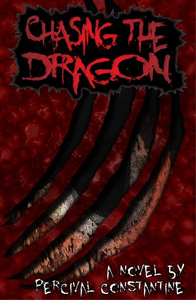
With this being November, I thought I’d talk about abandoned projects in general. I’ve had a few of them — every writer has. For example, Chasing The Dragon was supposed to be the first in a series featuring main character Riker Stone. But while doing the second book, Die By The Sword, it got away from me and I lost the drive.

Another one is Elias Starr and the Prometheus Engine, which was supposed to be the first in a potential sci-fi series. I got really far into that book, about a hundred pages, before it  fell off. This was originally supposed to be the beginning of a sci-fi series. Unfortunately, it didn’t work out that way.

Of course, if a project is abandoned at one point, that doesn’t mean it can’t be resurrected. Love & Bullets began as a failed screenplay and then a failed comic book before I turned it into a novel. Now, it’s the first book in the series with a second book already complete and awaiting release. My next novel, The Myth Hunter, also began originally as a comic project several years ago. It fell off but it was resurrected as a novel and I’ve begun planning the second book in that series. SoulQuest is another failed project that was later resurrected. Also originally a comic book, I had tailored it to an artist who expressed a desire to work with me. The artist disappeared and I found another. He did some preliminary work on it but then dropped off without a word. After that, I had the opportunity to release it as a serialized online novel through Revenance.

Will Riker Stone return at some point? Maybe. I like the character and I’ve been trying to find a way to bring him back to life. Elias Starr has been a bit more problematic because it’s harder to bring back a character who hasn’t gotten his chance to shine yet. Especially when the failure came before that first book was finished.

I’d like to see these characters return in some fashion. Maybe they will, maybe they won’t. Or maybe they’ll return in a different form than I originally intended. Time will tell.

A New Beginning

Even though I registered for this site about a month ago, I’ve just now actually added all the relevant content to it. For those of you who are coming here from my previous website, welcome. I hope you’ll find this site more visually appealing as well as easier to navigate. I know I do. For those of you who are just meeting me, introductions are probably in order.

Hi, my name’s Percival Constantine, but my friends call me Perry. I’m a freelance novelist, comic book writer and comic book letterer and I’ve been at this for a few years now. I started out in the comic book industry back in 2005 as an editor on HaVeN for Making Comics Studios. I also worked as an editor on MCS’ second title, Frater Mine. In 2007, I self-published my first novel, Fallen. Shortly after that, I shifted my focus in comics, becoming a letterer for, among others, AC Comics, Cosmic Times, Blackglass Press, and FYI Comics.

Although I was born and raised in Chicago, in 2008, I moved to southern Japan, where I’ve been for the past two years. Shortly after I moved to Japan, I self-published my second novel, Chasing The Dragon. Eventually, I began doing some comic writing, with short stories appearing in AC Comics’ Femforce and Blackglass Press’ Kagemono: Tooth and Claw (both of which are available on the Comics page).

Then in 2009, I completed my third novel, Love & Bullets, which had gone from screenplay to comic book to finally a novel. This is what began my association with Pulpwork Press, a small publisher focusing on pulp fiction novels and collections. Love & Bullets was released in 2010 and my second novel, The Myth Hunter, is aiming for an early 2011 release.

My focus these days is on pulp fiction. Hopefully you’ll like what you see. If you want a taste of my work, excerpts of my books are available at Amazon and I also write an online serial fiction called SoulQuest for Revenance Original Fiction.

You can also find me on both Facebook and Twitter.