Announcing Pro Se Single Shots!

Luther-Cross-logoPro Se Productions has just announced a new line, the Pro Se Single Shot Signatures.

The line features thirty-eight writers who will be producing stories, ranging between 3000-15000 words, on a consistent basis. They will either be an original series featuring recurring characters, or individual stand-alone tales with the unifying title of “From The Pen of…” followed by the author’s name. These short tales will be released in digital format only (print collections at a later date are a possibility, though) at a price point of 99¢ per story.

When Tommy Hancock, Pro Se Editor-in-Chief, invited me to this line, I wasn’t sure I would say yes. I’m already planning on doing something similar on my own, with the Vanguard series I’m currently writing and with other ideas waiting in the wings. However, I decided to take advantage of the opportunity and experiment with a different publisher.

To that end, I’m happy to announce that I will be writing Luther Cross, one of the Pro Se Single Shot Signatures!

Luther Cross is a demon/human half-breed, who has grown into a paranormal investigator. Possessing some degree of demonic abilities as well as knowledge of magic and the occult, Cross makes his living hunting down demons, ghosts, and other creatures of the night.

I originally conceived of Luther Cross several years ago and I began work on an introductory novel featuring the character. Unfortunately, the novel was never completed, but Luther stuck in my head and I always wanted the opportunity to get back to writing him at some point in the future.

I’m very excited to have the opportunity to revisit him in this new format. It’s one that I think suits the kind of stories I’m planning to tell with Luther far better than the format of a novel. In fact, I’ve already completed the first tale and sent it off.

Below you can read the full press release from Pro Se Productions. More information will definitely come:

PRO SE PRODUCTIONS TAKES SHORT FICTION TO THE NEXT LEVEL

A leading independent publisher of Genre Fiction, Pro Se Productions announces an innovative new Fiction line today.

In 2010, Pro Se Productions debuted as a small press focused on ‘Puttin’ The Monthly Back into Pulp!’ The company originally produced a line of three magazines that featured ‘New Pulp’ short stories, that is stories written by modern writers very much in the style and feel of tales featured in classic Pulp magazines in the early 20th Century. When Pro Se made the move into publishing novels and short story anthologies, it closed the magazine line, only to restart the concept as a single magazine title due to popular demand. PRO SE PRESENTS grew into an award winning magazine that ran for 20 issues, its final installment released in February 2014. With the end of the magazine, Pro Se Productions closes one era to enter another, one that readers got a taste of in December of 2013.

“We are always,” says Tommy Hancock, Partner in and Editor-in-Chief of Pro Se, “focused on producing the very best in New Pulp and Genre Fiction in all aspects, including the format which we present it in. It’s no secret that Publishing in the last five years, particularly for independent presses such as Pro Se, has moved more and more into the digital realm. Not only can readers carry more books around on their Ereaders or their phones, but the price point is tremendously better in most cases over print books. Digital publishing also affords writers and publishers to produce any size work they wish, including single short stories that can be offered for less than a dollar each. Pro Se Productions decided to dip its foot in that pool and in December we held a grand opening of sorts for our new imprint- Pro Se Single Shots.

“The success we had,” continues Hancock, “with the first volley of Single Shots was quite amazing. No one’s getting rich on them, but the interest readers showed in being able to drop 99 cents and get a good, solid short story that they could read in a single sitting was staggering to us right out of the gate. This combined with the fact that our second magazine line had run its course we felt in its current format, gave us a few ideas. Chief among them was the fact that we could take each story that would have appeared in a PRO SE PRESENTS and offer it individually to readers in a digital format. That way a mystery fan could pick up the mystery stories he or she wanted for a reasonable price without having to feel like they were buying other stories they may not enjoy. But an even more intriguing idea presented itself rather quickly.

“The concept of digital singles affords Pro Se the ability to really bring the concept of Pulp storytelling and even, in a indirect way, the idea of recurring tales from a consistent stable of authors on a regular schedule –much like classic Pulps did- into the 21st Century. This kernel of an idea took root with us rather quickly and brings us now to possibly the most exciting announcement Pro Se has made in a long time. Pro Se Single Shot Signatures.”

The Pro Se Single Shot Signature line brings together 38 writers from across the spectrum of Genre Fiction. Each of these authors will be producing either an original series of his/her creation featuring recurring characters and concepts or writing an imprint of individual stand alone stories entitled ‘From The Pen of…’ and the author’s name. Multiple genres are represented, from jungle tales to horror stories to some that defy description.

Regardless if an author is doing a series or imprint, they will all be working on a regular production schedule established based on their own ability to produce quality work. Some will produce stories on a bi weekly, monthly, bi monthly, quarterly, or bi annual schedule. Each story will range in length from 3,000 to 15,000 words. Also, debuts of the individual series and/or imprints will be spread out over the remaining months of 2014, with at least three titles debuting in April.

Pro Se Productions proudly announces the inaugural cast of authors in the Pro Se Single Shot Signatures line. They include:
David Foster
PJ Lozito
Russ Anderson
Sean Taylor
Teel James Glenn
Fuller Bumpers
Tommy Hancock
Morgan Minor
Mark Bousquet
Philip Athans
Jim Beard
I. A. Watson
Joshua Reynolds
Bobby Nash
Greg Norgaard
Mark Gelineau
J. Walt Layne
Nikki Nelson-Hicks
D. Alan Lewis
H. David Blalock
Gary Phillips
Sean E. Ali
Barry Reese
Percival Constantine
Jeremy Hicks
Logan L. Masterson
Chuck Miller
Alexander S. Brown
Adam Lance Garcia
David White
Kevin Rodgers
Derrick Ferguson
Aaron Smith
Frank Schildiner
Brad Mengel
Richard White
Terry Alexander
Terrence McCauley

Each Pro Se Single Shot Signature Series and Imprint will feature cover art by Artist Jeffrey Hayes.

If the author of a series or imprint chooses to, print collections of his or her stories will be produced at later dates as agreed upon by Pro Se and the individual creator. Hancock also stated that Pro Se will continue to produce stand alone Single Shots as they did in December and again in March.

“The Signature line,” Hancock says, “is a very exciting prospect for Pro Se, the authors and artist involved, and the readers I believe. It puts these fantastic New Pulp tales in a quick, easy to digest format, makes them inexpensive, and opens readers up to a whole host of ideas and authors that they may never have been exposed to otherwise for whatever reason. It may not be the same feel as having a paper magazine to fold up in your hand, but the Pro Se Single Shot Signatures line definitely makes Puttin’ The Monthly Back into Pulp something Pro Se can do in a big way.”

In coming days, news concerning the individual authors and the series and/or imprints they are working on as well as production schedules will be released from Pro Se Productions.

For More information on Pro Se Single Shot Signatures, to be placed on a review list for upcoming releases, or for interviews with the authors involved, please contact Morgan Minor, Director of Corporate Operations for Pro Se, at directorofcorporateoperations@prose-press.com.

To learn more about Pro Se Productions, go to www.prose-press.com and like Pro Se on Facebook at www.facebook.com/ProSeProductions.
Ron Fortier tackles SoulQuest!

Ron Fortier has just posted up a review of SoulQuest at Pulp Fiction Reviews. Here’s a bit of what he had to say:

“Soul Quest” reminded me a great deal of those early Ace Paperbacks in which I first discovered science fiction and fantasy as a teenager.  The action never stops; the heroes are true romantic rogues in the classic sense and the villains as dastardly as they come.  For a big book, “Soul Quest” moved at such breakneck speed, I read through it quickly only to be both satisfied and sad to see it end.  Zarim and the crew of the Excalibur are wonderful characters and I really am keeping my fingers crossed we’ll see them again soon.

Thank you for a wonderful review, Ron! If you want to see why Ron’s raving about this book, then what are you waiting for? Go pick up a copy of your own!

[mybooktable book=”soulquest”]

Don’t Be Petty

Author Lynn Shepherd recently wrote a blog post for the Huffington Post entitled “If JK Rowling Cares About Writing, She Should Stop Doing It.” A lot of people, myself included, have a lot of problems with this article. Let’s have a look at why:

I didn’t much mind Rowling when she was Pottering about. I’ve never read a word (or seen a minute) so I can’t comment on whether the books were good, bad or indifferent. I did think it a shame that adults were reading them (rather than just reading them to their children, which is another thing altogether), mainly because there’s so many other books out there that are surely more stimulating for grown-up minds.

Okay, let’s stop for a minute. Right off the bat, Shepherd comes off as an elitist snob. “You must read books that are intellectually stimulating. If it’s a children’s book, or if it involves fantasy, then it cannot be intellectually stimulating.” By Shepherd’s own admission, she’s never even read any of the Harry Potter books. Just the very notion that adults would dare to read something that doesn’t fit in Shepherd’s narrow-minded definition of “intellectually stimulating” is enough for her to take issue. Adults should read whatever books they like and the elitists like Shepherd should stay in their ivory towers and leave us common folk to our own devices.

It would have been bad enough had Shepherd just stopped there. But she decided to keep going. Because, you see, if you’re not a big name writer, apparently Rowling is destroying your career. Because Rowling wrote The Casual Vacancy and apparently Shepherd is annoyed that people bought it instead of her books:

It wasn’t just that the hype was drearily excessive, or that (by all accounts) the novel was no masterpiece and yet sold by the hundredweight, it was the way it crowded out everything else, however good, however worthwhile. That book sucked the oxygen from the entire publishing and reading atmosphere. And I chose that analogy quite deliberately, because I think that sort of monopoly can make it next to impossible for anything else to survive, let alone thrive. Publishing a book is hard enough at the best of times, especially in an industry already far too fixated with Big Names and Sure Things, but what can an ordinary author do, up against such a Golgomath?

This line of thinking is, of course, patently ridiculous. What Shepherd is essentially doing is blaming her lack of success on Rowling’s success. Where I come from, we have a word for this: it’s called petty-minded jealousy. Not to mention a lack of personal responsibility.

But Shepherd decided to then go further:

So this is my plea to JK Rowling. Remember what it was like when The Cuckoo’s Callinghad only sold a few boxes and think about those of us who are stuck there, because we can’t wave a wand and turn our books into overnight bestsellers merely by saying the magic word. By all means keep writing for kids, or for your personal pleasure – I would never deny anyone that – but when it comes to the adult market you’ve had your turn. Enjoy your vast fortune and the good you’re doing with it, luxuriate in the love of your legions of fans, and good luck to you on both counts. But it’s time to give other writers, and other writing, room to breathe.

If I were Rowling, my response to this would be, “who the hell do you think you are, lady?” What gives Shepherd the right? And more than that, her arrogance knows no bounds—she’s not standing up for all writers who might be affected by Rowling’s success (which is total nonsense but I’ll get to that in a minute), she’s only standing up for her. Look at what she says: “By all means keep writing for kids.” Or in other words, “you can take away sales from other writers, just not me.”

Now, as to why this whole notion is nonsense. It’s been said that a rising tide lifts all boats. And in reality, Shepherd should be thanking, not condemning, Rowling. Because fans of the Harry Potter series may not have ever tried reading books like The Casual Vacancy or The Cuckoo’s Calling. But thanks to Rowling, now they very well might. And if they like what they read, they might seek out other books in those genres. Perhaps books like the ones written by Lynn Shepherd.

Well…that might have happened. Had Shepherd not seen fit to publicly order Rowling to stay out of her territory as if the publishing world was akin to gangland turf (although that might be kind of fun if it were).

I’m by no means a successful author. Even in the world of New Pulp, I’m not as successful as the likes of Barry Reese, Bobby Nash, Derrick Ferguson, Van Allen Plexico, or others. But do you know what I’ve never done? I’ve never said, either publicly or privately, that the reason my books don’t sell is because of these other New Pulp writers. It’s flat-out idiotic.

Pay the Writer

shakespeare-got-to-get-paidRecently, a fellow New Pulp author posted on Facebook saying that he was asked by someone if he could make a living off his writing and he tried not to laugh. Another New Pulp author said that he has family members who are convinced he’s sitting on mountains of cash from his writing career and is lying when he says otherwise.

It’s an unfortunate truth that the vast majority of us writing in New Pulp still have to have day jobs, because we do not make enough off of our writing to live off of. Even if I were making enough money from my writing to live off of, I’d still need a day job for visa purposes (the joys of dealing with the Japanese immigration system).

So when my fellow writers tell me they aren’t making enough to live off of, I nod my head in sad agreement. But what gets me is that invariably there’s someone who will come along with the “true writers write for the joy of writing, not for the money.”

That kind of mentality drives me nuts.

I’m going to post this quote from an interview with Harlan Ellison:

They always want the writer to work for nothing. And the problem is there’s so goddamn many writers who have no idea that they’re supposed to be paid every time they do something. They do it for nothing!

I love writing. Novels, novellas, short stories, comics, film and TV scripts—I love it. If I made enough money off writing to live comfortably, then I’d quit my day job so fast, it’d make your head spin. But the notion that artists don’t or shouldn’t care about money, that they’re “sell-outs” if they use their art to earn a paycheck, is just flat-out nonsense and it’s something I’m sick and tired of hearing.

If a carpenter loves his job, would you expect him to build you a table for free? If a mechanic loves his job, would you expect him to fix your car for free? If a chef loves his job, would you expect him to cook your food for free?

Absolutely not. So why is it with the arts there’s always this idea of “well if you’re a true artist, you’ll do it because you love it, not because you want to get paid.”

Fuck. That.

If you think I’m not trying to build a career out of my writing, a career that pays the bills and provides for my family, then you are out of your freaking mind. If I didn’t want money for my writing, I would only write fanfiction. If I didn’t want money for my writing, I would post up all my stuff on Wattpad and not even bother with publication. If I didn’t want money for my writing, I wouldn’t pay for cover design.

Money isn’t the only reason why I write, but it absolutely is a factor. Anyone who sells their writing and says otherwise is flat-out lying. And it’s because we’ve built up this image in our culture of the noble starving artist, slaving away at his craft not because he’s trying to enrich his soul instead of his bankbook.

Kill the starving artist. Stop perpetuating that stereotype. Because it’s that stereotype that leads to people thinking they can exploit writers and artists by getting them to do work for free.

Writers may not be laying brick or performing life-saving operations or stopping violent crimes or anything like that. But it’s still work. It’s a valuable service that people need. Writers who make a living off their art aren’t whores or sell-outs—they’re smart.

Self-Publishers: Hold Yourselves to a Higher Standard

Last month, Chuck Wendig posted an entry on his terribleminds blog, entitled Self-Publishing Is Not The Minor Leagues. Like a lot of Chuck’s posts, it’s a great read. I’m just going to quote a small portion of it, because you should read the whole thing:

The attitude that pervades self-publishing is that it’s a good place to test your craft, to hone your work. We are reminded constantly that the cream floats to the top, that all the crappy self-publishing efforts have no effect on anything or anybody ever despite evidence to the contrary. The culture forgives and sometimes congratulates even the most meager of efforts because of how courageous someone is to take the plunge to publish their own work. The culture says, “Just click publish!” The culture criticizes the faults of traditional-publishing, but excuses (or celebrates) its own. And yet, sometime in the same breath, self-publishing gets painted as a path to traditional publishing, not as a path separate and scenic all its own.

The culture is full of contradictions.

One of the things that he talks about is that self-publishers should be more critical. The basic gist of it is this: if you think your writing is good enough to complete with traditional publishing, then you should make sure that it is presented as professionally as traditionally-published books.

That means revising. That means proofreading. That means editing (and that means getting someone else to edit it as well). That means formatting it properly. That means either designing a professional cover or hiring someone to do it for you.

Now to me, that all sounds pretty non-controversial, right?

Well apparently, I was wrong. Because it has set off a firebomb in the self-publishing community. The entry generated 217 comments, and not all of them were agreeing with Chuck. Over at kboards, there was a lot of pissing and moaning about it, so much that Chuck posted a follow-up. Then there was another post. And another.

You can read some of the comments from people who vehemently disagree with Chuck. As usual when someone suggests a bit more self-criticism, there have been cries and shouts of, “YOU’RE TRAMPLING ON OUR FREEDOM!” One person said that mediocrity and half-assed books should be celebrated and then, in the same post, said that no one is suggesting that self-published books shouldn’t be the best they can be.

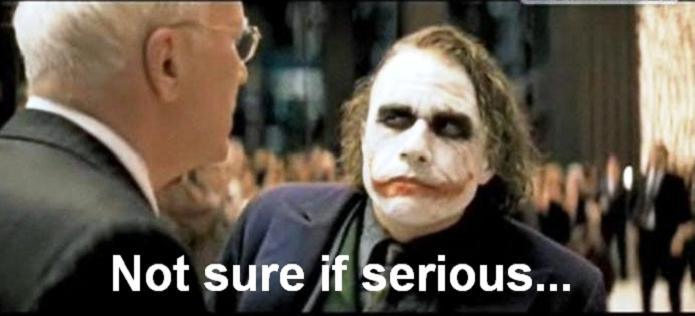
joker-not-sure-if-serious

Yeah, I know. I was confused, too.

Here is a fact about self-publishing: it has a terrible reputation. Fairly recently I had a conversation with someone who said that if it’s not good enough to be accepted by a publisher, it’s not good enough to be published, period. Yes, that is a very ignorant way of thinking, but it’s also, unfortunately, not uncommon.

And this race-to-the-bottom, anything goes, “it’s okay if your book looks like shit” mentality does not help. It only encourages the thinking among the general public that self-publishing is a toilet. The fact that a site like Lousy Book Covers even exists is not encouraging.

Is it true that all self-published books are crap that no self-respecting publisher would ever touch? Absolutely not. Is it true that all traditionally-published books are staggering works of brilliance? Hell no. There are both self-published books that are far superior to traditionally-published books, and there are both self-published and traditionally-published books I wouldn’t deem good enough to throw in my fireplace (if I had a fireplace).

If you want to be taken seriously as a professional writer, then you need to start approaching your work with the mindset of a professional.

I’ve seen some retorts to this. Like “well people can browse free samples on Amazon and then they’ll know if a book is worth their time.” Say you need five pages before you decide whether or not a book is worth your money. So you read five pages of one book. It’s poorly edited (if edited at all), there are grammar and spelling mistakes that would cause your high school English teacher to smash the blackboard, and the formatting is sloppy. So you then go to another book. Same problem. And another. And another. Say you go through the first five pages of ten books and they’re all terrible. That’s fifty pages you’ve just read. Would you keep going or would you stop and jump over to the best-seller lists?

This isn’t just speculation—this is stuff I’ve heard from readers. There are a great many people who have sworn off self-published books because of problems like this.

Yes, you learn things over the course of a writing career. Yes, your first book will be much different from your tenth book, because you’ve learned a lot over that time. You learn more about characterization and description. You learn more about pacing and plotting. You learn more about marketing. But one thing you should not be learning as you go is, “wow, I guess Comic Sans is not a good font choice for a cover.” One thing you should not be learning as you go is, “huh, maybe it would have been a good idea to revise this before I published it.”

Here’s a little test you can do: go to your local bookstore or library and find a traditionally-published book that you think is terrible. Look at the cover. Flip through the pages. Regardless of the quality of the story, do you know what you will not find? You will not find an abundance of grammatical and spelling errors. You will not find poor formatting. You will not find Comic Sans anywhere on the cover. Regardless of the story inside, the product has a professional standard. That’s what I’m talking about—hold your book to that same standard.

Self-publishing is easier than ever. You could drink an entire bottle of tequila, bang out a few thousand words on your computer, and then upload the file to KDP without even looking twice at it. You could also spend your entire weekend sitting in your own feces because you don’t want to get up from the couch while binge-watching Breaking Bad on Netflix.

Or in other words, just because you can do something doesn’t mean you should do it.

The point of turning off your internal editor when writing your first draft is so you can just get it out there. But once that draft is finished, you have to turn that internal editor back on and let him go ape-shit on your manuscript. Then you should revise it and hand it over to someone else. And you should format it to a professional standard, regardless of if it’s an ebook or a print book. And then you should design a professionally-looking cover.

And yes, if you cannot do this, then you may have to pay someone. Don’t give me that crap about how “it’s too hard” or “I can’t afford it”—either buckle down and do the work, or save up until you can afford it.

There is no excuse for shoddy products. Self-publishing is great, it’s opened a lot of doors for me that would have otherwise remained closed. If you want your work to be taken seriously, then you have to take it seriously yourself. If you want to be treated like a professional, then act like a professional.

If that’s too much to ask, then please go somewhere else. Because you’re only hurting the rest of us.


EDIT: This post has recently gotten some new traffic. And since I’ve already had to deal with one person who evidently thought it would be more fun to simply skim the post and then call me to task for things I never even said (all while ironically badmouthing me for making false assumptions), I’m going to lay a new ground rule: comments are moderated. I don’t put up with any bullshit here. If you’re not going to play nice, then your comments will be marked as spam. Simple as that.

Write a Review, Get a Free eBook!

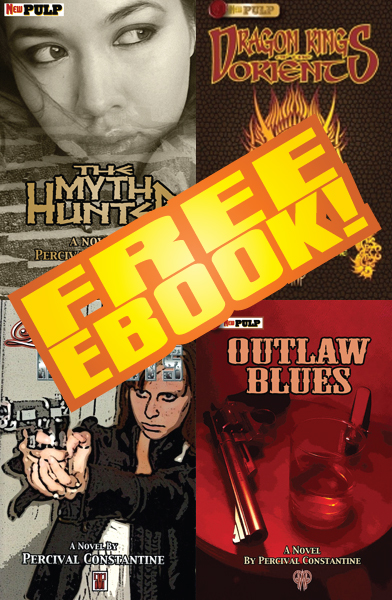
free-ebookWould you like a free ebook?

Have you picked up a copy of my epic fantasy novel, SoulQuest?

If the answer to both of those questions is yes, then I’d like to ask if you’d be kind enough to post a review of the book, either on Amazon or Goodreads. And to express my appreciation, you’ll receive a free ebook of your choice!

Once you’ve posted your Amazon or Goodreads review, copy the link and then please click here, take a look at the available books, and then fill out the form at the bottom of the page. When I receive the form, I’ll send you your free ebook within a few days!

Thanks for your support!

99¢ Pulp! New Year’s Sale!

99cent

Yesterday, I announced a Kindle Countdown sale where my latest book, SoulQuest was available from Amazon for only 99¢!

But why stop there? Instead, I’m having a huge sale to ring in the New Year!

Until January 5th, you can get SoulQuest from Amazon for 99¢, but you can also get the following books for the same price!

Chasing The Dragon, Love & Bullets, Outlaw Blues, The Myth Hunter, and Dragon Kings of the Orient are all available for 99¢ as well, and will remain that way throughout the month of January!

Head on over to the individual pages linked above, where you can find buy links for your e-reader of choice! Note that some venues may take longer to show the change than others, in which case you can go to my Smashwords page to get them in whatever format you choose!

Here’s to a very pulpy 2014!

SoulQuest is now on sale!

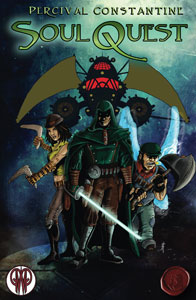
soulquestSoulQuest, my new epic fantasy novel, is now on sale on Kindle for only 99¢! Click here to go directly to Amazon to pick up your copy right now!

With a list price of $4.99, that means this Kindle Countdown Sale will save you 20% off the cover price!

But you need to hurry, because this countdown sale will only last until January 5th! So run on over to Amazon to get your copy before it’s too late! What better way to spend those Amazon gift cards you got than on a discounted book?

SoulQuest is an action-adventure epic fantasy novel, set in a world where magic and technology co-exist side by side. The sky-pirate Zarim and his crew, the thief Ekala and the faerie exile Swul, get tasked with locating the five mythical Soulstones before the twisted sorcerer Lord Vortai can obtain them! Along the way, the crew will meet up with an ex-soldier, a newly-turned vampire, the chieftain of a tribe of cat-people, and more!

What are you waiting for? Go buy it now!

Podcasting!

podcastIn case you’re unaware of my latest podcast endeavors, then let me take a minute to let you know what else I’m up to besides writing, editing, and formatting.

I currently run two podcasts. The first is The Exploding Typewriter: Pulp Writers on Writing Pulp, and as you can probably imagine from the title, that is a podcast about pulp writers discussing their craft. Every episode, I have a different guest come on and talk about some aspect of writing pulp. To date, I’ve had Tommy Hancock, Ron Fortier, Barry Reese, Derrick Ferguson, and Jim Beard on the show, and future guests will include Richard Lee Byers, Russ Anderson Jr., Mat Nastos, Joel Jenkins, Bobby Nash, and probably a whole lot more. And if you’re a pulp writer who hasn’t gotten in touch with me about being on the show, then please do so immediately! Details can be found at the above Exploding Typewriter link.

The second podcast is The Geek Screen, which is hosted by myself and Juan Bracich. Juan (or Johnny as I call him) are old college buddies who would always watch comic book movies together and then talk about them after over drinks. Since I moved to Japan, we obviously can’t do that as much any more, but we still get together on Facebook and Skype and shoot the shit about those movies. So one day, I decided we should record these chats and the result is The Geek Screen! Every episode, we discuss a little bit about news related to comic book movies and then we focus the bulk of the episode on one movie or TV show. So far, we’ve covered Arrow, The Wolverine, and Iron Man 3, with our next episode on Man of Steel.

Give both a listen, drop me some comments about how you like them, and leave a review on iTunes if you can, so we can bring more attention to both shows!

Also in the world of podcasting, I recently made my third appearance on PULPED! The Official New Pulp Podcast. In this episode, Tommy Hancock and I talk about SoulQuest, my latest novel, so please give it a listen and then head on over to Amazon and pick yourself up a copy!

Happy Holidays from PulpWork Press!

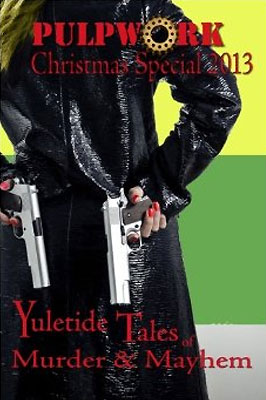
pulpworkxmas2013Hope you all have been enjoying your Christmas, Kwanza, Hanukkah, Festivus, Winter Solstice, or whatever else you might celebrate at this time of year. My Christmas day was spent doing a lot of work, but don’t worry, dear reader, I haven’t forgotten your present.

Or I should say those of us at PulpWork Press haven’t forgotten your present.

At the moment, the PulpWork Christmas Special 2013, featuring stories by Joel Jenkins, Josh Reynolds, Russ Anderson, and myself, is now available for FREE on the Amazon Kindle store! Click here to get your copy now!

So what will you get in this book? Well, you’ll get the following four tales of yuletide murder and mayhem!

The Third Death of Henry Antrim: Royal Occultist Charles St. Cyprian and his companion-in-arms, the lovely, gun-toting, and slightly bloodthirsty Ebe Gallowglass, discover murder most foul, a holy relic in the form of a Colt .45 pistol, and an evil sprung up from the wildlands of the weird west.

Malcom Destroys Christmas: A seven-year-old boy swears vengeance upon Santa Claus and the malign menace known only as Krampus decides to enlist him in a dastardly plot against Father Christmas.

The Shadow Killers: Cold-hearted assassin Monica Killingsworth finds herself the reluctant, but extremely well paid, escort of a small child and becomes the target of merciless killers, some of which she has worked with before. But Killingsworth knows a thing or three about assassination and bullets, blood, and bombs fly on Christmas day.

And Myth Hunter fans, you also get this tale!

The Wild Hunt: When the vulpine changeling Asami encounters a restless spirit wandering the icy slopes of Kurodake, Japanese legend clashes with Norse mythology and she finds herself caught up in the midst of a mythic hunt.

So what are you waiting for? Go get your copy right now!